

Top Questions Intended Parents Ask About Surrogacy — Answered
p>Starting a surrogacy journey is exciting, emotional, and often filled with unknowns. It’s normal for intended parents to wonder how the process works, what to expect medically and legally, and how to choose the right surrogate and agency.
At Physician’s Surrogacy, the only OB-managed surrogacy agency in the U.S., our mission is to give you clarity and confidence from the very beginning. Below, we answer the top questions intended parents ask about surrogacy, combining medical expertise with clear, compassionate guidance.

Key Takeaways
What Is Surrogacy and How Does It Work?
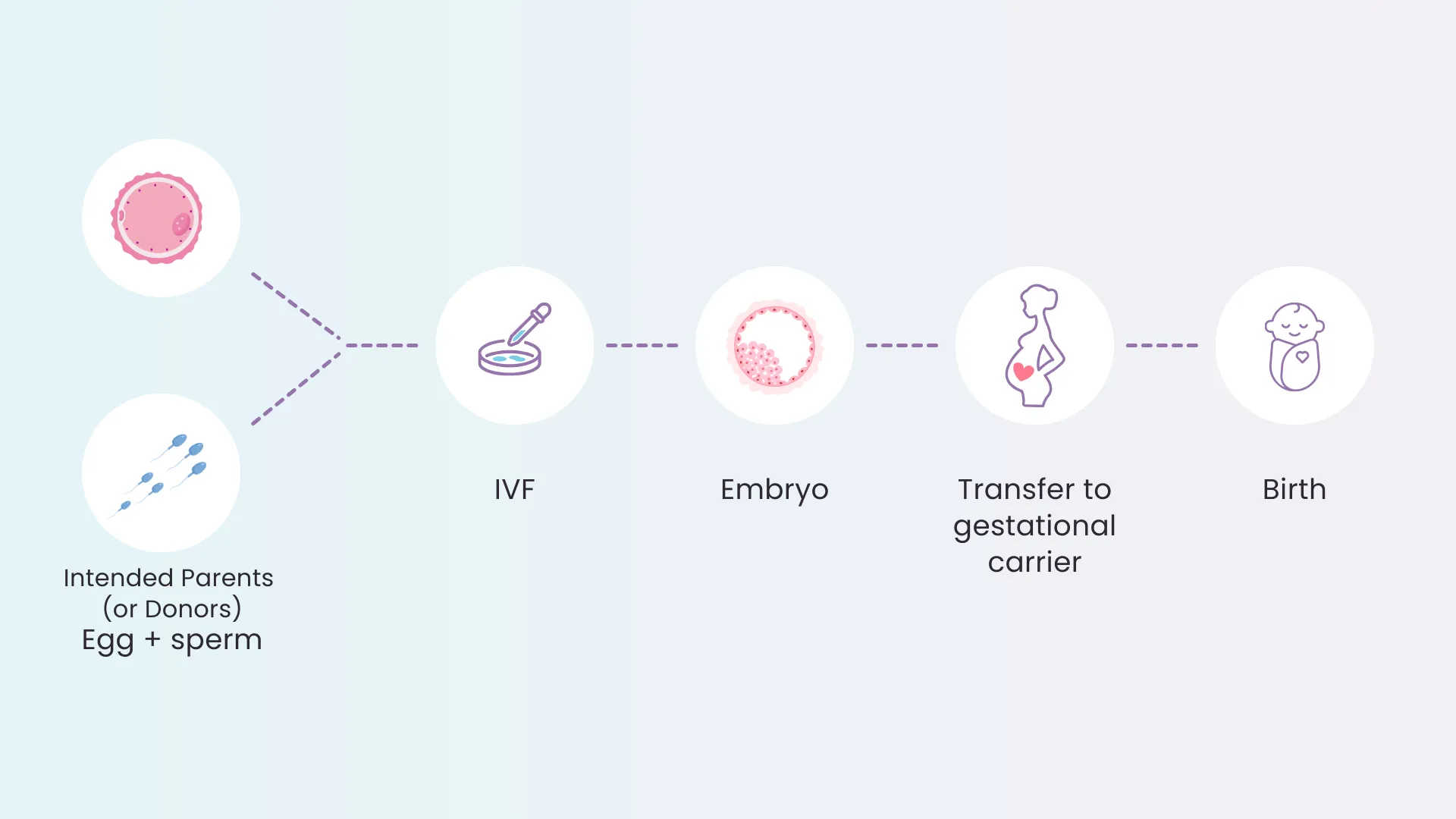
Surrogacy is a family-building method where a gestational carrier carries a baby for intended parents through IVF. In gestational surrogacy, the surrogate has no genetic connection to the baby. The embryo is created using the intended mother’s or donor’s egg and the intended father’s or donor’s sperm. They assume full parental responsibility from birth.
To understand the full process in detail, see our guide on how surrogacy works. For a broader comparison of surrogacy types, the gestational vs. traditional surrogacy guide covers the key distinctions.
National IVF data published by the Centers for Disease Control and Prevention (CDC) offers insight into treatment outcomes and success rates. You can explore the latest figures from all reporting clinics at the CDC ART database.
How Do You Find and Match with a Surrogate?
Finding the right surrogate is one of the most important decisions intended parents make. Many choose to work with a surrogacy agency to coordinate screening, matching, and communication.
Before a surrogate is introduced to intended parents, she undergoes comprehensive medical, psychological, and social evaluations. At Physician’s Surrogacy, that screening is physician-designed and exceeds ASRM guidelines. Only about 8% of candidates pass. You can read more about how PS screens surrogates and what makes the protocol different.
These evaluations confirm that a candidate is medically ready for pregnancy and fully understands the commitment involved. Once cleared, her profile may be presented for matching. As you move toward matching, it helps to review the questions to ask your surrogate to ensure alignment and compatibility.
Physician’s Surrogacy averages one week from consultation to a confirmed match, compared to the industry standard of 6 to 12 months. From match to confirmation of pregnancy typically takes 4 to 6 months, and the full journey from match to live birth runs about 14 months.
How Much Does Surrogacy Cost?
Surrogacy costs are shaped by surrogate compensation, medical care, legal requirements, insurance, and your IVF plan. Physician’s Surrogacy operates on a fixed and flat model. The price quoted at the start is the price you pay, with no surprise invoices at any stage.
Four program tiers are available:
| Program | Price | Match to Baby |
|---|---|---|
| Physician Plus | $193,000 | 12 to 14 months |
| Surrogacy Flat Rate | $145,000 | 18 to 22 months |
| Surrogacy Livebirth Guarantee | $208,000 | 18 to 22 months |
| All Inclusive Bundle | $255,000 | 18 to 22 months |
No fees are charged until a surrogate match is confirmed. For a full breakdown of what each program includes, see the surrogacy cost guide. Financing guidance is also available at PS’s financing page.
What Are the Legal Requirements?
Surrogacy laws vary by state and country, making legal guidance essential. Your journey typically includes:
- A gestational carrier agreement
- Establishing parental rights
- Pre-Birth or Post-Birth Orders (depending on your state)
- Hospital and delivery coordination
- Post-birth documentation and discharge planning
Ethical and legal best practices for gestational surrogacy are guided by nationally recognized frameworks, including the ASRM guidelines on gestational surrogacy, which outline protections for intended parents and surrogates.
Physician’s Surrogacy partners with reproductive law experts to protect your rights at every step. For a state-by-state legal overview, the surrogacy laws by state guide is a useful starting point. Our physician-led structure keeps the legal, medical, and psychological sides of the journey aligned.
How Are Intended Parents Involved During Pregnancy?
Intended parents remain actively informed and involved throughout the pregnancy. Clinical teams provide updates after appointments, including ultrasound findings and milestone reports. Many choose to attend key visits virtually or in person.
Some agencies also offer additional prenatal testing options, such as Non-Invasive Prenatal Testing (NIPT), which can provide early insights into fetal health and development.
How often you communicate with the surrogate is typically discussed during matching and outlined in the legal agreement, allowing both sides to set expectations in advance. For more on how the relationship between intended parents and surrogates develops, see the surrogate relationship guide.

Is Surrogacy Emotionally Difficult?
Surrogacy can bring a blend of optimism, relief, and understandable uncertainty, especially for families who have previously faced infertility or loss.
Many find that having structured communication, consistent updates, and clear expectations helps the experience feel steadier and more predictable.
Emotional clarity can also come from understanding why surrogacy aligns with your family-building goals. Our guide on why intended parents choose surrogacy addresses this directly. For those who have been through failed IVF, the article on surrogacy after failed IVF may also be helpful.
Over time, most families describe the journey as meaningful and deeply rewarding, particularly once they feel supported at each step.
What Happens After the Baby Is Born?
Immediately after birth, the baby is placed with you. Hospitals and agencies prepare for this in advance so the transition is smooth and emotionally supportive for everyone involved.
A Pre-Birth or Post-Birth Order establishes legal parentage, allowing your names to appear directly on the birth certificate.
For international families, agencies often assist with the documentation and coordination needed for newborn travel. The guide on international surrogacy for intended parents covers what to expect in more detail.

Begin Your Surrogacy Journey with Confidence
Surrogacy becomes easier to navigate when the process is supported by clinical insight rather than guesswork.
At Physician’s Surrogacy, OB/GYNs help shape the key medical steps, from early surrogate screening to ongoing pregnancy monitoring, so you receive guidance rooted in real clinical practice. This structure brings clarity to a journey that can otherwise feel complex or uncertain.
The Only U.S. Surrogacy Agency Led by Practicing OB/GYNs
To review how this structured approach applies to your circumstances, schedule a consultation with our team. There are no fees until a surrogate match is confirmed.
Average matching time: one week. Programs start at $145,000, fixed and flat. Preterm delivery rate 50% below the national average.
FAQs: Quick Answers for Intended Parents
Common questions from families who are new to the surrogacy process.
This article is for informational purposes only and does not constitute medical or legal advice. Surrogacy eligibility, program details, timelines, and costs vary by individual circumstance. Consult a qualified medical professional and independent legal counsel before making any decisions related to surrogacy.

Julianna Nikolic
Chief Strategy Officer Julianna Nikolic leads strategic initiatives, focusing on growth, innovation, and patient-centered solutions in the reproductive sciences sector. With 26+ years of management experience and a strong entrepreneurial background, she brings deep expertise to advancing reproductive healthcare.