

GLP-1 Medications and Surrogacy: A Full Guide for Surrogates
Taking a GLP-1 medication and feeling called to become a surrogate can put you in a frustrating position. Many women worry they’ll be turned away immediately, or they get stuck trying to decode conflicting advice online about timing, washout rules, and side effects.
Those concerns are understandable. Surrogacy has a real medical timeline, and glucagon-like peptide-1 (GLP-1) receptor agonists come with real clinical considerations. At Physician’s Surrogacy — the nation’s only OB-managed surrogacy agency — our in-house physicians review each candidate’s full health profile, including any current or recent medications, so nothing falls through the cracks.
The good news: GLP-1 medication and surrogacy can absolutely be discussed and planned safely, as long as you are upfront and guided by your care team. This guide walks through how these medications affect your application, the mandatory timelines for safety, and what to expect at every stage.
Key Takeaways
Can You Be a Surrogate If You Take a GLP-1 Medication?
Quick Answer
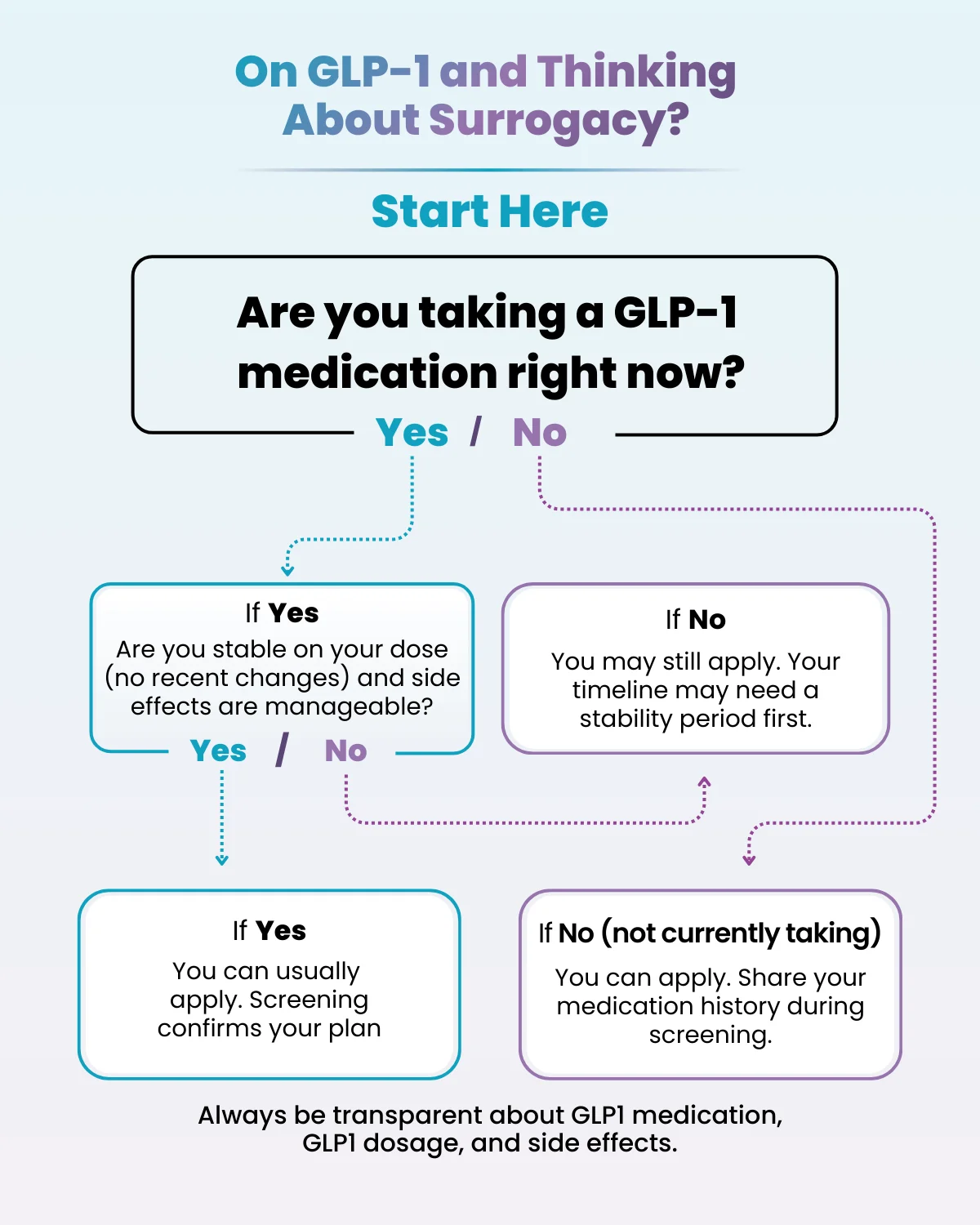
Yes — you can apply and be screened. Current or past GLP-1 use is not an automatic disqualifier. Most clinics will require you to stop the medication before embryo transfer, and timing will depend on the specific drug and your clinic’s protocol. Full disclosure during your initial screening is required.
Many potential surrogates are surprised to learn that past or current GLP-1 use is not an immediate “no.” These medications are common, and many women interested in surrogacy are currently using them or have recently stopped.
Programs ask about GLP-1s because surrogacy involves structured pregnancy planning, medical clearance, and careful clinical monitoring. Some surrogates have used GLP-1s to work toward a qualifying Body Mass Index (BMI) before applying — that kind of proactive health management is exactly what our physician-led team looks for.
What Are GLP-1 Medications?
GLP-1 medications (glucagon-like peptide-1 receptor agonists) are a class of drugs used to treat type 2 diabetes and, increasingly, for weight management. Common brand names include Ozempic, Mounjaro, Wegovy, and Zepbound. They have changed how clinicians approach metabolic health — and that shift has brought them into the surrogacy conversation too.
A few terms you may encounter during screening:
- GLP-1 injection / GLP-1 shot. Most of these medications are administered as a weekly or daily injection under the skin.
- GLP-1 dosage. The strength of the medication. Many people start at a low dose and titrate upward to a maintenance level, which can affect side effect patterns.
- GLP-1 mechanism. These drugs mimic a hormone that regulates appetite and slows digestion — which is why fertility clinics pay close attention when planning procedures and pregnancy timing around them.
What Surrogacy Programs Look At When Reviewing GLP-1 Use
When you apply to Physician’s Surrogacy, our medical team reviews your complete health profile to confirm you are a safe candidate for pregnancy. For candidates on GLP-1s, a few specific factors come into focus.
- Overall health history. Are you taking the medication for diabetes management or strictly for weight management? Diabetes history can involve additional considerations during medical clearance.
- Stability on medication. Are you on a steady routine, or are you still titrating and managing side effects that could complicate screening?
- Ability to follow a structured plan. Surrogacy runs on a precise medication calendar. If you are already managing a detailed GLP-1 dosage schedule, our team also wants to know you can follow fertility medication protocols with the same consistency.
Surrogacy and everyday weight management are different goals. In everyday life, you might stay on a GLP-1 long-term. In surrogacy, the goal is pregnancy readiness. Because you are carrying for another family, fertility clinics use a more cautious approach — especially around medications where pregnancy safety data is still developing.
GLP-1 and Pregnancy Planning: The Washout Period Explained
This section matters most for your timeline. Pregnancy planning drives every decision in surrogacy preparation, and your GLP-1 use will affect that calendar in a specific way.

Unlike a personal pregnancy — where you might stop medication the day you get a positive test — surrogacy requires stopping weeks in advance. The plan is made ahead of time, with your prescribing physician and fertility clinic in agreement.
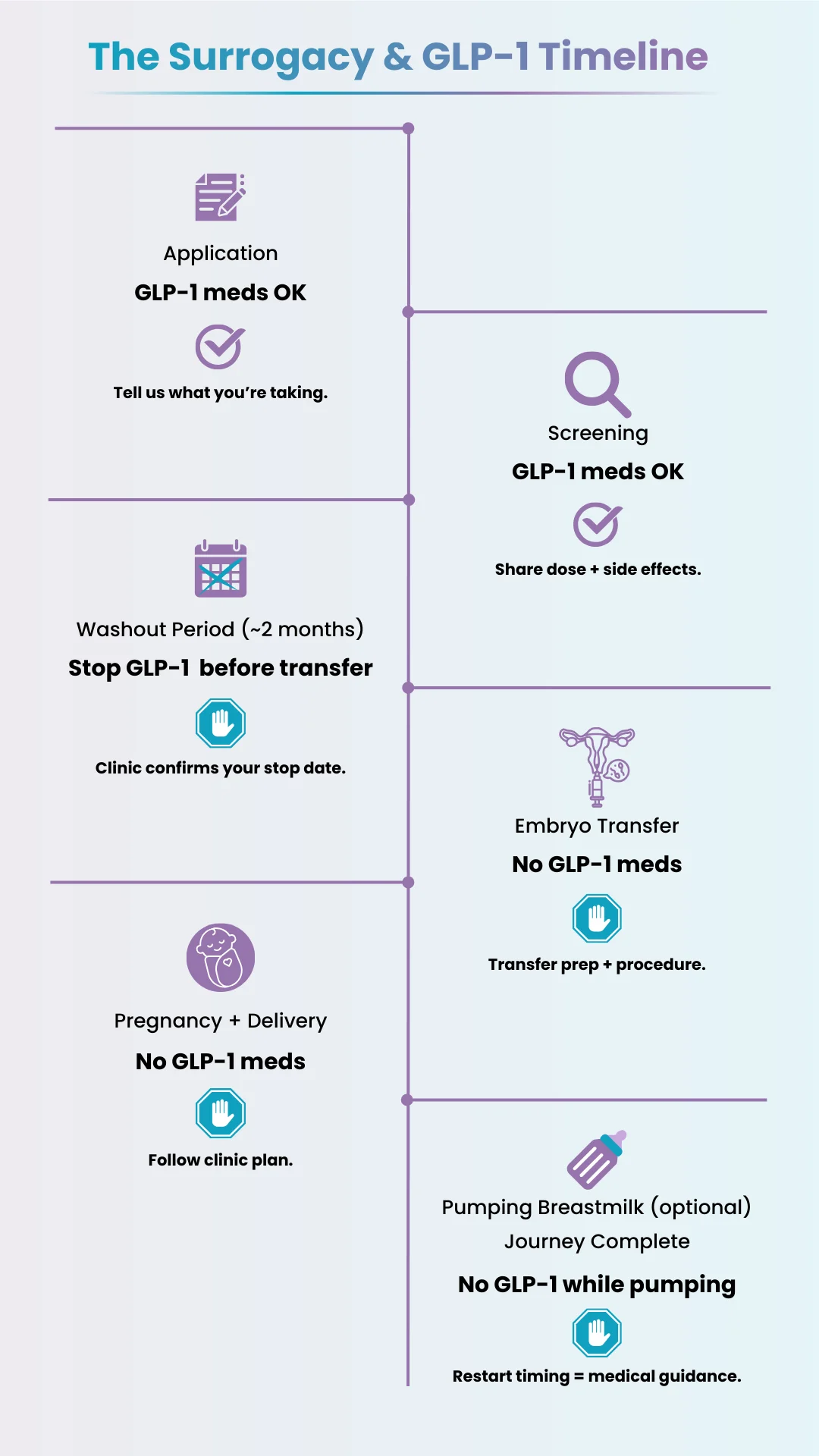
Many fertility clinics require surrogates to stop GLP-1 receptor agonists before embryo transfer. In practice, this washout period is often around two months, but the exact timing depends on the specific medication and your clinic’s protocol. The drug stays in your system for weeks after the last dose, so stopping earlier helps reduce fetal exposure during early development.
A large cohort study published in JAMA Internal Medicine (2024) analyzed pregnancies with GLP-1 exposure. While researchers did not find a dramatic increase in malformations compared to insulin use, they urged caution due to uncertainty and limited safety data on newer drugs. That caution is reflected in how most fertility clinics approach this medication class.
GLP-1 and Birth Control During Surrogacy Preparation
During surrogacy preparation, surrogates typically take birth control pills to synchronize their cycle with the intended mother or egg donor. GLP-1 medications can interact with this step in a specific way.
Some reports suggest that the slowed digestion caused by GLP-1s may affect the absorption of oral birth control pills, potentially leading to breakthrough ovulation. Your team will want your exact medication plan documented so cycle timing stays accurate. In some cases, a non-oral birth control method may be recommended during preparation.
What to Have Ready for Medical Clearance
Moving through clearance smoothly starts with documentation. Having this information ready before your first appointment keeps the process moving.
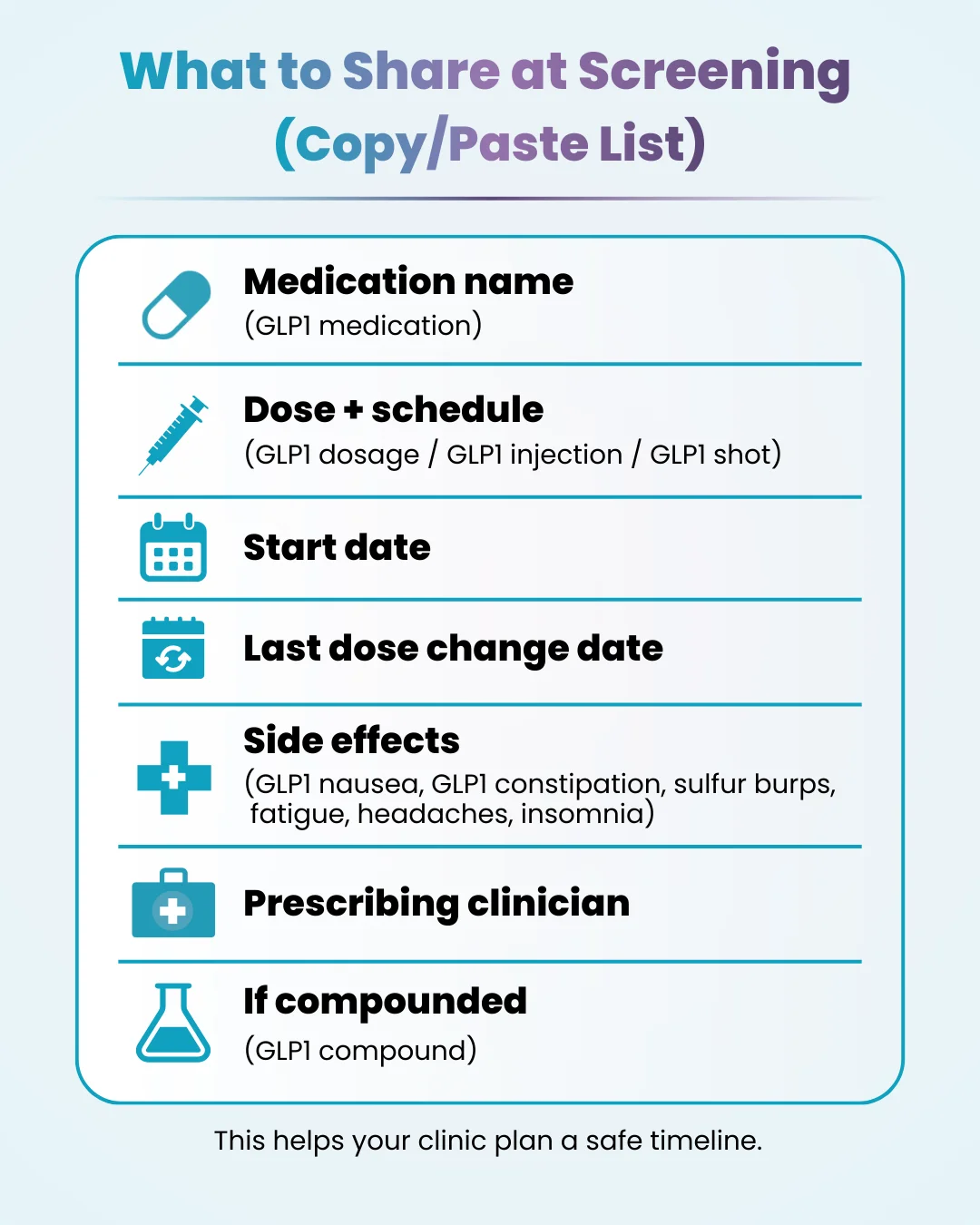
- Medication name. Include the brand (Wegovy, Zepbound, etc.) and note if it is compounded.
- Start date. When did you begin treatment?
- Last dose change. Are you stable right now, or still titrating?
- Prescribing doctor. Who manages your prescription and follow-ups? Your surrogacy team may need to coordinate with them directly.
Build in roughly two months for a GLP-1 washout period before embryo transfer. Add this to your overall surrogacy planning timeline — from application to embryo transfer, the full process typically spans several months even without medication considerations.
GLP-1 and Breastfeeding After Delivery
Surrogacy doesn’t always end at delivery. Some surrogates choose to provide breast milk for the intended parents for a period after birth. If pumping is part of your plan, GLP-1 restart timing is an important postpartum consideration.
Right now, data on GLP-1 transfer into breast milk and possible effects on an infant is limited. A 2024 study in The BMJ examined infant outcomes related to GLP-1 exposure in early pregnancy. While that study did not focus on lactation transfer specifically, the overall lack of lactation-specific evidence is one reason many clinicians recommend postponing restart until breastfeeding or pumping ends.
If pumping is part of your plan, raise it early so your medical team can factor it into your postpartum timeline.
GLP-1 Side Effects That Matter During Screening
Your physical comfort is a priority. Some GLP-1 side effects can overlap with — or worsen — early pregnancy symptoms, and your team will want a stable baseline before moving forward with clearance.
GI Issues: Nausea, Constipation, and Sulfur Burps
- What to report. If you experience persistent nausea or sulfur burps (the rotten egg taste sometimes associated with GLP-1 use), tell your coordinator at the start.
- Why it matters. Early pregnancy can bring significant nausea on its own. Starting a pregnancy while managing persistent GI symptoms can make hydration and nutrition harder to maintain, and in severe cases may increase the risk of Hyperemesis Gravidarum (severe vomiting).
- Constipation overlap. Progesterone used during surrogacy preparation can slow digestion. Combined with GLP-1-related constipation, this can become genuinely uncomfortable — so your team may want a clear symptom plan before you proceed.
Fatigue and Mental Health Considerations
Psychological screening is a required part of surrogacy. Being open about your mental health allows the team to support you properly.
- GLP-1 fatigue and headaches. Surrogacy involves regular appointments, injections, and blood draws. If fatigue or GLP-1-related insomnia is disrupting daily life, it is worth addressing before starting the process.
- Mood changes. There is growing clinical interest in how GLP-1 medications affect mood. Some people feel better as their health improves; others notice shifts in anxiety or depression. Report any mood changes honestly during your psychological evaluation.
Rare but Serious Issues to Disclose
If you have a history of pancreatitis or notice sudden vision changes, disclose it right away. These issues are uncommon with GLP-1 use, but your medical team needs the full picture before pregnancy clearance can proceed.
GLP-1 Costs, Insurance, and Finding the Right Doctor
Cost questions come up often, especially for candidates who pay out of pocket or have switched pharmacies. For surrogacy screening purposes, what matters most is stability and clear documentation.
- Who pays for GLP-1 medication? In most cases, weight management medications taken before pregnancy are treated as personal health maintenance. Intended parents typically cover medical costs tied directly to the pregnancy itself.
- No insurance coverage? If you are paying out of pocket, mention any access issues early. Missed doses and frequent medication switches can affect side effects and stability during screening.
- Who prescribes GLP-1 medications? Your fertility clinic will not prescribe weight management medication. The right prescriber is your primary care physician, endocrinologist, or obesity medicine specialist. Confirm they are available to coordinate with your surrogacy team if needed.
Questions to Ask at Your Consultation
Walking into your consultation prepared makes your path clearer — and it demonstrates to your team that you take the process seriously.
- “Does your program have a specific policy on GLP-1 medications?”
- “Do you require a washout period before embryo transfer, and how long is it?”
- “If I stop, what symptoms should I expect, and how should I manage them before the transfer?”
- “How will you coordinate with my prescribing clinician on the stop date?”
- “If I plan to pump breast milk after delivery, when can I restart my medication?”
- “What side effects — such as nausea or dehydration — should I report right away?”
At Physician’s Surrogacy, our in-house OB/GYN team can conduct peer-to-peer consultations with your prescribing physician — something most agencies cannot offer because they are run by non-medical staff. If your medication history is complex, this direct physician-to-physician communication makes the coordination far smoother.
Start Your Surrogacy Journey on a Strong Medical Foundation
Being on a GLP-1 medication often means you have been investing seriously in your health — and that commitment matters in surrogacy. It does not cancel your ability to help another family build theirs. It simply means your timeline needs careful planning so you feel stable and supported before pregnancy begins.
At Physician’s Surrogacy, our OB/GYN-led team is specifically equipped to guide you through these medical decisions. We review GLP-1 use as part of our physician-designed screening process, coordinate directly with your prescribing doctor, and build a plan around your health — not around a generic checklist. That level of clinical oversight is only possible because our physicians run the agency itself.
You do not have to figure out the timing on your own. If you are ready to find out whether you qualify, reach out to us today and take the first step.
Frequently Asked Questions
Can you be a surrogate while taking a GLP-1 medication? +
How long is the washout period before embryo transfer? +
Can GLP-1 medications affect embryo transfer preparation? +
Can you restart GLP-1 medication after delivery if you plan to pump? +
What GLP-1 side effects matter most for surrogacy screening? +
!

Julianna Nikolic
Chief Strategy Officer Julianna Nikolic leads strategic initiatives, focusing on growth, innovation, and patient-centered solutions in the reproductive sciences sector. With 26+ years of management experience and a strong entrepreneurial background, she brings deep expertise to advancing reproductive healthcare.