
Surrogacy for family members is a unique and personal journey. It involves a loved one stepping in to help create or grow a family. This type of surrogacy can be a beautiful act of love, but it also requires careful thought and planning. Understanding the process and its challenges is important for a successful and positive experience.
Before becoming a surrogate for a family member, it’s important to weigh all factors. This decision impacts the surrogate and the intended parents in three ways: emotional, physical, and financial. Discuss expectations and boundaries early to avoid misunderstandings later.
Consider the type of surrogacy. Some may opt for traditional surrogacy, where the surrogate’s egg is used. Some people opt for gestational surrogacy. This method uses an embryo made from the genetic material of the intended parents or donors. Both require legal clarity and proper medical procedures.
Health, legal, and financial factors are important in family surrogacy. Ensuring the surrogate is physically ready to carry a child is necessary. Clear agreements are to outline responsibilities and protect everyone involved. Financial transparency is also important, even in situations where compensation is not expected. Addressing these aspects early helps create an easier and more successful surrogacy journey.
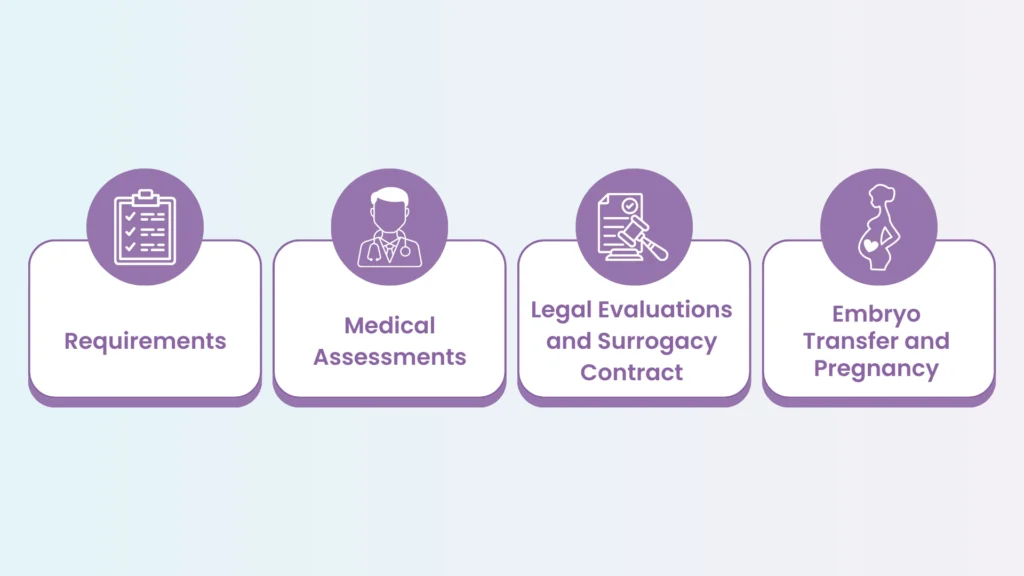
Being a surrogate for a family member is a generous and meaningful decision. However, the process involves more than just willingness. Surrogates need to meet certain requirements. This helps keep both the surrogate and the baby healthy. Each step is crucial for a safe and successful journey.
Even when the surrogate is a family member, meeting eligibility requirements is essential. A history of healthy pregnancies and emotional stability is typically required. These standards keep the surrogate healthy and improves the chances of a good outcome. Surrogacy experts and fertility clinics carefully evaluate potential surrogates, ensuring they meet the guidelines established by the American Society for Reproductive Medicine (ASRM). Adhering to ASRM guidelines ensures the process prioritizes the safety and well-being of both the surrogate and the baby while maintaining ethical and professional standards.
Medical assessments are essential to ensure the gestational surrogate is physically fit to carry a child. These assessments help verify the surrogate’s health, including her ability to handle the demands of pregnancy. It’s a critical step to reduce risks and ensure a healthy and successful pregnancy for both the surrogate and the baby.
Legal evaluations are necessary to outline the rights and responsibilities of all parties involved. A surrogacy contract is crucial, even when the surrogate is a family member. It clarifies roles, medical decisions, and compensation arrangements. This contract ensures that everyone understands their duties, rights, and expectations, minimizing potential conflicts and ensuring a smoother process.
Once agreements and evaluations are complete, the medical process begins. The embryo transfer is performed under the care of a fertility clinic. Regular monitoring ensures a healthy pregnancy. Family surrogacy needs teamwork and constant communication to help the surrogate during the journey.
Family surrogacy offers many benefits, but it also comes with unique challenges. Understanding the pros and cons can help everyone involved make an informed decision.
Pros:
Cons:
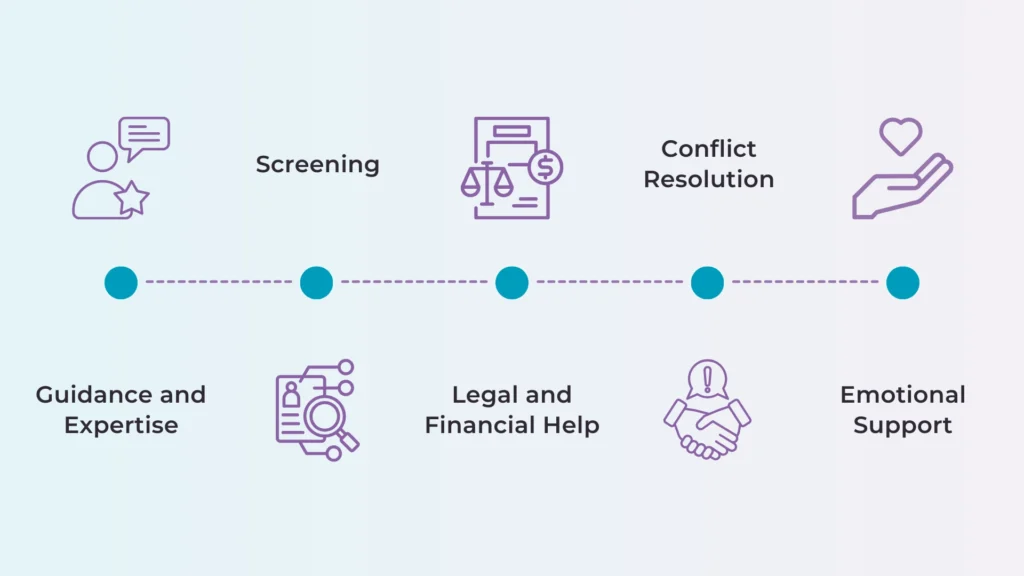
Working with a surrogacy agency is important, even if you are a surrogate mother for a family member. Agencies offer expertise, support, and structure during the process. This helps avoid potential challenges.
Benefits of Working with an Agency:
Even in family surrogacy, professional guidance helps to an easy and positive experience for all parties. An agency acts as a neutral and knowledgeable partner throughout the journey.
Being a surrogate for a family member can be rewarding but also emotionally challenging. The surrogate must be sure she wants to help out of genuine desire, not obligation. If her reasons are unclear, the emotional strain can be heavy. She needs to feel comfortable in her role and understand her motivation.
One of the hardest parts is the bond formed during pregnancy. Even if the baby isn’t genetically hers, the connection can be strong. This makes it tough to hand over the baby after birth. The surrogate must prepare for this and remember her role is to bring joy to the parents.
Staying in touch with the baby after birth can also be complicated. Some surrogates may struggle to keep their distance, especially if they’ve bonded closely. Clear boundaries and communication with the parents from the start can help ease these emotions..
In the end, surrogacy requires deep thought and clear motivation. When done for the right reasons, it can be very fulfilling. However, it’s important to acknowledge the emotional challenges and support the surrogate throughout the process.
Family surrogacy can help loved ones grow their family, but it may also change family dynamics in surprising ways. When a family member is a surrogate, we can test relationships during pregnancy and after the baby arrives.
One of the main challenges is the potential for shifting roles. The surrogate must go through being both a family member and a gestational carrier, which can sometimes create tension.
This dual role can mix family love with surrogacy duties. This may cause confusion or emotional discomfort. It’s essential for everyone involved to establish clear expectations and boundaries from the beginning to minimize potential conflicts.
Another challenge comes after the baby is born. The intended parents and the surrogate may have different feelings about the relationship with the child. The surrogate might feel a deep emotional connection, which could complicate the process of handing the baby over.
The intended parents are excited to bring their child home. But they might feel unsure about the surrogate’s role from here on.
A surrogate family must also manage their own expectations. Extended family members may have strong opinions or concerns about the process, which can add additional stress. These varying perspectives can sometimes put pressure on the surrogate, especially if she feels caught between family expectations and her own feelings.
Family surrogacy can be rewarding. However, it’s important to understand how family dynamics may affect the process. Clear communication and a strong support system are vital. They help you handle emotional and relationship challenges that come up along the way.
In family surrogacy, the financial aspects are different from traditional surrogacy arrangements. Typically, there is no compensation for surrogates beyond medical expenses. Even without payment, the surrogacy journey requires a lot of emotional and physical effort from the surrogate. The surrogate must feel fully comfortable with this decision. The process takes a lot of time, energy, and personal commitment.
The surrogate’s primary costs are related to medical expenses, including prenatal care, labor, and delivery. While these expenses are often covered by the intended parents, the surrogate needs to feel confident in how these costs will be managed. It’s also important that the surrogate’s own health and well-being are taken into consideration, especially since carrying a child for someone else can be physically demanding.
Without pay other than medical coverage, a surrogate might feel like she’s giving a lot but getting little in return. It’s important for the surrogate to know her reasons for becoming a gestational carrier. This helps her enter the process with clarity. If the surrogate’s reasons are purely altruistic, she must ensure she’s emotionally prepared for the journey, knowing it will require her full commitment.
Family surrogacy is a big emotional commitment for the surrogate. Even without payment, it requires a lot of personal time and energy. It’s important for the surrogate to feel confident about her decision and clear on why she’s doing it. When done with care, family surrogacy can build strong connections and bring happiness to both the surrogate and the intended parents.
Domestic vs international surrogacy are two popular paths for intended parents seeking to grow their families. Both options have unique benefits and challenges. Knowing what each option offers will help you choose the best path for your surrogacy journey.
The main difference between domestic surrogacy and international surrogacy is the physical distance. This distance can impact many parts of the process. It affects communication, legal needs, and medical oversight.
Becoming a parent in the U.S. often gains from staying in touch with their surrogate mothers and surrogacy professionals. Surrogacy abroad can make staying in touch tougher. Time zones, language barriers, and cultural differences can get in the way. These challenges can make building a strong connection with your surrogate more complex.
Legal frameworks are another important consideration. Domestic surrogacy laws differ from state to state. However, they are usually clear and known to parents in the U.S.
On the other hand, international options may involve entirely different legal systems. Some countries make surrogacy laws easier, but others have stricter or unclear rules. So, it’s important to know the laws before moving forward.
The distance also impacts medical care. In domestic surrogacy, intended parents can manage their surrogate’s medical visits. This helps ensure she gets good healthcare.
Foreign surrogacy has different standards for assisted reproductive technology by country. This can make some medical aspects less predictable.

Medical care plays a main role in choosing between domestic and international surrogacy. The quality and experience of medical teams and facilities can vary a lot by location.
In the United States, surrogacy has been around for a long time. The American Society for Reproductive Medicine (ASRM) sets the guidelines. These guidelines help provide excellent care for intended parents and surrogate mothers. U.S. clinics have skilled medical teams and modern facilities. They focus on assisted reproductive technology. This gives intended parents confidence in the health and safety of surrogacy.
In contrast, the availability and quality of medical care can differ in international surrogacy destinations. Some countries offer excellent care, while others are relatively new to surrogacy. This can lead to variations in medical standards, training, and oversight. Parents may struggle to judge if facilities are reliable. They also want to make sure the surrogate’s healthcare meets U.S. standards.
Another consideration is access to medical updates and involvement in the process. Intended parents can often go to appointments or talk directly with the medical team during domestic surrogacy. In the international surrogacy process, distance and language can create challenges. Parents often depend on agencies or intermediaries for updates.
American surrogacy has high standards in screening surrogate mothers. The process is careful and aims to keep everyone safe and healthy. Screening typically includes detailed medical evaluations, psychological assessments, and background checks. These steps help confirm that the American surrogate is physically and emotionally prepared for the journey.
In addition to screening, domestic surrogacy often considers the surrogate’s living environment. A stable and supportive home helps ensure a healthy pregnancy.
It also leads to a positive experience for the surrogate. Access to reliable healthcare and a safe community also plays a critical role. These factors help find suitable and available surrogates.
With international surrogacy, the screening process can vary greatly depending on the country. Some international surrogacy agencies follow rigorous guidelines, while others may have fewer requirements or limited oversight. Intended parents might struggle to check the international surrogates’ medical history or living conditions abroad. This creates some uncertainty.

Cost is a major factor when choosing between domestic surrogacy and international surrogacy. Surrogacy abroad may look cheaper, but only considering the cost can bring surprise expenses.
In the United States, higher upfront costs show the quality of care. They also come from strict legal protections and full support during the process. These costs typically include surrogate compensation, medical care, legal fees, and agency services. While it may seem expensive, the transparent structure reduces the likelihood of hidden or unexpected expenses.
In contrast, international surrogacy often appears cheaper at first glance. However, the lower initial costs can come with uncertainty.
Changes in surrogacy contracts, unexpected legal issues, or medical problems can raise costs. Intended parents might deal with extra travel costs and changes in currency rates. This can make the process less predictable.
Ultimately, prioritizing quality over price ensures fewer risks and an easier journey. International options look good, but surprises can cause higher long-term costs.
When choosing between domestic and international surrogacy, legal protections and requirements matter a lot. The legal landscape directly impacts the safety and clarity of your surrogacy journey.
Surrogacy laws in the United States differ by state. Many regions have clear and established rules. These laws protect both intended parents and surrogates.
Clear surrogacy contracts outline responsibilities, compensation, and parental rights. Hiring an experienced attorney makes sure all legal steps are done right. This reduces uncertainty.
For international surrogacy, the legal framework can be more complex or less defined. Some countries have friendly surrogacy laws. Others restrict the process. These vary by country. Parents might encounter unclear regulations or legal gaps that complicate establishing parental rights. Additionally, citizenship and immigration laws can create challenges when bringing the baby home.
One of the key challenges in international surrogacy is the potential for language and cultural differences. These can create barriers. They make it harder to communicate with your surrogate mother and surrogacy professional.
In the United States, intended parents and their surrogates usually speak the same language. This makes communication easy. Cultural norms are also more familiar, which can help build trust and understanding throughout the surrogacy journey.
When you choose surrogacy abroad, you might hit language barriers. This is especially true if you don’t speak the language of the country you are working with.
Miscommunications could lead to misunderstandings about medical care, surrogate expectations, or legal matters. Cultural views on surrogacy can change the experience. Some countries see the process differently and have their own practices.
You can ease these challenges by teaming up with an international surrogacy agency. They offer translation services and cultural support.
Traveling for international surrogacy comes with unique considerations that you should be prepared for. You might need to travel several times during the surrogacy process. This could be for medical appointments, legal matters, or to meet your surrogate mother.
In the United States, traveling is usually easier. Intended parents can stay near their surrogates and healthcare providers. International surrogacy can take longer and cost more due to travel.
International intended parents must plan for visa and immigration needs. This is especially important when bringing the baby home after birth. These rules can change a lot based on the country. It’s important to research what you need for travel and citizenship.
There are also practical aspects to consider, such as the cost of flights, accommodation, and transportation. International surrogacy may require more time away from home, so make sure to plan accordingly.
Deciding between domestic surrogacy and international surrogacy depends on what’s most important to you as an intended parent. Each option has its own advantages and challenges.
In domestic surrogacy, you benefit from closer proximity to your surrogate mother, familiar legal systems, and easy communication. You can also be more involved in the medical and legal processes. However, it tends to be more expensive due to the higher costs of healthcare and legal services in the United States.
On the other hand, international surrogacy may offer lower upfront costs, but it comes with more uncertainty. You may face language barriers, travel requirements, and unfamiliar legal systems. While some countries have well-established surrogacy programs, others may have less clear regulations.
To make a decision, think about your budget. Also, consider how much you want to be involved. Finally, think about how comfortable you are with travel and legal issues. Understanding the differences and how they align with your needs will guide you toward the right choice.
Choosing between domestic surrogacy and international surrogacy is a big decision for intended parents. Both options have their own benefits and challenges. The best choice depends on your preferences, budget, and comfort with the process. Take your time. Do careful research and get professional advice. This will help make your surrogacy journey successful.
Becoming a father is a decision you’ve made on your own terms. Gestational surrogacy lets you follow through on it biologically, legally, and on a timeline you can plan around.
Each year, thousands of single men across the United States build biological families this way, and the legal and medical infrastructure to support them is well established, particularly in premier surrogacy states like California.
This guide covers how surrogacy works for solo intended parents — the process, the costs, legal parentage for a single father, and how to choose an agency built for you.
Book your complimentary consultation →

Medically, the process is the same as surrogacy for couples. What changes is the context.
You are the single point of contact for every decision — agency communication, legal contracts, medical updates, and financial management all run through you alone.
That is manageable, and many single men navigate it successfully every year.
But it means choosing an agency that treats you as a primary client, not as half of a couple.
Here is how the seven steps unfold for a solo intended dad:
Step 01
Your agency becomes your core support throughout the journey. For single men, this choice carries extra weight — you need an agency with specific experience serving solo intended parents, not just couples, and a communication model that keeps you directly informed at every stage, without a partner to relay information. Before committing, review questions to ask any agency and know the red flags to watch for.
Step 02
Your agency presents matched surrogate profiles. One consideration is unique to single men: confirm early that your surrogate is fully comfortable supporting a single-parent family. Not all surrogates have worked with solo intended parents before. That comfort — and the shared understanding of what your family will look like — needs to be established before you commit to a match.
Step 03
A donor egg is always required in single-man surrogacy. You can find an anonymous donor through an egg bank or use a known donor. This step typically runs concurrently with surrogate matching and is coordinated by your agency or fertility clinic. Frozen donor eggs from a dedicated egg bank are often faster and more cost-predictable than a fresh cycle.
Step 04
Before any medical procedures begin, attorneys for both parties draft and review surrogacy contracts and pre-birth orders covering parental rights, surrogate compensation, and medical decision-making. As a sole intended parent, the contract establishes that you — and only you — are the legal parent.
Step 05
Your fertility clinic fertilizes the donor egg with your sperm to create embryos. Healthy embryos may undergo preimplantation genetic testing (PGT) before transfer to maximise the chance of a successful first transfer.
Step 06
The surrogate undergoes a medicated cycle to prepare for transfer. A blood test 10–14 days later confirms whether the pregnancy is established. Your agency should notify you directly, same day.
Step 07
Your surrogate attends regular prenatal appointments throughout the pregnancy. In most surrogacy-friendly states, a pre-birth order issued during the pregnancy establishes you as the sole legal parent before birth. After delivery, the birth certificate lists you as the father — one name, no further legal steps required.
Step 08
Once your parental rights are confirmed and any post-delivery documentation is complete, your baby goes home with you. Your agency remains available for post-journey questions during the transition to solo fatherhood — a step that deserves as much support as the journey itself.
Most single-man surrogacy journeys take 12 to 24 months from agency enrollment to bringing your baby home. Matching is often where the clock stalls — industry wait times average 6 to 12 months.
At Physician’s Surrogacy, our average matching timeline is one week.
Through our Medically Cleared Surrogate Program, surrogates complete full medical and OB-GYN clearance before you ever meet them, so when you are ready to match, so are they. See how we match in one week.
Single-man surrogacy in the United States typically costs $140,000 to $180,000. In California, expect $150,000 to $200,000+. A donor egg is always required, which adds $8,000–$20,000 compared to intended parents who can use a partner’s eggs.
When you are funding a surrogacy journey on a single income, the cost structure matters more than it does for a couple.
There is no second salary, no partner to split decisions with, and no backup if your budget assumptions prove wrong.
Because you are the sole financial anchor, understanding where the hidden variables live is the only way to protect your journey from unexpected stalls.
Here’s a full breakdown of surrogacy costs and the variables that drive them:
| Cost Item | National Range | California Range |
|---|---|---|
| Surrogate compensation | $60,000 – $75,000+ | $75,000+ |
| Agency fee | $20,000 – $35,000 | $30,000 – $50,000 |
| IVF / embryo creation | $15,000 – $25,000 | $15,000 – $30,000 |
| Egg donor fee * | $8,000 – $15,000 | $10,000 – $20,000 |
| Legal fees (all parties) | $8,000 – $12,000 | $10,000 – $15,000 |
| Medical / screening | $5,000 – $10,000 | $5,000 – $12,000 |
| Surrogate health insurance | $5,000 – $15,000 | $5,000 – $20,000 |
| Miscellaneous & reserve | $5,000 – $10,000 | $5,000 – $10,000 |
| TOTAL | $140,000 – $180,000 | $150,000 – $200,000+ |
* Egg donor fees are a fixed cost for single-man surrogacy. Unlike some intended parents who use a partner’s eggs, single men always require a donor. This is the primary reason single-man surrogacy runs $10,000–$20,000 higher than the average for couples using the intended mother’s eggs.
The line items with the most variance — and the ones worth scrutinising most carefully:
Legal outcomes for single men vary by state. Before selecting a surrogate, confirm your state’s standing — see the full surrogacy laws by state guide for a breakdown of what’s enforceable where.
In California, a single intended father secures a pre-birth order before delivery that establishes him as the sole legal parent. The birth certificate lists one father from day one — no co-parent, no adoption required. In states without pre-birth order availability, a parentage judgment or adoption follows birth.
When a couple pursues surrogacy, the legal question is about the two parents.
When you pursue it alone, the question is simpler and, in some ways, more exposed.
There is one intended parent, one name to appear on the birth certificate, and one person who needs that name to be legally protected before the baby is born.
Here is how that works:
A pre-birth order (PBO) is a court judgment obtained during the pregnancy that names you as the sole legal parent before birth. In California, PBOs are available to single intended fathers regardless of marital status or genetic connection. Your name, and only your name, appears on the birth certificate from the moment your child is born. No adoption required.
California is one of the clearest states for single-man surrogacy. In others, a parentage judgment or second-parent adoption follows birth, adding weeks, legal fees, and uncertainty to a process you have already waited months for. This is why state selection is not a minor logistical detail for single intended fathers.
Surrogacy and adoption are the two most common paths to fatherhood for single men. Both are valid. Both result in a child you will raise and love. But they are fundamentally different experiences — and the differences matter when you are making this decision on your own. Before comparing them, it helps to understand the types of surrogacy available and the full pros and cons of surrogacy as a path.
Surrogacy gives you a biological child — your sperm, your DNA, your genetic link. Adoption does not. For some single men, that connection is the primary reason they choose surrogacy over adoption. For others, it is not a priority. Be honest with yourself about where you stand before you start.
Surrogacy follows a structured, largely predictable timeline of 12 to 24 months. Domestic adoption timelines are often unpredictable — wait times can stretch to several years depending on circumstances. International adoption has become more restricted for single men in most countries. If timeline certainty matters to you, surrogacy offers it.
In surrogacy, your parental rights are established before the baby is born in California and other surrogacy-friendly states. In adoption, you become the legal parent through a court process after the child is placed with you. Both are legally sound — but the surrogacy process is more predictable and, in California, more clearly defined for single men.
Surrogacy costs $140,000–$180,000 in the U.S. Domestic adoption typically costs $30,000–$50,000, though this varies widely. Cost is a real factor for a single-income household — a conversation worth having with an agency before committing to either path.
Surrogacy lets you be part of the story from the start — the match, the medical process, the pregnancy milestones, the birth. Adoption places you in the child’s life at the point of placement. Neither is better. They are different kinds of parenthood.
If you are still weighing the two paths, talk to both a surrogacy agency and an adoption agency before deciding. We are happy to walk through the comparison honestly — no pressure toward surrogacy if adoption is the better fit for you.
Understanding both sides of this decision helps you prepare — not just for the process, but for the full experience of becoming a solo father through surrogacy.
Why solo fathers choose this path
Your child shares your genetics. For many single men, this is the central reason they choose surrogacy over adoption.
The process follows a predictable sequence. You can plan around it in a way that is difficult with adoption.
In California, a pre-birth order protects your parental rights before the baby is born — removing a major source of uncertainty.
You choose the egg donor, match with the surrogate, and receive updates throughout. You are present for every stage.
Surrogacy has clear milestones and a structured process. That structure is reassuring when going through this alone.
Preparing for the reality
Cost is the most significant barrier. At $140,000–$180,000 on a single income, the financial planning required is real.
Coordinating across agencies, clinics, and attorneys is a major undertaking that mostly runs through you.
A 12–24 month journey has peaks and valleys. When setbacks occur, you process them without a partner.
You may face skepticism or a lack of understanding from others. Being prepared for these conversations matters.
Not all states support single men equally. State selection is one of the most consequential decisions you will make.

Surrogate selection matters in every surrogacy journey. For single intended fathers, a few considerations go beyond the standard screening checklist. See our guide on what to consider when selecting a surrogate for the full picture.
Not every surrogate has experience working with a solo intended parent. Some prefer the dynamic of supporting a couple. Ask your agency directly how many single-father journeys each prospective surrogate has been involved in, and whether she has specifically discussed the arrangement with her own family. A surrogate who is enthusiastic about supporting your family structure is a better match than one who is merely open to it.
Without a partner to relay updates, you are the only person receiving medical news, milestone updates, and day-to-day communication from the surrogate. Establish early how often you want updates and in what format. A mismatch in communication expectations is easier to address before matching than during a pregnancy.
PS Signature Program
A qualified surrogate should pass a full health evaluation before matching. Physician’s Surrogacy operates a Medically Cleared Surrogate Program, which sees surrogates complete full medical and psychological screening before entering the matching pool. For a solo intended father, a false start after committing to a match carries more weight. Pre-screening eliminates that risk. You can also learn more about the surrogate screening process before making your decision.
Surrogates should undergo psychological screening that includes an understanding of single-parent family structures. Confirm this is part of the screening process at any agency you consider.
When you pursue surrogacy as a couple, you have a partner to process decisions with, share the information load, and absorb the emotional weight of a long journey.
When you do it alone, the agency fills that role. That is the practical reality of single-parent surrogacy — and it is why who you choose matters more for solo intended fathers than it does for couples.
Physician’s Surrogacy is a physician-led, OB-managed agency based in San Diego. Our model is built around direct medical oversight and transparent communication with intended parents — not filtered updates routed through a coordinator.
For single men, that model is the core of what makes the journey manageable.
Here are the four things that make a specific difference for solo intended fathers:
Our physician-led model means clinical updates come directly to you — not to a couple’s shared inbox, not filtered through a case manager summarising a doctor’s notes. You know exactly what is happening with your baby and your surrogate at every stage.
When a medical decision arises, our OBs conduct peer-to-peer consultations with your surrogate’s physician. For a single father with no partner to help interpret complex medical data, this is the difference between understanding and hoping you understood correctly.
The industry average for matching is 6 to 12 months. Our average is one week, because every surrogate in our pool has already completed full medical and OB-GYN clearance before you meet them. For a solo father managing a single timeline, that difference is meaningful.
Egg donor coordination, legal oversight, insurance review, clinical monitoring — our team manages every element so you can focus on preparing for fatherhood. You are not doing this alone.
Single fatherhood through surrogacy is not the easy path. It is a deliberate one, chosen by men who know what they want and are prepared to work for it. The legal framework exists to protect you. The medical process is proven. What makes the difference is having an agency that treats a solo intended father as a complete client, not a half-couple.
Physician’s Surrogacy is a physician-led, OB-managed surrogacy agency based in San Diego. We serve single men, and our pre-screened surrogate pool, direct clinical model, and end-to-end journey support are designed for solo intended parents specifically — not just adapted from a couples program.
When you are ready to move from planning to action, our team is prepared to guide you. Read what other intended parents ask before their first consultation, or what goes into deciding to work with a surrogate.
Related Reading
A physician-managed agency means your clinical updates come directly to you — not filtered through layers of coordination. Single fathers who build their families through Physician’s Surrogacy get the same direct-access model as any other intended parent.
Our average matching time is one week — with no fees due until your match is confirmed.
Surrogacy Flat Rate: $145,000. All Inclusive Bundle (donor eggs + IVF + Live Birth Guarantee): $255,000. All quotations are Fixed and Flat — no hidden costs, no disputes.
!
If you’re considering surrogacy, the first question most women ask is simple: do I qualify? Age is one of the first factors agencies and fertility clinics review — not as an arbitrary filter, but because it has real implications for your health during pregnancy.
Most agencies follow a minimum age of 21 and an upper limit that typically falls between 40 and 45, depending on the program. At Physician’s Surrogacy, our in-house OB/GYNs set our surrogate age requirements at 20.5–40.5 — a range shaped by clinical data, not convenience.
Here’s what you need to know about those requirements, why they exist, and how the evaluation process works.
Age is one of the most consistent predictors of pregnancy risk. The research on this is well-established: women older than 35 face increased risk of pregnancy-related complications, including preeclampsia, gestational diabetes, cesarean delivery, and postpartum hemorrhage — and those risks increase incrementally with age.
This matters especially in surrogacy, where the surrogate carries a pregnancy on behalf of someone else. The goal isn’t just a successful delivery — it’s that the surrogate returns home healthy to her own family. An agency that ignores age-related risk isn’t being inclusive; it’s being careless.
The American Society for Reproductive Medicine (ASRM) recognized this in its updated 2022 guidelines, which recommend that a potential surrogate be between 21 and 45 years of age, with limited situations considered beyond 45, and that all parties be informed of the risks associated with advanced obstetrical age when exceptions are made.
Quick Answer
The minimum age to become a surrogate is typically 21 across the industry. At Physician’s Surrogacy, our lower limit is 20.5 — a small amount of flexibility for women who are emotionally mature, have completed a prior pregnancy, and meet all other requirements.
This minimum reflects the maturity and prior pregnancy experience required to carry a pregnancy for someone else responsibly. At 21, many women have already had at least one healthy pregnancy — which is a standard requirement for becoming a gestational carrier.
For candidates close to the 20.5 lower limit, we evaluate emotional stability and life experience with the same rigor as physical health. Surrogacy places real demands on a woman and her household — meeting those dema
ds well requires more than meeting a number on a form.
Quick Answer
Most agencies and fertility clinics place the upper age limit between 39 and 41. At Physician’s Surrogacy, our ceiling is 40.5 — set by our in-house OB/GYNs based on the clinical risks that rise meaningfully in the early 40s.
A 2024 study published in PMC found that women aged 40 and above had significantly higher rates of cesarean section, preterm delivery, gestational diabetes, preeclampsia, and postpartum hemorrhage compared to younger women.
At this stage, a surrogate’s full health picture matters — not just her age. Our physicians carefully review previous pregnancy history, delivery outcomes, and overall health before drawing any conclusions.
Some fertility clinics may also require additional testing or medical evaluations for candidates closer to the upper limit.
Our age window runs from 20.5 to 40.5 at the time of screening. That’s tighter on the upper end than the ASRM maximum, and it’s intentional.
Our physician-designed screening process goes beyond standard ASRM guidelines. The 40.5 upper limit reflects the clinical reality that risks associated with advanced maternal age — particularly preterm labor, gestational hypertension, and cesarean delivery — rise meaningfully in the early 40s.
Removing those elevated-risk candidates from the pool is one of the reasons our preterm delivery rate runs 50% below the national average.
The lower end of 20.5 gives us a small amount of flexibility for women who are mature, have completed a prior pregnancy, and meet all other requirements — but we evaluate these cases carefully. Emotional stability and life experience matter as much as physical health in surrogacy.
Age doesn’t cause complications in isolation. But it raises the baseline probability of several conditions that require careful monitoring during any pregnancy.
Age is the first filter, but it’s far from the only one. Our physicians use a proprietary 47-point screening process that reviews your full medical and pregnancy history, not just your birthdate. Candidates who fall within the age range go through four core evaluation areas:
Includes prior pregnancy outcomes, delivery complications, C-section history, and any chronic health conditions. Our physicians review this directly — not administrative coordinators.
Our in-house OB/GYNs evaluate each candidate individually — something most agencies cannot offer because they don’t have physicians on staff. This is what makes us the only OB-managed surrogacy agency in the country.
Conducted by a licensed mental health professional with surrogacy experience. This assesses emotional readiness, family support, and your understanding of the journey — including postpartum separation.
We confirm your health profile meets the requirements of the fertility clinic handling the embryo transfer — so there are no surprises once matching is complete.
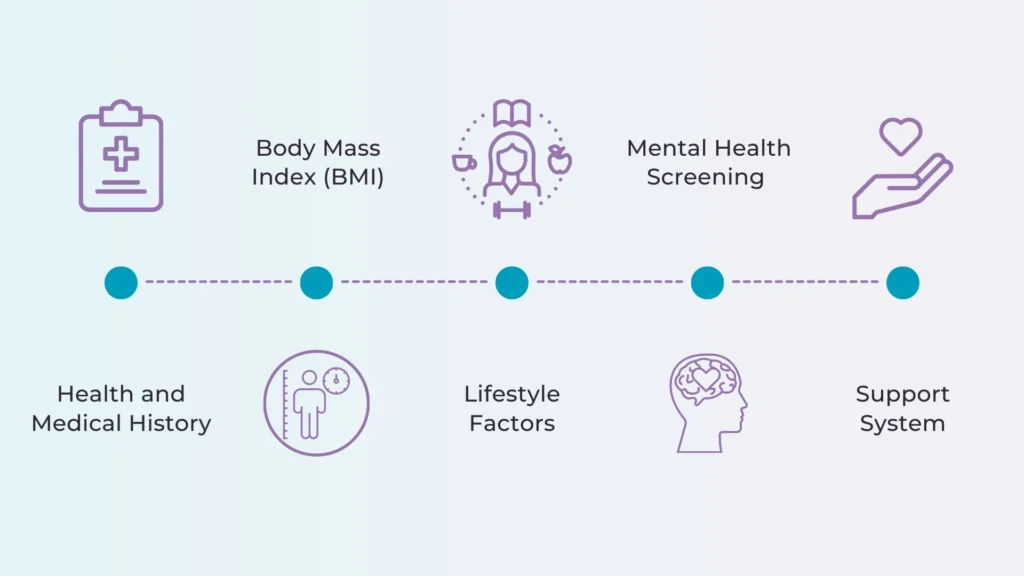
Beyond the age limit, there are additional qualifications to become a surrogate. These rules help keep the surrogate and baby healthy and support a good experience for everyone involved. Here are the most common requirements for surrogates:
Exceptions to surrogate age requirements are rare. In unique situations, some agencies and fertility clinics may evaluate candidates slightly outside the typical range on a case-by-case basis — but this is uncommon, and exceptions depend heavily on the fertility clinic’s own eligibility criteria.

Not meeting the surrogate age requirements doesn’t close every door. The right next step depends on which side of the range you’re on.
Younger than 20.5: The most useful thing to do right now is gather information. Learn how the process works, maintain a healthy lifestyle, and come back when you’re eligible. Many women who begin researching in their early 20s go on to complete their first surrogacy journey in their mid-to-late 20s.
Older than 40.5: Our standard program won’t be a fit — but that doesn’t mean surrogacy is permanently off the table. Some programs and independent matching arrangements consider candidates slightly beyond this range on a case-by-case basis, depending on the fertility clinic’s own requirements.
Surrogacy may not be a personal fit right now, but you can still support families on this journey. Referral programs — including ours — compensate women who recommend qualified candidates. It’s a meaningful way to stay connected to something you care about.
The age limits in surrogacy aren’t arbitrary. They’re grounded in obstetric research, ASRM guidelines, and the practical reality that a surrogate’s health during pregnancy directly affects outcomes for everyone involved.
Physician’s Surrogacy is the only surrogacy agency in the U.S. managed by practicing OB/GYNs. When our physicians set the 20.5–40.5 range, they drew on clinical judgment and the same evidence base used in every other aspect of our screening program — not a number that sounded reasonable. That rigor is why our preterm delivery rate sits 50% below the national average.
If you’re within our age range and want to know whether you qualify, the most direct path is to start your application and let our physicians review your history. No vague timelines, no runaround — a clear answer from a team that has physicians in the room.
Schedule A Consultation!
Meeting a surrogacy company for the first time is an exciting and important step in your family-building journey. This meeting helps everyone understand surrogacy. It shows how the agency supports intended parents and surrogates. Asking the right questions helps clarify services, set expectations, and understand the agency’s approach to gestational surrogacy.
Preparation is necessary when meeting a surrogacy company for the first time. Now’s your chance to gather info through surrogacy questions, also to share your goals, and learn the agency’s approach. Clear communication sets the tone for a successful partnership.
Arriving with the right documentation shows that you’re serious about starting the surrogacy process. This helps the agency provide specific advice and a realistic plan for your journey.
If you’re thinking about egg donation surrogacy, it’s good to know about potential egg donors or your preferences.
Consider bringing a written list of priorities. You can share the qualities you seek in a gestational surrogate or your preferences for screening. Clear documentation keeps the conversation productive and focused.
Establishing expectations and boundaries helps build trust with a surrogacy agency. Discussing these early on ensures alignment throughout your surrogacy journey.
Start by sharing your goals for family building and the qualities you value in a surrogate. Clearly state your preferences. Also, mention any specific needs based on surrogacy laws.
It’s also important to set boundaries regarding communication. Choose how often you want updates and what type of relationship you prefer with your gestational carrier. A good surrogacy agency respects your choices. It also makes sure everyone feels supported.
This is your chance to learn how the agency can guide you through the surrogacy process and what makes their approach unique. By asking focused questions, you can determine whether the agency’s practices align with your needs and priorities to become a parent.
Start by understanding the full service the agency offers. Ask if they manage the whole process. This includes the initial screening, matching, and ongoing support for you and the surrogate. Check if they help with medical coordination, like managing IVF clinics. Also, see if they assist with legal arrangements, such as contracts that follow surrogacy laws in your state.
Do their services include finding screened surrogates? Also, do they manage egg donation surrogacy and offer emotional support during the process? A complete approach confirms the agency can handle all aspects of the process effectively.
The screening process is an important element of any successful surrogacy experience. Ask the agency how they evaluate potential available surrogates. Do they conduct medical, psychological, and background checks? Understanding how they choose screened surrogates helps you trust the quality of matches.
Also, inquire about their matching process. Do they consider factors like communication preferences, personal values, and geographic location? Ask them how they handle surrogacy laws and regional fit.
Understanding the agency’s track record is essential. Ask how long they’ve been working in the surrogacy process and the number of families they’ve helped build. Inquire about their success rates, particularly with matching screened surrogates and completing successful pregnancies.
Check if they have experience with your situation, like egg donation surrogacy or the need for gestational carriers. A proven history of positive outcomes can provide reassurance that you’re in capable hands.
Legal expertise is a main part of any reputable surrogacy agency. Ask how they address a surrogacy contract. How they handle parental rights, and compliance with surrogacy laws by state or country. Discuss whether they work with experienced attorneys to handle the complex legalities, like a pre-birth order or general aspects of gestational surrogacy.
Understanding how they ensure all parties meet legal requirements can save you from future complications. This is especially important if you’re considering surrogacy in states with specific regulations or international arrangements.
Support is a necessary factor in a positive surrogacy journey. Ask about resources available to both intended parents and surrogates. This can include emotional counseling, medical guidance, or regular check-ins during the process.
Find out if they facilitate open communication between parties and how they handle unexpected challenges. Complete support makes things easier for everyone, from the first screening to care after birth.
Transparency about costs is important when working with a surrogacy company. Ask for a detailed breakdown of their fees to understand what’s included. This might cover services such as surrogate matching, the screening process, legal support, and coordination with IVF clinics.
Check if their fees include extras, like extra medical costs or longer timelines. Also find out about financing plans they could offer. Clarity on costs helps you plan financially and ensures there are no surprises along the way.
Ethics builds trust with a surrogacy agency. Ask how they uphold ethical standards when working with both intended parents and surrogates. Inquire about their policies on surrogate compensation, informed consent, and the screening process for gestational carriers.
Their approach to ethical practices focuses on fairness, respect, and everyone’s well-being. Understanding this ensures a positive journey.
Surrogacy can bring unexpected situations. It’s key to know how the agency manages them. Inquire about their protocols for handling complications. This includes medical and legal issues during pregnancy or disagreements between the parties involved.
Discuss their experience in resolving legal disputes and ensuring compliance with surrogacy laws by state. Knowing they have clear strategies in place can provide confidence as you move forward.
One of the most important aspects of the surrogacy process is the relationship between the intended parents and surrogates. Ask if the agency offers opportunities to meet or communicate with potential gestational carriers before a match is made.
Inquire if they facilitate initial conversations to ensure compatibility in communication styles, values, and expectations. Connecting with a surrogate before finalizing the match helps build trust. It can ease concerns, making the process feel more personal and less transactional.
Clear and open communication is essential for a positive surrogacy experience. Ask how the agency ensures transparency between all parties involved, including intended parents, surrogates, and legal representatives.
Ask about their communication methods. Find out if they provide regular updates on medical progress, legal milestones, and emotional support during the journey. Knowing how they manage updates and address concerns helps you feel informed and reassured every step of the way.

After your first meeting with a surrogacy agency, it’s essential to clarify any lingering questions. Follow-up questions help solidify your understanding of their services and ensure there are no unanswered concerns.
Request more details about the surrogacy process. Ask about the timeline, legal support, or any extra services not discussed in the meeting. If you’re thinking about surrogacy and egg donor service, ask how it would work.
Follow-up questions let you see how responsive the agency is. You can also check if they are willing to meet your needs. The best surrogate mother agencies value transparency and clear communication all along the way.
Choosing the right surrogacy agency is an important step in building families through surrogacy. By asking the right questions during your first meeting, you make sure you understand every part of the surrogacy process. Remember, this is your journey, and you deserve a partner who understands your needs and values. They will help you have an easy and successful experience.
What actually disqualifies you from being a surrogate?
Most applicants rule themselves out before anyone medical has seen their file. A past C-section, a slightly elevated Body Mass Index (BMI), a history of managed depression — they scan a checklist, find one item that doesn’t fit, and close the tab.
What disqualifies you from being a surrogate is a narrower list than most agency websites suggest. The difference between a hard stop and a condition that gets physician review is the difference between actually being disqualified and assuming you are.
The screening standard that matters
Before getting into specific conditions, there are non-negotiable foundations that apply at our agency and at every American Society for Reproductive Medicine (ASRM)-aligned program in the U.S.
These conditions are not evaluated case-by-case. They disqualify a candidate regardless of history, management, or circumstance — the medical risk they carry cannot be safely managed in a surrogate pregnancy.
Quick Answer
Hard disqualifiers: HIV-positive status, Hepatitis B or C, active cancer, no prior pregnancy, active substance use disorder, untreated serious psychiatric illness, three or more prior C-sections, and a history of uterine rupture or eclampsia. These apply at every ASRM-aligned agency — not just ours.
This is where most surrogate disqualification questions land. For every condition below, what disqualifies you from being a surrogate depends on the specifics — and a physician review, not a checklist, determines the outcome.
One prior C-section is common among our surrogates and rarely presents an obstacle. Two prior C-sections enters the conversation — ASRM guidelines set a lifetime maximum of three C-sections total, and the surrogate delivery may also require one.
That means candidates with two prior C-sections are still eligible. Those with three are not, because a surrogate pregnancy would push them past the lifetime limit. The clinical concern behind this threshold is placenta accreta risk, which rises with each uterine scar. Read more about C-section history and surrogate eligibility.
A past history of depression does not automatically disqualify you. Current medication status and psychological stability matter far more than past diagnosis alone. Most IVF clinics require surrogates to be off psychiatric medication for at least 12 months before embryo transfer.
Our psychological evaluation assesses current readiness — not just what’s in your records. See the full guide on surrogacy and depression.
Anxiety follows the same framework as depression: current status matters far more than past diagnosis. Many of our surrogates have managed anxiety at some point in their lives. The psychological evaluation looks at your current readiness, support system, and ability to handle the emotional realities of the journey. For a broader view, see our guide on emotional readiness for surrogacy.
An ADHD diagnosis alone does not disqualify you. The issue is stimulant medication. Adderall, Vyvanse, and Ritalin are classified as Category C medications — not recommended during pregnancy, per CHADD’s pregnancy guidance. If you’re currently on stimulant medication, you’d need to discontinue it before transfer — under your prescribing doctor’s supervision. ADHD managed without medication or with non-stimulant alternatives is generally not an obstacle.
A history of HPV does not disqualify you. HPV is the most common sexually transmitted infection in the U.S., and past detection — including a prior abnormal Pap smear — is not grounds for rejection. What matters is your current cervical health. Prior loop electrosurgical excision procedure (LEEP) or cone biopsy procedures are reviewed individually for any effect on cervical competency. Read our full HPV eligibility guide.
Herpes does not disqualify you from being a surrogate. HSV-1 has no impact on a surrogate pregnancy. HSV-2 is managed with antiviral suppression in the final weeks of pregnancy — and if an active outbreak occurs near your delivery date, your OB/GYN may recommend a C-section as a precaution. Full disclosure during medical history review is required. See our herpes eligibility guide.
PCOS doesn’t disqualify you. Gestational surrogacy uses the intended parents’ embryo — not your eggs — so PCOS’s effect on ovulation isn’t the concern. The clinical flag is complication risk: women with PCOS have elevated rates of gestational diabetes and preeclampsia. Well-controlled PCOS with uncomplicated prior deliveries typically doesn’t prevent candidacy.
Severity determines everything with endometriosis. Mild to moderate cases that have been treated are often compatible with serving as a surrogate. The IVF clinic’s reproductive endocrinologist reviews uterine lining receptivity, whether surgery has been performed, and imaging of the current cavity. Severe endometriosis affecting uterine structure is more likely to raise obstacles — but it’s always determined on individual review. See our endometriosis eligibility guide.
Fibroids are common, and most don’t affect eligibility. Location is what matters clinically. Submucosal fibroids — inside the uterine cavity — can interfere with embryo implantation and are the ones our physicians evaluate most carefully. Intramural and subserosal fibroids are generally not disqualifying. A 2024 fibroid study found fibroids associated with elevated rates of hypertensive disorders and preterm labor — factors weighed alongside location and size on imaging.
Preeclampsia history requires careful physician review — but history alone doesn’t rule you out. One mild episode resolved at full term is treated very differently than severe preeclampsia at 28 weeks or a case involving HELLP syndrome. ACOG’s preeclampsia guidance distinguishes how severity and gestational timing affect recurrence risk — and our OB team applies that same framework to your actual delivery records.
Prior gestational diabetes that developed during a prior pregnancy and fully resolved after delivery is not automatically disqualifying. It signals elevated recurrence risk, which a managing OB monitors closely. Managed without serious complications and without recurrence in subsequent pregnancies, it’s typically compatible with our program. Current, uncontrolled Type 2 diabetes is a different situation — that generally disqualifies an applicant.
Thyroid conditions don’t automatically disqualify you. Well-managed thyroid conditions are frequently compatible with serving as a surrogate. Uncontrolled thyroid dysfunction is the concern — ACOG and multiple studies link unmanaged thyroid disease to preterm delivery, hypertensive disorders, and neural tube defects. If your thyroid-stimulating hormone (TSH) levels are stable on medication and prior pregnancies were uncomplicated, thyroid disease typically doesn’t prevent candidacy.
Autoimmune conditions vary widely in their effect on surrogate eligibility. Active lupus with frequent flares is generally disqualifying. Lupus in stable, documented remission is evaluated individually. Well-managed Hashimoto’s with controlled thyroid function is typically not an obstacle. Rheumatoid arthritis depends heavily on which medications are involved and whether they’re pregnancy-safe.
Chronic hypertension alone doesn’t automatically disqualify you, but it requires careful physician review. Chronic high blood pressure — pre-existing, not gestational — raises the risk of preeclampsia, intrauterine growth restriction, and placental abruption during pregnancy. Well-controlled mild hypertension on a pregnancy-safe medication with an uncomplicated prior delivery is often reviewable. Severe, poorly controlled hypertension generally disqualifies an applicant.
A preterm delivery triggers physician review — but the cause matters more than the fact of it. Spontaneous preterm labor with no identifiable cause is reviewed differently than an indicated preterm delivery driven by a specific, non-recurring factor. ACOG distinguishes these two categories — our OB team applies that same framework when reviewing your actual delivery records, not just a form summary.
One miscarriage rarely disqualifies you. Multiple miscarriages — typically three or more — raise a clinical question about recurrent pregnancy loss that our physicians investigate. They look for an identifiable cause: chromosomal, anatomical, immunological, or thrombophilic.
An identified and treated cause is very different from unexplained recurrent loss. Recurrent unexplained loss, particularly if your most recent pregnancy ended in miscarriage, receives close scrutiny during IVF clinic medical screening.
Thrombophilia doesn’t automatically disqualify you, but it requires IVF clinic coordination. Hereditary thrombophilias — Factor V Leiden, antiphospholipid syndrome, and MTHFR mutations — affect how blood clots and can increase pregnancy risk. Eligibility depends on the specific condition, its severity, and whether prior pregnancies involved clotting complications.
Many surrogates with managed thrombophilia are cleared after IVF clinic review, often with a low-molecular-weight heparin protocol during the pregnancy.
Taking GLP-1 medications doesn’t disqualify you. You’ll be asked to discontinue them at least two months before embryo transfer so the medication clears your system. If you’re currently on a GLP-1, the timeline works — you’d stop the medication as your transfer date approaches, under your prescribing doctor’s guidance.
Tubal ligation has no effect on surrogate eligibility. Gestational surrogacy uses IVF embryo transfer — the embryo goes directly into the uterus, bypassing the fallopian tubes entirely. The same applies to women who’ve had their tubes tied after completing their own families.
Tattoos and piercings don’t disqualify you from being a surrogate. Timing matters for recent procedures — tattoos or piercings received within 12 months before your medical screening may require a bloodborne pathogen panel. Fully healed tattoos have no bearing on eligibility whatsoever.
Most agencies have non-medical coordinators make initial eligibility calls. At Physician’s Surrogacy, board-certified OB/GYNs review every applicant’s full medical history — the same physicians who design our screening protocol and consult peer-to-peer with your managing OB throughout the journey.
Only 8% of applicants pass our physician-designed screening — not because we’re exclusionary, but because we’re rigorous.
That rigor is what keeps our preterm delivery rate 50% below the national average. Learn more about our physician-led approach.
These aren’t medical conditions. Each can disqualify you just as effectively as a clinical diagnosis — and unlike medical findings, most are within your control before you apply.
The psychological evaluation is the most misunderstood part of surrogate screening. It’s not designed to catch you out — it’s designed to confirm you’re genuinely prepared for what surrogacy involves.
A licensed psychologist conducts a clinical interview with you and, if applicable, your partner. The evaluation covers your mental health history, motivations, support system, and emotional readiness to hand the baby to the intended parents at delivery.
Conditions that typically disqualify at this stage: active, unstable mental health conditions that are untreated or recently diagnosed; severe postpartum depression that was poorly managed; current major life stressors suggesting the timing isn’t right; or a support system actively opposed to the surrogacy.
None of these are permanent disqualifications. “Not right now” is genuinely different from “never.” Women who reapply after resolving a temporary stressor often become excellent candidates.
Request OB records from prior pregnancies — especially any complicated ones. Having records ready speeds up physician review considerably.
If you have a managed condition, ask your physician to document your current status clearly. A note confirming stable blood pressure or a resolved depressive episode carries real weight in our review.
If you’re currently smoking, start a cessation program. If your BMI is near the threshold, connect with a nutritionist. These aren’t reasons to delay indefinitely — they’re factors worth addressing before you apply.
The fastest way to know if you qualify — or if something disqualifies you — is to apply. Omitting information doesn’t help. Your OB records contain what they contain, and honest disclosure is always the right call.
A checklist is a blunt instrument. It can’t weigh severity, context, or whether a past complication is relevant to a future pregnancy. Clinical judgment makes that call — not a form that checks boxes.
Our physician team reviews every application with that framework. They sometimes approve candidates that other agencies’ checklists would reject. They also sometimes identify risks a clean checklist would miss. Both outcomes protect you.
If you’ve been turned down by another agency, that rejection was almost certainly a checklist decision. Our physicians may reach a different conclusion. Our surrogate requirements page covers what we look for in detail, and our screening process guide walks through exactly what happens after you apply.
Surrogacy sits at the intersection of medical science and one of the most generous decisions a person can make. The women who pursue it deserve a process that takes their health seriously from the first contact — not a system that filters them out before a physician has read their file.
Questions about your medical history don’t resolve with more research — they resolve with a physician looking at your actual records. Our intake process surfaces the eligibility questions that matter, and our OB/GYN team reviews the complex cases that coordinators at other agencies would simply decline.
Physician’s Surrogacy is the only U.S. agency managed by practicing OB/GYNs — not business operators.
Compensation for qualified surrogates starts at $60,000–$75,000+ based on your state, plus a $1,250 pre-screening completion bonus. See the Physician’s Advantage for what this means in practice.
!
Most intended parents arrive at this question quietly, almost reluctantly — does the surrogate share anything with our baby? It’s one of the first things people want to understand, and one of the most misunderstood aspects of the surrogate procedure.
The short answer is reassuring. In gestational surrogacy, your surrogate does not contribute DNA. The baby’s genetics come from the egg and sperm used to create the embryo — yours, a donor’s, or both.
What your surrogate does contribute is something harder to quantify but no less meaningful: a healthy body, a carefully monitored pregnancy, and nine months of extraordinary care. This guide explains what the surrogate procedure actually involves — medically, clinically, and humanly.
Quick Answer
No — in gestational surrogacy, the surrogate does not pass on genetic traits. She isn’t the egg source. The baby’s DNA comes from the intended parents or an egg donor. The surrogate’s role is to carry and support the pregnancy, not to contribute to the child’s genetics.
This question comes up in almost every first conversation with intended parents — and it deserves a direct answer, not a vague one.
In gestational surrogacy, the embryo is created through in vitro fertilization (IVF) using an egg and sperm that are not the surrogate’s. The embryo is then transferred to the surrogate’s uterus. She carries the pregnancy. She does not supply the egg.
That’s the key distinction. Genetically speaking, the surrogate is a carrier — not a contributor. The baby’s hair color, eye color, blood type, and inherited traits all come from the biological material used to create the embryo.
This is also what separates gestational surrogacy from traditional surrogacy, where the surrogate’s own egg is used — creating a genetic connection that adds complexity on every level.
Saying the surrogate “doesn’t pass traits” is accurate, but it can leave intended parents with the wrong impression. Her role isn’t passive.
During pregnancy, the baby develops entirely within the surrogate’s body. Her uterine environment — including her nutrition, hormonal balance, stress levels, and overall health — shapes how the pregnancy progresses. Researchers sometimes call this epigenetics: the way the pregnancy environment can influence how genes are expressed, without changing the underlying DNA itself.
A 2019 review published in Frontiers in Genetics described how the intrauterine environment can affect fetal gene expression patterns through epigenetic mechanisms — without altering the genetic code itself. In plain terms: the surrogate’s health can influence fetal development even though she doesn’t share DNA with the baby.
That’s why surrogate screening isn’t a formality. It’s a clinical necessity.
The distinction matters more than most people realize. Gestational surrogacy — where the surrogate has no genetic connection to the baby — is the overwhelmingly preferred model today for good reason.
The embryo is created through IVF using the intended parents’ egg/sperm or donor gametes — not the surrogate’s. She carries the baby but has no biological relationship to the child. This is the standard model at Physician’s Surrogacy and the most widely practiced form of surrogacy in the United States.
In traditional surrogacy, the surrogate provides her own egg — making her the genetic mother of the child. This creates additional medical, emotional, and legal complexity that most intended parents prefer to avoid. Many states restrict or prohibit this arrangement entirely. See our gestational vs. traditional surrogacy guide for a full comparison.
Gestational surrogacy is one of the most medically sophisticated ways a family can be built — and one of the most human. The process moves through four distinct stages, each with its own clinical and emotional weight.
Your fertility clinic confirms the embryo source — your own eggs and sperm, or a combination with donor material. IVF creates the embryos before or during matching, depending on the program.
Medical and psychological screening confirms the surrogate is ready for pregnancy — before you match. A physician-designed screening protocol evaluates health history, uterine anatomy, psychological readiness, and lifestyle factors.
The surrogate’s uterine lining is prepared for embryo transfer under clinical guidance — typically with hormone medications. The goal is a precisely timed, receptive uterine environment for the transfer window.
A fertilized embryo is transferred to the surrogate’s uterus. Pregnancy tests confirm implantation, and the surrogate receives ongoing prenatal care and clinical monitoring through delivery.
Each stage involves close coordination between the surrogacy agency, the IVF clinic, and the surrogate’s own OB-GYN. That coordination is where most delays — and most surprises — originate in programs that aren’t designed for it.
If the surrogate’s health influences fetal development — and the science suggests it does — then the depth of screening before matching isn’t a bureaucratic detail. It’s a clinical safeguard for your pregnancy.
The ASRM gestational carrier guidelines outline baseline screening requirements for gestational carriers — covering medical history, infectious disease testing, psychological evaluation, and uterine assessment. Programs that go beyond these baselines tend to catch problems earlier and produce better outcomes.
At Physician’s Surrogacy, this screening is designed and overseen by board-certified OB/GYNs — the only surrogacy agency in the U.S. built this way. Our physician-designed screening protocol goes beyond ASRM guidelines. The result is a preterm delivery rate 50% below the national average.
You can read more about how our surrogate screening process works — and what it evaluates — on the dedicated screening page.
Physician’s Surrogacy was built differently. Practicing OB/GYNs designed our screening protocol, oversee clinical communications, and provide peer-to-peer consultation with surrogates’ own managing OBs — throughout the pregnancy, not just at match time.
Preterm delivery rate 50% below the national average.
Learn more on our Physician’s Advantage page.
This comes up alongside the genetics question, often in the same breath. The answer is equally clear.
A gestational surrogate has no genetic claim to the baby and no legal right to keep the child. Before any embryo transfer occurs, a surrogacy contract is drafted and signed by all parties — establishing parental rights, responsibilities, and protections in writing.
In most surrogacy-friendly states, intended parents can also obtain a pre-birth order: a court order establishing legal parentage before the baby is even born. This means your name goes on the birth certificate. The surrogate does not appear.
The ACOG clinical guidance on surrogacy points to the importance of legal clarity before medical procedures begin — including clear contracts and appropriate informed consent from all parties.
Some intended parents add an egg donor to their plan — when the intended mother’s eggs aren’t available or preferred. It changes the logistics, not the core answer on genetics.
With donor eggs, the baby is not genetically related to the intended mother or to the surrogate. The embryo is created from the donor’s egg and the intended father’s (or donor) sperm, then transferred to the surrogate. The surrogate still contributes nothing genetically.
What changes is the coordination. Egg donation adds a third timeline — donor selection, screening, retrieval or shipment — that needs to align with both embryo creation and surrogate readiness. In programs that handle all three separately, this creates waiting gaps that can add months to the process.
Physician’s Surrogacy coordinates with an egg bank partner and affiliate IVF center so these timelines can run in parallel. If you want to explore the egg donation side, Lucina’s egg donation guide covers how the two processes fit together.
No — the placenta acts as a barrier. The surrogate’s bloodstream and the baby’s remain separate throughout pregnancy. Nutrients and oxygen pass through the placenta, but blood does not cross directly between them.
This is standard placental biology, not unique to surrogacy. What it means practically: the surrogate’s blood type doesn’t affect the baby’s.
Her health influences the pregnancy environment — not the baby’s genetics. Factors like prenatal nutrition, physical health, hormonal stability, and stress levels can affect how the pregnancy progresses and how the fetus develops in utero.
Ongoing prenatal care and clinical monitoring throughout the pregnancy isn’t optional — it’s how those factors get managed. At Physician’s Surrogacy, our OB/GYNs maintain peer-to-peer communication with the surrogate’s managing OB so nothing falls through the cracks.
If the intended mother’s eggs are viable, they’re typically used to create the embryo through IVF. The surrogate procedure itself doesn’t change — what changes is who the egg comes from. The surrogate still carries the pregnancy and still has no genetic connection to the child.
Learn more about the full intended parent journey on our become a parent page, or read our complete how surrogacy works guide.
The surrogate procedure works differently depending on which program manages it. Here’s what separates programs that protect intended parents from ones that create late-stage surprises.
Surrogacy sits at the intersection of modern medicine and profound human generosity. And the question that brings so many intended parents here — does a surrogate pass traits to the baby? — deserves a real answer, not a hedge.
In gestational surrogacy, she doesn’t. The DNA is yours (or your donor’s). What the surrogate gives is something else: a healthy body, a carefully monitored pregnancy, and a commitment to carrying someone else’s family into the world. That’s not a small thing.
Choosing the right program to support her — and you — is how you protect that gift. Our team at Physician’s Surrogacy is happy to walk through the surrogate procedure in detail, including what our physician-designed screening covers and what your timeline looks like from consultation through birth.
Schedule a consultation to talk through your embryo plan, match timeline, and next steps.
!
Many women wonder if the procedure of embryo transfer will be painful or uncomfortable. Surrogates can feel more at ease by understanding the process. This knowledge helps build confidence in their role in the surrogate process. Knowing what to expect, how to prepare, and when to seek advice can improve the experience.
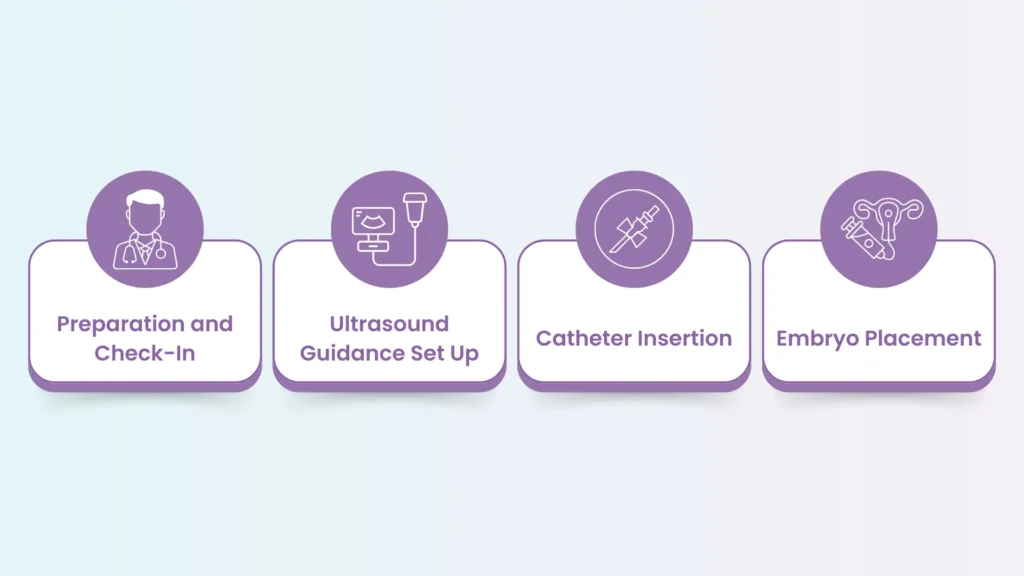
Becoming a surrogate is a big step and is very common for surrogates have many questions about the surrogacy process. The procedure of embryo transfer is an important part of the in vitro fertilization IVF and and plays a key role in achieving pregnancy. For surrogates, understanding each step helps reduce anxiety and ensures better preparation. Here’s what happens:
The procedure of embryo transfer is often misunderstood. Many surrogates worry it might cause pain or discomfort. However, the process is generally quick, minimally invasive, and well-tolerated. Here’s what you need to know:
The recovery period after the procedure of embryo transfer is generally quick. Most surrogates can resume their daily activities shortly after the process, but here’s what to expect during this time:
The procedure of embryo transfer is generally quick and painless, but some steps can help surrogates minimize any potential discomfort. Here are practical tips to make this process of surrogacy as easy as possible:
After the procedure of embryo transfer, mild discomfort or sensations are common. However, it’s important for surrogates to know when to reach out to their doctor. Here are some signs that may require medical attention:

The procedure of embryo transfer can be a stressful experience for many surrogates, not just physically but emotionally as well. Managing stress and emotions is important for both personal well-being and the success of the embryo implantation process. Here are some tips to stay calm and positive during this time:
Understanding the procedure of embryo transfer is important for surrogates as they go through this key step in the surrogacy process. It’s normal to feel some mild discomfort, like cramping or back pain after embryo transfer, but these usually go away quickly and aren’t a sign of anything serious. By staying informed and using relaxation techniques, surrogates can reduce their worries and approach the procedure with confidence.
If you’re at the point of researching a surrogate mother agency, you’ve probably already been through a lot. Failed IVF cycles, medical diagnoses, months of decisions that didn’t lead where you hoped. Surrogacy isn’t the easy path. It’s the one you take when the others have closed. Choosing the right agency is the most consequential decision left in that process, and most people don’t know what to actually look for.
This article breaks down what a surrogacy agency does, how agencies differ from each other in ways that matter, and what questions you should ask before you sign anything.
A surrogate mother agency connects intended parents with a gestational surrogate, then coordinates everything that follows: medical screening, matching, legal contracts, IVF center coordination, pregnancy monitoring, and post-delivery support. The scope is wide. How thoroughly an agency handles each piece is what separates a smooth journey from a nightmare one.
For intended parents, the agency is the single point of accountability. When something goes wrong: a screening delay, a legal complication, a medical question mid-pregnancy. The agency is the entity responsible for resolving it. That makes the quality of your agency the most important factor in your surrogacy experience, well ahead of cost.
Most agencies describe themselves similarly: full-service, compassionate, experienced. Here’s what to look at beyond the language.
There is a pattern that shows up repeatedly in surrogacy journeys booked through large agencies. Intended parents match quickly, then spend months waiting for the surrogate to clear post-match medical screening. The embryo transfer gets pushed back. Timelines slip. Nobody with actual medical authority is overseeing the delay.
This is what some in the industry call the “medical black hole,” the gap between matching and a confirmed pregnancy where progress stalls and no one is accountable. It’s one of the most common sources of frustration and additional cost in surrogacy.
Why It Happens
Most agencies run matching and medical screening sequentially. The surrogate is matched first, then sent for screening. If something comes up in screening, the match collapses and the process restarts. The fix is parallel processing: running clinical coordination and matching simultaneously, which requires physician infrastructure most agencies don’t have.
Physician’s Surrogacy addresses this through its Medically Cleared Program, available through partner IVF centers. Surrogates complete full medical and psychological screening before being matched, eliminating the post-match screening wait entirely. That removes 3 to 5 weeks from the timeline between match and embryo transfer.
Physician’s Surrogacy is the only surrogate mother agency in the United States managed by practicing, board-certified OB/GYNs. That distinction is structural, not cosmetic. Most surrogacy agencies are founded and run by people with business or social work backgrounds who coordinate with outside medical professionals. PS’s physicians are inside the agency.
What that means in practice: the doctors who designed the surrogate screening protocol are also available when your surrogate’s OB has a clinical question during the pregnancy. Instead of a coordinator relaying medical information through a chain of emails, you get physician-to-physician consultation. The people managing your journey have the same credentials as the people managing the pregnancy.
Surrogacy program costs vary widely, and understanding how pricing is structured matters as much as the headline number. Some agencies separate agency fees from surrogate compensation, legal fees, and medical costs, then bill each category as it comes up. Others quote a single program price that covers everything.
Physician’s Surrogacy operates on a fixed and flat model. The price quoted at the start is the price you pay. No hidden invoices, no scope creep. Four program tiers are available, depending on your timeline and coverage needs:
| Program | Price | Match to Baby |
|---|---|---|
| Physician Plus | $193,000 | 12 to 14 months |
| Surrogacy Flat Rate | $145,000 | 18 to 22 months |
| Surrogacy Livebirth Guarantee | $208,000 | 18 to 22 months |
| All Inclusive Bundle | $255,000 | 18 to 22 months |
No fees are charged until a surrogate match is confirmed. If you want to understand what each program includes before your consultation, the full surrogacy cost guide breaks it down. Financing options are available through PS’s financing partners.
Physician’s Surrogacy does not charge program fees until a surrogate match is confirmed. All programs are fixed and flat from that point forward, with no billing surprises at any stage of the journey.
Average matching time: one week. Programs start at $145,000, fixed and flat.
The right questions cut through marketing language quickly. Before committing to any agency, get specific answers to each of these.
Ask whether a licensed physician is involved in surrogate screening and pregnancy oversight, or whether a coordinator manages medical communications on behalf of the agency.
Ask for the median wait time for your last 20 intended parents, not the best-case scenario. “As fast as one week” and “average one week” are very different claims.
Ask for an itemized written breakdown of every cost category. Some agencies quote an agency fee that excludes legal, medical, and complications. Know exactly what you’re agreeing to.
Ask what the process and costs are if a surrogate fails post-match screening or withdraws. Agencies handle this very differently, and the answer directly affects your financial exposure.
Ask who has clinical authority if your surrogate develops complications mid-pregnancy. At most agencies the answer is: nobody on staff. That’s important to know before you’re in the situation.
Some agencies offer financial protection if the journey doesn’t end in a live birth. Ask whether it exists, what it covers, and whether it’s bundled into the program price or priced separately.
Gestational surrogacy is one of the most medically sophisticated ways a family can be built. The agency you choose is responsible for the medical standard of your surrogate’s care, the speed and quality of your match, the legal structure protecting both parties, and what happens when anything goes sideways.
Choosing a surrogate mother agency on price alone is a mistake most people don’t realize they’ve made until they’re already six months into a process that isn’t working. The questions above aren’t meant to be adversarial. They’re the ones a good agency will answer clearly and specifically, because they’ve built systems to back them up.
Physician’s Surrogacy is the only agency in the country where practicing OB/GYNs manage the program. If you want to understand what that means for your specific situation, a consultation is the right starting point. There are no fees until a match is confirmed.
One consultation is enough to understand the difference between a physician-led surrogate mother agency and every other option. Bring your questions. Our team answers them specifically.
Average match time: one week. Preterm delivery rate 50% below the national average. No fees until your match is confirmed.
Common questions intended parents ask when evaluating a surrogate mother agency.
If you’re seriously considering becoming a surrogate in California, you already know this isn’t a casual decision. You’re wondering whether you actually qualify — whether your age, your health history, your prior pregnancy, or something else might disqualify you before you even get started.
California has some of the most straightforward surrogate requirements in the country, and most women who’ve had at least one healthy pregnancy are closer to qualifying than they think.
At Physician’s Surrogacy, the nation’s only OB-managed surrogacy agency, our in-house physicians review every application individually — not against a rigid checklist. This guide covers every major surrogate requirement in California clearly, so you can walk into any agency conversation already knowing where you stand.
California’s surrogate requirements follow guidelines established by the American Society for Reproductive Medicine (ASRM) and are further shaped by the individual standards of each surrogacy agency and the fertility clinic performing the embryo transfer.
Here’s what every prospective surrogate needs to meet.
At Physician’s Surrogacy, surrogates must be at least 20.5 years old at the time of application and no older than 40.5.
The lower limit reflects the legal requirement that surrogates be old enough to enter binding contracts. The upper limit reflects clinical data on obstetric risk — complication rates rise meaningfully after 40, which is why most physicians set a boundary in this range.
Some agencies cap eligibility at 40 with no flexibility. Our OB/GYN team evaluates experienced surrogates with strong obstetric histories individually, which is why our window extends slightly beyond what many agencies publish. For a detailed breakdown, see our surrogate age requirements guide.
Every surrogacy agency and fertility clinic requires that you’ve already carried and delivered at least one child.
A prior successful pregnancy confirms your body can carry a pregnancy to term, reduces the unknowns around uterine receptivity, and gives the agency and intended parents confidence in the medical outcome. It also means you’ve experienced pregnancy and postpartum firsthand — you know what you’re choosing.
C-section deliveries count. Miscarriages, even multiple, don’t automatically disqualify you — but your full pregnancy history will be reviewed during medical screening. For more on how complications are evaluated, see our guide on common surrogacy disqualifications.
Surrogates must be in good overall health, free from chronic conditions that could complicate pregnancy. During the medical screening process, a physician reviews your full health history, current medications, and any past pregnancy complications.
Our BMI threshold is up to 35. Candidates with a Body Mass Index (BMI) between 35 and 37 may still apply — our physicians review those applications individually, and we can connect you with nutritional support if needed.
A higher BMI carries documented increases in gestational diabetes, preeclampsia, and cesarean delivery risk as outlined by ACOG’s guidance on obesity in pregnancy, which is why the threshold exists — but a physician review, not a number alone, determines eligibility. We publish no minimum BMI.
Conditions like well-controlled hypothyroidism or a history of managed anxiety don’t automatically disqualify you. What matters is your current health status and whether our physicians determine you’re a safe candidate for a monitored pregnancy. For the full picture, our surrogate mother requirements page covers every criterion in detail.
Surrogates must not currently receive means-tested government financial assistance programs such as Medicaid, SNAP, or housing subsidies.
This requirement exists because surrogate compensation can affect benefit eligibility — and because agencies want to confirm that financial stability, not financial pressure, is driving the decision.
As ASRM’s patient resource on third-party reproduction notes, financial independence is a standard component of gestational carrier screening across reputable programs.
Surrogates must live in a stable home environment — and neither smoke nor live with anyone who smokes.
Secondhand smoke exposure during pregnancy is a documented risk factor for adverse outcomes including preterm birth and low birth weight, according to the CDC. This requirement applies to the household, not just the surrogate personally.
To become a surrogate in California, you must be a U.S. citizen or a legal permanent resident. This is required for the surrogacy contract to be legally enforceable and for the pre-birth order process — the legal mechanism that places the intended parents’ names on the birth certificate before delivery.
California’s Family Code Section 7962 governs gestational surrogacy agreements and establishes the framework for pre-birth orders and independent legal representation.
Surrogacy involves carrying a pregnancy with the full intention of relinquishing the child after birth. That’s emotionally complex, even for women who feel completely settled on the decision.
An independent licensed mental health professional evaluates your motivations, support system, understanding of the process, and emotional readiness. The American College of Obstetricians and Gynecologists (ACOG) identifies psychological evaluation as a recommended component of responsible gestational carrier screening. This step protects you as much as it protects the intended parents.
California’s surrogate-friendly legal framework makes it one of the most protective states in the country for gestational carriers.
Gestational surrogacy is one of the most medically sophisticated ways a family can be built — and one of the most human — which is why the legal protections California provides matter so much for everyone involved.
If you’re comparing agencies to work with in California, our best surrogacy agencies in California guide breaks down how the top options compare on screening standards, compensation, and support.
Quick Answer
California surrogate compensation ranges from $55,000 to $75,000+ in a fixed-rate package. At Physician’s Surrogacy, your total compensation is disclosed and agreed upon before you sign — not assembled piece by piece as the journey progresses. You know exactly what you’ll earn from day one.
At Physician’s Surrogacy, we use a fixed-rate compensation model. That kind of upfront transparency isn’t standard in the industry, and it matters when you’re making a decision this significant.
A $1,250 pre-screening completion bonus is also included, along with an additional $500 bonus for surrogates who opt into our Medically Cleared Program — a fast-track option that gets you transfer-ready in as little as four weeks.
For a full breakdown of what California surrogates earn, visit our surrogate compensation page.
Most surrogacy agencies conduct surrogate screening through a combination of a self-reported application and a third-party medical review. That process works, but it has gaps — primarily that no one with direct clinical authority is evaluating the records.
At Physician’s Surrogacy, screening is designed and managed by in-house board-certified OB/GYNs — the same physicians who oversee your pregnancy monitoring once you’re matched. Our proprietary OB-designed screening process goes beyond ASRM guidelines, reviewing your full obstetric history, current health status, psychological readiness, and compatibility with the fertility clinic that will perform the embryo transfer.
The result: our preterm delivery rate is 50% below the national average. That outcome isn’t incidental — it’s what physician-designed screening produces when it goes deeper than a checklist. We’re the only surrogacy agency in the U.S. managed by practicing OB/GYNs, and that distinction matters for your safety, not just for positioning. Learn more on our Physician’s Advantage page.
Once you submit an application, here’s what the process generally looks like at Physician’s Surrogacy:
Your initial application is reviewed against the requirements above. If you meet the baseline criteria, you move to screening. Our team responds within 1–3 business days.
Our OB/GYN team reviews your health records and full obstetric history. A licensed mental health professional conducts your psychological evaluation via video call.
Once cleared, you’re matched with intended parents. Our average time from consultation to confirmed match is one week — compared to the industry standard of six to twelve months.
Both parties review and sign the surrogacy contract with independent legal representation. Your attorney is paid for by the intended parents.
The partner fertility clinic performs the embryo transfer. Your pregnancy is monitored closely from transfer through delivery, with our OB/GYN team available for peer-to-peer consultation with your delivering physician at any point.
We provide three to six months of continued coordinator access and medical follow-up after birth — because the journey doesn’t end at delivery.
Meeting the surrogate requirements in California is the starting point, not the finish line.
Surrogacy sits at the intersection of modern medicine and profound human generosity, and the agency you choose shapes every part of that experience — how you’re screened, how quickly you’re matched, how clearly you’re communicated with, and how well you’re supported through the pregnancy and after.
Physician’s Surrogacy is the only OB-managed surrogacy agency in the country. Our physicians don’t review your file once and hand it off — they design the screening process, monitor your pregnancy communications, and remain available for peer-to-peer consultation with your delivering OB if anything comes up.
If you meet the requirements above and want to understand what it looks like to work with an agency where physicians are actually running the program, submit your application and talk to our team.
!
Copyright 2026 © All rights reserved