
The cost of surrogacy in California is higher than anywhere else in the country — and most families don’t find out by how much until they’re already in the process.
A complete gestational surrogacy journey here typically costs between $150,000 and $200,000+. That’s $10,000–$30,000 above the national average.
But the premium buys something specific: the strongest legal framework for intended parents in any U.S. state, Pre-Birth Orders that name you as the legal parent before delivery, and access to top-ranked fertility clinics with published outcome data.
Higher costs here are structural, not arbitrary. This guide breaks down where that money goes, what drives variation within the state, and how to avoid the insurance mistakes that add $15,000–$25,000 to budgets that didn’t plan for them.
For a national overview of how much surrogacy costs across the U.S., see our general pricing guide.
Schedule your complimentary consultation →
Quick Answer
A complete California surrogacy journey costs $150,000–$200,000+ in 2026. That total covers agency fees, surrogate compensation, IVF and medical care, legal work (including Pre-Birth Orders), and insurance. At Physician’s Surrogacy, intended parents pay no agency fees until a match is confirmed.
While a typical U.S. surrogacy journey runs $150,000–$220,000, California sits toward the higher end and frequently exceeds it. That premium covers stronger legal security, higher surrogate compensation, and access to top-tier fertility clinics.
Talk to a physician about your journey →
Here’s how that budget breaks down in California specifically:
| Cost Category | California Range (2026) | What It Covers |
|---|---|---|
| Agency & Program Fees | $30,000–$50,000 | Screening (medical/psychological), case management, coordination. PS charges $0 until match confirmed. |
| Surrogate Compensation | $75,000+ | Flat-rate comp, monthly allowances, milestones (CA is a high-comp state) |
| IVF & Medical | $30,000–$50,000 | IVF cycles, meds, embryo transfer, PGT-A, prenatal monitoring. SB 729 may cover some IVF costs. |
| Legal Expenses | $10,000–$15,000 | GCA drafting, Pre-Birth Order filing, independent counsel for both parties |
| Insurance & Contingency | $5,000–$25,000+ | Surrogacy-friendly policy or gap coverage if surrogate’s plan has exclusions |
| TOTAL (California) | $150,000–$200,000+ | Full journey: match to live birth |
* Ranges are estimates. Your final budget depends on insurance coverage, number of IVF attempts, surrogate experience, and specific medical needs.
Those ranges reflect the broader California market — where costs are variable, billing is milestone-based, and final totals often exceed the initial quote. At Physician’s Surrogacy, the model is different.
All our quotations are Fixed and flat: no hidden costs, no disputes, and no agency fees until your match is confirmed. There are four programs, each designed for a different situation.
| Program | Price | Timeline | Best For |
|---|---|---|---|
| Surrogacy Flat Rate | $145,000 | 18–22 months | Standard fixed-and-flat program. Families with viable embryos ready to proceed. |
| Physician Plus | $193,000 | 12–14 months | Priority access at every stage. 10:1 case manager ratio. Birth concierge. Fastest path to a live birth. |
| Surrogacy Livebirth Guarantee | $208,000 | 18–22 months | All-inclusive GC IVF expenses. Unlimited transfers. 80% refund if live birth not achieved after 3 transfers. |
| All Inclusive Bundle | $255,000 | 18–22 months | Adds donor eggs to the Livebirth Guarantee. Full end-to-end coverage for families starting from scratch. |
* All programs include OB/GYN-managed surrogate screening, one-week average matching, and Fixed and flat pricing with no agency fees until match confirmed.
In California, the Surrogacy Flat Rate at $145,000 sits below the state average for comparable journeys — with physician oversight included as standard, not priced as a premium. The Livebirth Guarantee at $208,000 is worth examining closely for California families: in a state where a single failed transfer and insurance complications can push unbundled costs past $280,000, the all-in protection and unlimited transfer coverage can save families up to $60,000 compared to standard unbundled costs.
California is a high-compensation state. At Physician’s Surrogacy, surrogates start at $75,000+ in flat-rate compensation — reflecting California’s position as a high-demand, high-cost state.
That reflects both the cost of living in major California markets and the strong demand for California-based surrogates from domestic and international intended parents.
Beyond the flat-rate amount, surrogate compensation includes monthly wellness allowances, maternity clothing, travel and mileage, lost wages or childcare, and additional pay for C-section delivery or carrying multiples.
Experienced surrogates who have completed prior journeys earn more on each subsequent journey. For a full breakdown, see our compensation guide.
Insurance is where California surrogacy budgets go sideways. Getting this right early can save $15,000–$25,000. Getting it wrong can add that much without warning.
If a surrogate uses her personal health insurance for the pregnancy, the insurer may legally place a lien on her compensation to recover costs. That creates unexpected liability for intended parents who relied on a plan they thought was safe.
If your surrogate has an ACA plan that does not exclude surrogacy and carries no lien risk, you may only need to cover her deductible and out-of-pocket costs. That’s typically $6,000–$9,000.
If her insurance won’t cover a surrogate pregnancy, a separate maternity policy adds $15,000–$25,000+ to the budget. For a full checklist of what to verify, see our guide on surrogacy insurance coverage.
Effective January 1, 2026, SB 729 mandates IVF coverage for many large-group insurance plans issued or renewed in California.
This can meaningfully reduce the IVF portion of a California surrogacy budget — but only if the intended parent’s employer plan falls under the mandate. Self-insured plans and small-group plans may be exempt. Confirm coverage directly with your insurer before budgeting.
Insurance lien risk, SB 729 eligibility, and pre-birth order timing all require expert guidance from day one. Our onsite OB/GYN team and Fixed and flat pricing mean no surprises — clinical or financial — at any stage of your California journey.
Standard program starts at $145,000 — Fixed and flat, with OB/GYN oversight included.
No agency fees until your match is confirmed.
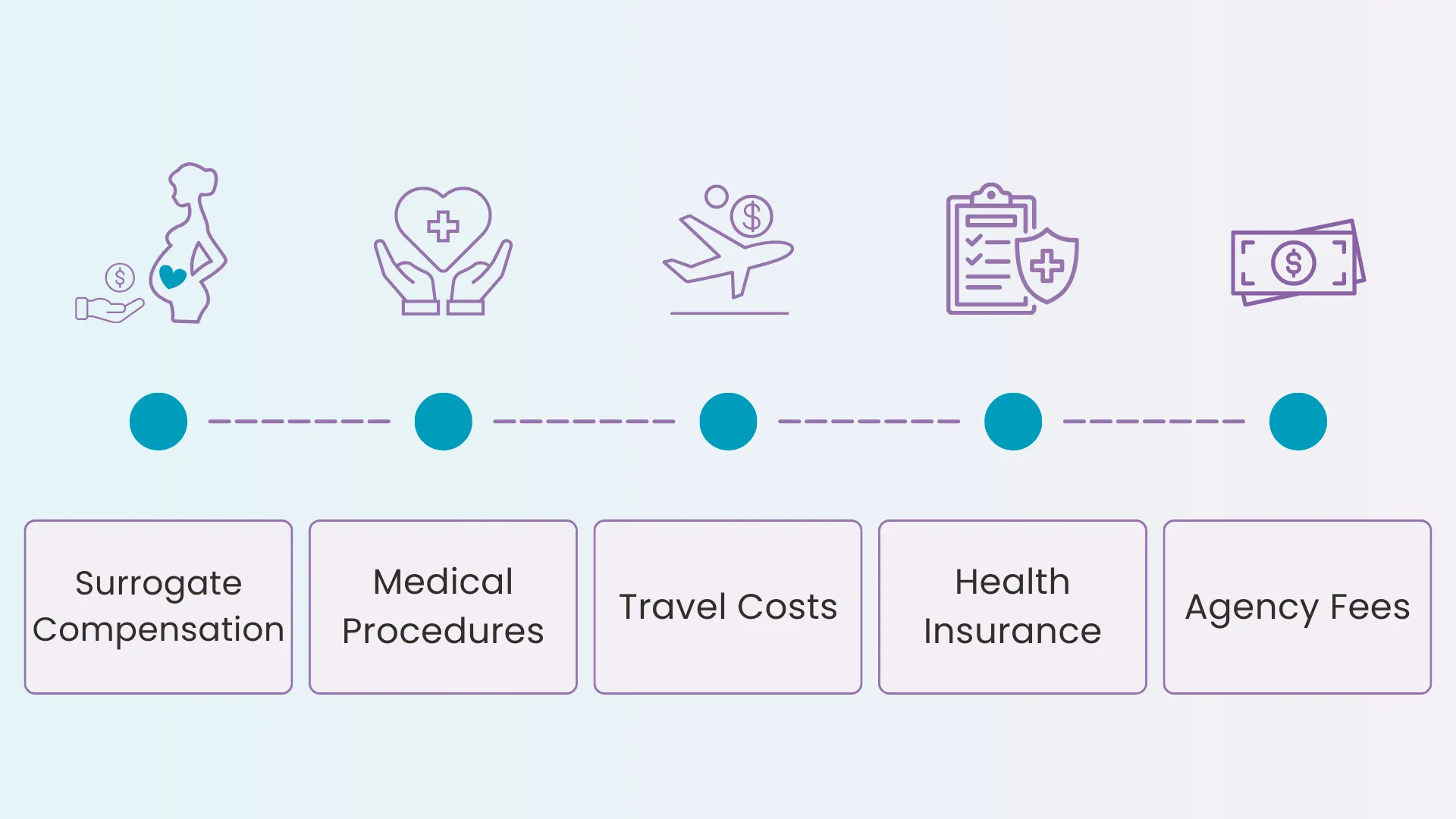
Several variables shape where your California surrogacy budget actually lands. Each one contributes to the total in ways that are hard to predict without a case-specific review.
California’s surrogacy laws are the most developed in the country. That legal infrastructure is a major reason families choose to build here, even when the California surrogacy cost runs higher than other states.
Under California Family Code Sections 7960–7962, intended parents obtain a Pre-Birth Order that establishes parental rights before the baby is born.
Both parents are named on the birth certificate at delivery. No post-birth adoption steps. No court hearing required. This applies to all family structures: married couples, unmarried couples, single parents, and LGBTQ+ families.
For a full walkthrough of the legal process, see our guide to California surrogacy laws.
California does not limit surrogacy to married heterosexual couples with a genetic connection to the child. Single parents, same-sex couples, and families using donor gametes all access the same legal pathways.
That’s not the case in every state. Texas, for example, limits its validated gestational surrogacy agreement pathway to married couples. California’s inclusivity drives demand — and, by extension, cost.
Legal fees for a California surrogacy journey typically run $10,000–$15,000. That covers drafting the Gestational Carrier Agreement (GCA), filing the Pre-Birth Order, and independent legal representation for both the intended parents and the surrogate.
Both parties must have separate attorneys under California law. That requirement adds cost, but it protects both sides.
California is home to some of the highest-ranked fertility clinics in the country. According to CDC Assisted Reproductive Technology data, many California clinics consistently report outcomes at or above national averages.
High success rates can reduce total cost by minimizing the need for multiple IVF cycles. That’s part of what draws intended parents to California clinics, even when per-cycle costs are higher than in other states.
A single IVF cycle in California runs approximately $15,000–$30,000. The total clinical budget for a surrogacy journey typically reaches $30,000–$50,000, since you’re covering medical care for two patients: the surrogate and yourself or an egg donor.
At Physician’s Surrogacy, our onsite OB/GYNs oversee the medical side of your California journey. Our physicians order optional antenatal testing — Non-Invasive Prenatal Testing (NIPT), Nuchal Translucency (NT) Sonogram, AFP Quad Screen, and Fetal Echocardiogram.
They also conduct peer-to-peer consultations with your surrogate’s managing OB if complications arise. That clinical involvement is unavailable at coordination-only agencies.
Our preterm delivery rate runs 50% below the national average. In a state where surrogacy costs are already high, that kind of clinical oversight can also prevent the NICU costs that nobody budgets for.
Modestly, yes. The $150,000–$200,000+ range applies statewide. But markets within California differ.
Los Angeles and the San Francisco Bay Area tend toward the higher end. Surrogate compensation expectations, clinic fees, and logistics costs are all influenced by the local cost of living.
Southern California markets — San Diego, Orange County, and the Inland Empire — are generally comparable in overall cost but may offer slightly more competitive surrogate availability.
Physician’s Surrogacy is headquartered in San Diego and coordinates a high volume of California journeys. Our established clinical partner network in the state means fewer logistical surprises and faster coordination.
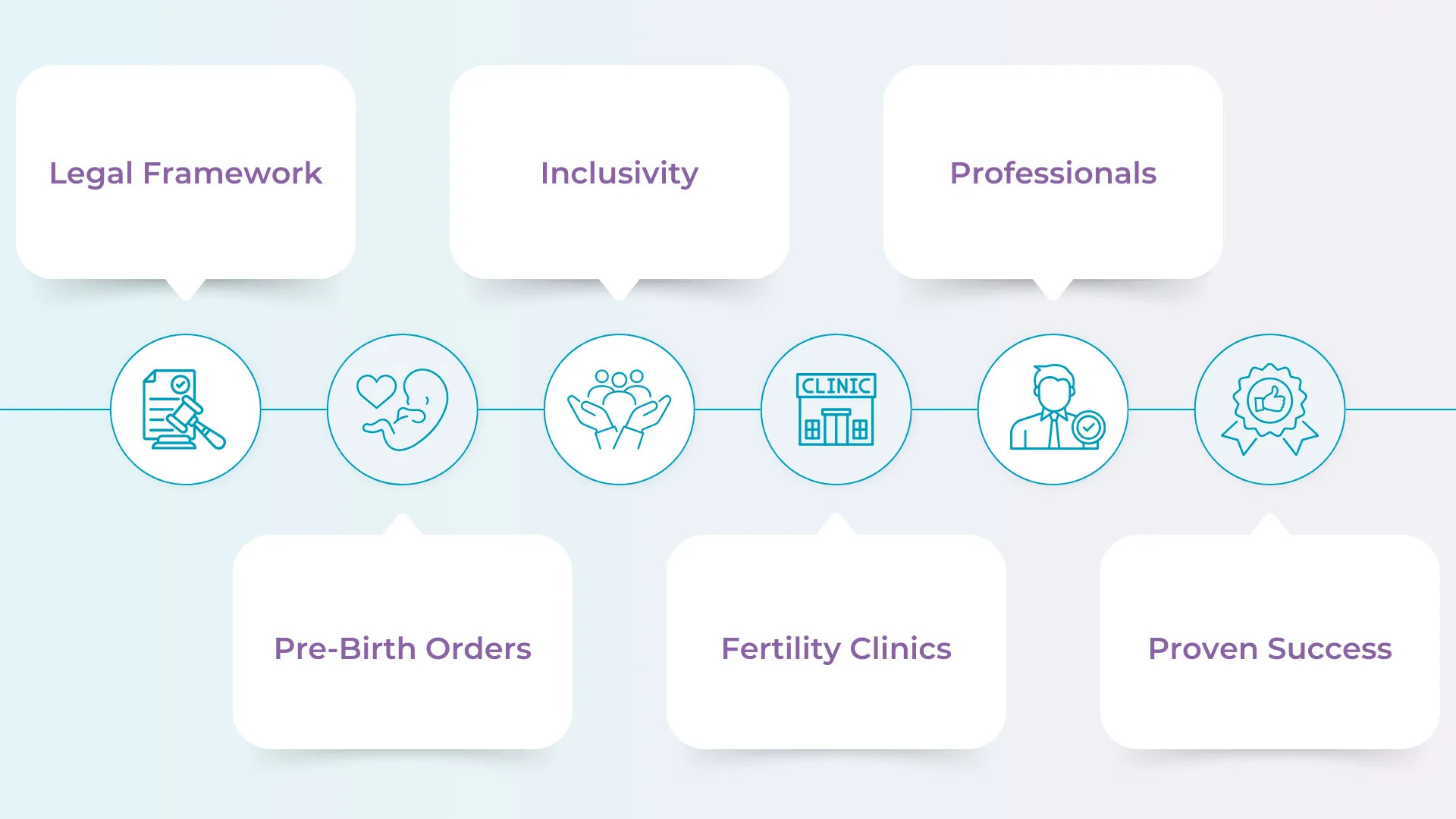
California surrogacy runs $10,000–$30,000 above what you’d pay in states like Texas, Florida, or Illinois. The premium is not arbitrary.
Quick Weigh-Up
California vs. lower-cost surrogacy states
What California gives you
What to think about
What the state doesn’t give you, however, is any guarantee about how an agency runs the clinical side of your journey. That’s where the choice of agency — not state — becomes the cost variable most families underestimate.
Physician’s Surrogacy
Typical Agency
Start planning financial assistance early. Each option below requires different lead times.
The cost of surrogacy in California regularly exceeds $200,000 at many agencies — and the final number often grows as milestone fees, rebilling, and insurance gaps stack up.
That’s the part most intended parents don’t see coming. The initial quote covers the expected path. The unexpected path — a failed transfer, a surrogate withdrawal, an insurance lien — is what pushes costs past what you planned for.
Our fixed and flat programs are built to close that gap. The Surrogacy Flat Rate at $145,000 puts physician-managed surrogacy below the California average, with no agency fees until your match is confirmed.
The Surrogacy Livebirth Guarantee at $208,000 covers all GC IVF expenses with unlimited transfers and an 80% refund policy if a live birth isn’t achieved after three transfers — the kind of financial protection that becomes very relevant in California, where a single additional cycle can cost $20,000–$30,000 more.
Our onsite OB/GYN team oversees your journey from surrogate screening through delivery, right here in San Diego. We match intended parents with pre-screened surrogates in an average of one week. And our physician-designed screening produces a preterm delivery rate 50% below the national average, which in California means fewer NICU costs and fewer budget surprises at the finish line.
From the standard Surrogacy Flat Rate to the All Inclusive Bundle with donor eggs and a live birth guarantee — every Physician’s Surrogacy program is Fixed and flat, OB/GYN-managed, and starts with no agency fees until your match is confirmed.
No agency fees until your match is confirmed. No hidden costs at any tier.
Get your personalized California cost estimate with no obligation.
!
You’ve probably already done the math on IVF. You may have done the rounds on fertility treatments that didn’t work. Now you’re asking a harder question — how to find a surrogate mother who is medically qualified, legally protected, and genuinely right for your family. That question deserves a direct, honest answer.
Gestational surrogacy is one of the most medically sophisticated ways a family can be built — and one of the most human. This guide walks you through every path to finding a surrogate, what she must qualify for medically, how to choose the agency behind her, and what happens after you match — so you can move forward with clarity instead of anxiety.
Before you start looking for a surrogate, you need to understand the two types. The distinction matters legally, medically, and emotionally — and it determines everything that follows.
In gestational surrogacy, the surrogate carries an embryo created from either your eggs, your partner’s eggs, or a donor egg. She has no genetic connection to the baby. This is the standard model used by reputable agencies today, and it’s the only type we work with at Physician’s Surrogacy.
In traditional surrogacy, the surrogate’s own egg is used, making her the biological mother of the child she’s carrying. That creates real legal complexity in most U.S. states. Most licensed agencies no longer offer traditional arrangements for this reason. Read our breakdown of gestational vs. traditional surrogacy if you want both options compared in detail.
Talk to your reproductive endocrinologist (RE) before anything else. They can confirm if you or your partner have viable eggs, which determines your embryo path — and your path to finding a surrogate.
There are three real paths to finding a surrogate: through an agency, through your personal network, or entirely on your own. Each has genuine trade-offs.
An agency recruits, screens, and matches surrogates on your behalf. When you receive a surrogate mother profile, that woman has already passed medical, psychological, and background screening. You’re not starting from zero — you’re choosing from a pool of qualified candidates.
Agencies also coordinate between your fertility clinic, your attorneys, the escrow company, and the surrogate herself. For most intended parents, that coordination is what makes the journey manageable rather than overwhelming.
The quality gap between agencies is real. See the questions to ask below — they’ll help you tell a strong agency from a weak one quickly.
Some intended parents ask a family member or close friend to carry for them. This can work, but it introduces complications that stranger arrangements don’t.
The surrogate still needs to pass the same medical and psychological screening as any agency candidate. If she doesn’t qualify medically, you’re back to searching — and the rejection is now personal.
Think carefully about the long-term relationship, too. After the baby is born, you’ll continue seeing this person at holidays and milestones. The legal and emotional boundaries need to be even clearer than they would be with a stranger. Read more about surrogacy with family members before deciding.
You can pursue surrogacy without an agency. This means finding your own candidate, hiring your own attorneys, and coordinating your own medical team and escrow arrangements.
This path is legal, and some people complete it successfully. But it’s not a cost-saving shortcut — attorney fees, psychological evaluations, and medical screenings still apply. And if something goes wrong mid-journey, there’s no agency support to fall back on. Read our full breakdown of independent surrogacy pros and cons before deciding.
Not every woman who wants to be a surrogate can be one. Reputable agencies and fertility clinics enforce strict medical and lifestyle requirements to protect both the surrogate and your future child.
| Requirement | Standard at Physician’s Surrogacy | Why It Matters |
|---|---|---|
| Age | 20.5–40.5 years old | Confirms physical and emotional readiness |
| Prior Pregnancy | At least one successful, uncomplicated birth | Proven ability to carry to term |
| BMI | Below 35; 35–37 evaluated case-by-case | Reduces pregnancy complication risk |
| Non-Smoker | No nicotine or tobacco use | Nicotine raises preterm delivery risk |
| Prior C-Sections | Typically no more than two | Multiple C-sections raise uterine rupture risk |
| Mental Health | Cleared by licensed psychologist | Confirms emotional readiness and stability |
| Infectious Disease | Clear infectious disease panel | Protects embryo and pregnancy health |
| Stable Home Life | Supportive environment, reliable transport | Appointments require consistent availability |
These aren’t arbitrary hurdles. They reflect decades of clinical experience in reproductive medicine. The ASRM surrogate screening guidelines publishes surrogate screening guidelines that reputable agencies follow — and the best agencies exceed them.
When evaluating an agency, ask directly how their screening protocol compares to ASRM standards. An agency that can’t answer that question clearly is one worth researching further.
The agency is the most consequential decision you’ll make in this process. It shapes who you match with, how your surrogate is monitored, what happens if complications arise, and how supported you feel from match to delivery.
Here’s what separates strong agencies from the rest — and what to ask when evaluating your options.
For a full checklist, see our guide on best surrogacy agency features. We also cover what makes an agency vs. independent surrogacy different if you’re still weighing that decision.
Physician’s Surrogacy is the only surrogacy agency in the United States managed by practicing, board-certified OB/GYNs. That’s not a marketing claim — it changes how every clinical decision in your journey gets made.
At most agencies, medical questions go through a coordinator who escalates to the fertility clinic when something comes up. At Physician’s Surrogacy, our in-house physicians designed the surrogate screening protocol, review clinical communications after every appointment, and can consult peer-to-peer with your surrogate’s managing OB when needed.
The result is a preterm delivery rate 50% below the national average — and a surrogate pool that’s the largest active, pre-screened pool in the country. Our average match time is one week, compared to an industry standard of 6–12 months. Learn more about what drives that difference on our Physician’s Advantage page.
Once you’ve chosen an agency, here’s what the actual process looks like from the inside.
Your reproductive endocrinologist confirms if you need a surrogate only, or a surrogate plus an egg donor. This determines your embryo creation path before matching can begin.
Research agencies, ask the questions above, and sign your agency agreement. At Physician’s Surrogacy, no fees are owed until your match is confirmed — you’re not paying before you have a surrogate.
Your agency presents profiles of pre-screened surrogates matched to your preferences. Each profile includes medical history, prior pregnancy outcomes, lifestyle details, and psychological clearance status.
Before committing, you’ll meet your potential surrogate — typically by video call. This is your chance to ask questions, share your story, and see if the match feels right on both sides.
Your surrogate completes a full medical evaluation at your fertility clinic. If she’s in our Medically Cleared Program, much of this is done before matching — removing the post-match screening wait that delays most journeys.
Both parties work with separate reproductive attorneys to draft and sign the surrogacy agreement. This document defines compensation, medical decision authority, contact expectations, and parental rights. See our overview of surrogacy contracts and parental orders.
Once contracts are signed, your fertility clinic coordinates the embryo transfer with your surrogate’s cycle. Your clinic manages this stage — your agency handles coordination and keeps communication flowing.
Your surrogate carries the pregnancy with ongoing agency and physician support. After delivery, parental rights transfer per your pre-birth order. For a full cost picture, see our surrogacy cost breakdown.
Cost is one of the first questions intended parents ask — and one of the hardest to answer without knowing the full scope of your journey. The honest answer: surrogacy in the United States typically runs $140,000–$200,000+ all-in when you add agency fees, surrogate compensation, legal fees, fertility clinic costs, and insurance.
Here’s how the major cost categories break down.
| Cost Category | What It Covers |
|---|---|
| Surrogate compensation | $60,000–$75,000+ depending on state and experience |
| Agency fees | Matching, coordination, ongoing support; no fees owed at Physician’s Surrogacy until match is confirmed |
| Fertility clinic / medical | IVF, embryo transfer, prenatal care, delivery; billed separately by your fertility clinic |
| Legal fees | Surrogacy contract, pre-birth order; both parties require independent legal representation |
| Insurance | Surrogate health coverage, life insurance for surrogate; varies by state and existing policy |
| Travel and miscellaneous | Travel to medical appointments, maternity clothing allowance, other surrogate support expenses |
At Physician’s Surrogacy, our Surrogacy Flat Rate program is $145,000. Once your program is set, your price is fixed. Surrogate compensation is included in the program price. If you need help planning the financial side, read about your options for financing your surrogacy journey.
Quick Answer
Physician’s Surrogacy’s Surrogacy Flat Rate program is $145,000, with $0 agency fees until your match is confirmed. Surrogate compensation of $60,000–$75,000+ is included in the program price, and your price is fixed once your program is set.
Many intended parents explore multiple financing sources rather than relying on a single one. Common options include personal loans, fertility-specific financing programs, savings, agency payment plans, and grants from nonprofit organizations that support assisted reproduction. Crowdfunding has also helped some families close the gap.
None of these paths is right for everyone — they depend on your financial picture, credit, and timeline. Our surrogacy financial planning guide walks through each option in detail.
Surrogacy law varies by state — and that variation affects how parental rights are established, how pre-birth orders work, and what the birth certificate process looks like at delivery.
Surrogacy-friendly states like California, Nevada, and Washington have well-established legal frameworks that protect intended parents. Other states require post-delivery proceedings. See our surrogacy laws by state to check where your surrogate’s state of residence falls.
Both you and your surrogate mother must have separate, independent legal representation. One attorney representing both parties is a conflict of interest — and in many states, it’s unenforceable. This is non-negotiable in any legitimate arrangement.
Matches do occasionally fall through — a medical screening failure, a change in the surrogate’s circumstances, or a mismatch in expectations that becomes clear during the meeting process.
With a reputable agency, a failed match means you return to the pool — not back to square one. With an independent arrangement, you may have to restart the search entirely.
Ask any agency you’re evaluating what their re-matching process looks like and how common it is. Agencies that can’t give you a clear answer may not have a defined protocol.
Surrogacy is one of the most common paths to parenthood for same-sex male couples and single men. The legal and medical steps are largely the same, with a few additional considerations around sperm source and parental rights establishment.
For gay couples, both partners can contribute sperm to create embryos — some couples create embryos from each partner’s sperm and transfer one of each. For a detailed walkthrough, read our guide on surrogacy for single men and our overview of LGBTQ+ surrogacy options.
Surrogacy sits at the intersection of modern medicine and profound human generosity. Finding a surrogate mother who is medically qualified, emotionally ready, and right for your family is the work of the agency behind her — and that’s where Physician’s Surrogacy is different.
We’re the only surrogacy agency in the United States managed by practicing OB/GYNs. Our physicians designed the screening protocol, monitor clinical communications, and can consult directly with your surrogate’s OB if complications arise. That’s how we achieve a preterm delivery rate 50% below the national average — and match you with a pre-screened surrogate in an average of one week.
If you’re ready to take the next step, schedule a free consultation with our team. We’ll walk you through where you are, what your path looks like, and answer every question you’ve been holding.
Schedule A Consultation!
You’ve matched with your surrogate. She’s passed a rigorous screening process, committed months of her life to your family, and now you want to show her how much that means.
The problem? Most gift guides for surrogate mothers are generic lists of bath bombs and gift cards — surface-level gestures for an anything-but-surface-level relationship. The best gifts for a surrogate mother reflect her stage of pregnancy, her personality, and what she actually needs.
At Physician’s Surrogacy, we’ve supported intended parents through thousands of moments like this one — the ones that happen outside the clinic, when words feel inadequate. This guide is our attempt to help you fill that space thoughtfully.
Surrogacy is a legal, medical, and logistical process — but it’s also a deeply human one. Your surrogate is not just performing a service.
She’s restructuring her daily life, managing her own family’s needs, tolerating physical discomfort, and doing all of it with your family in mind. If you’re still orienting to the journey itself, our surrogacy overview covers how it works from start to finish.
Thoughtful gestures reinforce the relationship during a period when communication and trust matter most. The best surrogate gift ideas don’t require a big budget. What does she do when she has a free afternoon? What does she say she misses during pregnancy? Those answers matter more than the price tag.
Book your complimentary consultation →
Each gift below is organized by budget and includes timing notes so you can give the right thing at the right moment — from pre-transfer through post-delivery.
The presentation matters almost as much as the gift itself. A few things that consistently make these moments more meaningful:
Some people arrive at this article searching for gifts from surrogates to intended parents — and that’s worth addressing directly.
Most surrogates do think about you during the journey. Common gestures include milestone photos, handmade keepsakes, notes about pregnancy milestones, or small gifts around delivery. There’s no expectation or standard here — if your surrogate gives you something, receive it with genuine gratitude and acknowledge it specifically.
Some intended parents choose to give their surrogate a gift after delivery that they open together — a shared ritual that marks the close of the journey. If that feels right for your relationship, it’s a meaningful option worth discussing.
Surrogacy sits at the intersection of modern medicine and profound human generosity. The best gift you can give your surrogate is an agency that treats her well from day one.
Physician’s Surrogacy is the only OB/GYN-managed surrogacy agency in the United States. Our in-house board-certified OB/GYNs oversee surrogate screening and pregnancy monitoring. Surrogates have 24/7 access to clinical support, compensation disclosed upfront, and 3–6 months of post-delivery care.
You can read how the journey works in our guide to the surrogacy process, or browse real family stories from parents who’ve been where you are. Most agencies quote 6–12 months just to find a match. We match intended parents with pre-screened surrogates in an average of one week.
Schedule A Consultation!
Choosing the best surrogacy agencies is a big step for both intended parents and surrogates.
For intended parents, it provides a safe and easy path to growing their families.
For surrogates, it offers the support and guidance needed to make an impact.
Looking into the most important features of surrogacy agencies allows both to find one that cares for everyone involved while making the experience as rewarding as possible.
Southern California is widely considered the global hub for surrogacy due to its world-class IVF clinics and supportive legal environment. However, agencies in this region operate on very different models.
To help you navigate your options in Los Angeles, Orange County, and San Diego, we have compiled a comparison of the top-rated programs in the region based on their operational model and area of expertise.
| Agency | HQ | Best For | Key Differentiator |
| Physician’s Surrogacy | San Diego | Speed & Safety | Upfront Medical Clearance (Surrogates screened before matching). |
| West Coast Surrogacy | Orange County | Local Support | Boutique Model (Personalized, high-touch care). |
| Hatch Fertility | Los Angeles | Experience | Longevity (Established in 1991, pioneer agency). |
| Circle Surrogacy | National (LA Office) | Cost Certainty | Fixed Fee (All-inclusive Journey Protection Guarantee). |
Best For: Intended Parents who want to avoid the “waiting game” and minimize the risk of medical rejection.
The Difference: Unlike traditional agencies that match you first and screen later, Physician’s Surrogacy is the only physician-managed program that provides Medically Cleared Surrogates. Candidates are fully screened (OB records, psychological evaluation, and diagnostic testing) by an affiliate IVF center before they are ever presented to you.
The Timeline: Because medical clearance is done upfront, the journey is fast-tracked. Matching takes approximately 1 week, and transfer can happen as quickly as 4 weeks after legal clearance.
Best For: Parents seeking a highly personalized, “quality over quantity” experience.
The Difference: West Coast Surrogacy explicitly operates on a “boutique model,” emphasizing a level of individual attention that larger volume agencies may not provide. Their approach includes case managers working closely with the agency director to guide clients through every phase.
The Team: A key advantage is their experienced staff; many team members—including the founder—are former surrogates themselves, offering first-hand understanding and “unmatched” support. This allows them to provide responsive, hands-on care deeply invested in each specific match.
Best For: Parents who value a long track record and industry stability.
The Difference: Established in 1991, Hatch (formerly The Egg Donor & Surrogacy Program) is one of the oldest and most established agencies in the U.S. While newer agencies frequently enter the market, Hatch positions itself as a pioneer that has refined its processes over more than 30 years.
The Track Record: They have facilitated thousands of family-building journeys, offering a depth of historical experience and reputation that is rare in the industry.
Best For: Intended Parents seeking financial predictability and protection against variable costs.
The Difference: Circle Surrogacy differentiates itself with the Journey Protection Guarantee Program, a fixed-cost model designed to eliminate surprise expenses. Unlike “pay-as-you-go” models, this program bundles agency fees, surrogate compensation, and legal fees into one upfront cost.
Financial Security: This all-inclusive plan covers unlimited embryo transfers until a baby is achieved and ensures there are no rematch fees if a new surrogate is required. It also provides financial protection, offering a refund of a portion of the program fee if the journey is unsuccessful after using all embryos.
While the agencies listed above are among the best in Southern California, it is vital to understand the specific standards that set a world-class program apart. Whether you choose one of the providers above or conduct your own research, you need a checklist to separate marketing claims from actual results.
Below are the 10 essential features that define the safest and most successful agencies in the industry.
Understanding the screening timeline is critical for managing your expectations.
Match-Then-Screen (Traditional): Most agencies match you with a surrogate first, then proceed to medical screening. While this opens up a wider pool of candidates, it carries the risk of medical disqualification after the match is made.
Medically Cleared Surrogates: If speed and certainty are your top priorities, look for agencies (like Physician’s Surrogacy) that perform the full medical workup—including background checks, OB record review, and diagnostic testing—before you match. This eliminates uncertainty, allowing you to move to legal contracts immediately.
Transparent financial practices are one of the main points of a positive surrogacy experience for both intended parents and surrogates. Surrogacy agencies focus on honesty and clarity, ensuring that all parties understand the financial aspects of their journey and feel supported every step of the way.
For Intended Parents: Understanding Your Pricing Model
Transparency means knowing exactly where your money goes, but the structure of these costs can vary significantly between agencies. It is important to ask which model an agency uses:
Line-Item Pricing: Many agencies charge a base agency fee, with other expenses (legal, medical, travel) billed as they arise. This offers detailed itemization but can lead to variable final costs if complications occur.
Fixed-Cost Programs: Agencies like Circle Surrogacy and PS offer an “All-Inclusive” or “Fixed Fee” model. This bundles agency fees, surrogate compensation, and legal fees into one upfront cost. This protects against unforeseen complications (like multiple embryo transfers) and ensures financial predictability.
Knowing what to expect financially allows intended parents to plan effectively, avoid surprises, and focus on building their families.
For Surrogates: Fair and Covered Compensation
For surrogates, fair compensation reflects the time, effort, and sacrifices involved in carrying a pregnancy for someone else. Surrogate compensation packages often include a base payment for the surrogate’s commitment, full coverage of all pregnancy-related medical expenses, and monthly allowances to manage everyday needs such as childcare or transportation.
The best-paying surrogacy agencies also cover travel and accommodation costs for surrogacy-related appointments and provide additional benefits for specific circumstances, such as carrying multiples or undergoing a C-section.

Surrogacy is a personal journey but involves complex legal arrangements to protect everyone involved. Surrogacy agencies provide expert legal support to provide clarity, fairness, and confidence for both intended parents and surrogates.
Legal agreements are necessary for defining each party’s roles, rights, and responsibilities. These contracts outline critical aspects like medical procedures, compensation, and expectations, guaranteeing everyone starts the process on the same page.
The agency’s legal team collaborates with both intended parents and surrogates to draft clear and complete agreements that reflect their needs and goals.
Expert legal support for intended parents focuses on establishing parental rights and guaranteeing a clear process. This includes drafting contracts, obtaining pre-birth orders (or handling post-birth adoptions where necessary), and making certain their names are correctly listed on the child’s birth certificate.
Agencies also take care of the varying surrogacy laws across states or countries, offering specific advice to avoid legal complications.
For surrogates, legal protection assures that their rights and interests are protected throughout the journey. Legal teams help surrogates understand the terms of their agreements, which include details about compensation, pregnancy-related expenses, and medical procedures.
Contracts also protect surrogates from unexpected liabilities, such as unforeseen medical costs, and guarantee the financial benefits outlined in their package.
If you are looking for the best surrogacy agency in the US, make sure it provides independent legal representation for both surrogates and intended parents. This avoids conflicts of interest and makes sure that each party has a dedicated advocate working in their best interest.
Support is necessary for both intended parents and surrogates to experience this process with confidence and ease. The best surrogacy agencies focus on providing extensive resources, emotional guidance, and expert assistance to make sure everyone feels supported every step of the way.
Intended parents benefit from personalized guidance that begins with their first inquiry and continues until they welcome their baby. Agencies provide step-by-step support, helping intended parents understand the surrogacy process, review legal agreements, and coordinate with medical professionals. Experienced case managers are available to answer questions, offer reassurance, and address any concerns.
Many agencies also connect intended parents with counseling services or peer support groups, creating opportunities to share experiences and gain insights from others who have been through the same journey.
For surrogates, support goes beyond logistics—it’s about recognizing their incredible commitment and making sure they feel valued throughout the process.
Emotional encouragement is necessary when becoming a surrogate, which is why access to licensed counselors and experienced surrogacy professionals is important to manage any emotional challenges that may arise.
Practical support is equally important. Agencies assist surrogates with organizing medical appointments, handling travel arrangements if necessary, and ensuring all required paperwork is managed seamlessly. Financial guidance is also provided to make sure surrogates receive timely compensation and reimbursements for expenses.
Agencies typically fall into two categories, and the right choice depends on your preference for convenience versus flexibility.
Surrogacy agencies are proud of their success rates and share stories from happy parents and surrogates. These success stories show that the agency knows how to handle the process.
The testimonials demonstrate that the agency has the expertise to guide future parents through the complexities of surrogacy and help them realize their dream of having a child.
Success rates are also an indicator of the agency’s ability to match intended parents with qualified surrogates and create an easygoing journey from start to finish.
For surrogates, these stories serve as evidence that the agency values their contributions and is committed to supporting them throughout the process. Positive experiences shared by other surrogates show that the agency prioritizes clear communication, emotional support, and a respectful partnership.
For intended parents, having access to a diverse network of surrogates is necessary for finding someone who fits your specific needs and preferences.
Some intended parents prioritize health history, personality, or even location, and working with the best surrogacy agencies offers a wide range of potential surrogates, increasing the likelihood of finding a surrogate that matches your preferences.
With a broad selection of surrogates, you can choose someone whose values and expectations align with yours, creating an easy, more harmonious surrogacy journey.
Surrogacy is not just a physical process—it’s an emotional one, too. The best surrogacy agencies offer mental health support for both intended parents and surrogates.
This might include counseling for surrogates to help you navigate the challenges of carrying a baby for another family and for intended parents, support that can ease the emotional ups and downs of the process, helping you feel reassured and connected.

Ask potential agencies about their average timelines for matching and transfer. Agencies with pre-screened surrogates can often move to transfer in as little as 4 weeks.
Traditional agencies may have longer lead times due to the screening process occurring after the match.
Ensure the agency you choose can provide a clear roadmap that fits your family’s schedule:
Matching Speed: Can the agency provide a match in ~1 week? (This is only possible if they screen surrogates upfront).
Transfer Timeline: Look for programs that can prepare a surrogate for embryo transfer in as little as 4 weeks after legal clearance. This predictability is vital for Intended Parents planning their travel and finances.
The best surrogacy agencies treat everyone involved with respect and fairness. This includes making sure surrogates are fully informed about the process and risks, as well as guaranteeing intended parents’ needs and wishes are honored.
Agencies that follow ethical practices make everyone feel valued, safe, and cared for. Whether you’re a surrogate or an intended parent, this makes the journey more positive and fulfilling.
Look for an agency with a strong reputation, clear pricing, legal expertise, and supportive staff. Read reviews and talk to other surrogates or parents for recommendations.
Surrogacy in the United States is often ideal because the country has clear legal protections, high-quality healthcare, and supportive agencies. California is especially popular due to its surrogate-friendly laws.
Ask about the screening process, compensation, legal support, and how they handle communication. For intended parents, you might ask about costs and success rates. Surrogates can ask about emotional support and benefits.
For intended parents, medical procedures, surrogate compensation, and legal fees are the biggest expenses. The best surrogacy agencies will explain these costs clearly to help you budget.
Success rates depend on factors like the agency’s expertise and the health of the surrogate and embryo. The best surrogacy agencies have high success rates thanks to their experience and careful screening.
For intended parents looking to grow their families and surrogates wanting to make a meaningful impact, choosing the best surrogacy agencies is very important. These agencies offer the expertise, care, and support you need for a safe and positive journey. From fair compensation to legal protection and emotional guidance, choosing the right agency makes everyone feel valued and respected.
When considering options to grow your family, a surrogate mother service can be a life-changing path for intended parents who cannot carry a child on their own. These services are designed to help you go through the surrogacy process with guidance from professionals and agencies that specialize in making your dreams of parenthood a reality. Understanding the role of surrogacy agencies, the cost for surrogate mother, and the legal and emotional aspects is important to know before making a decision.
These services simplify what might otherwise feel like an overwhelming process, giving intended parents the confidence they need for their journey. Here’s what these services typically include:
For many, surrogacy offers the possibility of a biological connection and control over the pregnancy journey. The cost of surrogate mother services may be higher than some other family-building options. Still, for many families, this experience makes it worth the investment.
Here’s how it compares to other methods:
Choosing the right surrogacy agency is one of the most important steps in your journey toward parenthood. A reputable agency acts as a trusted partner, guiding you through the complexities of the surrogacy process and guaranteeing a supportive experience.
Here’s what to look for:

A surrogacy agency acts as a trusted partner throughout the surrogacy process. By working with an agency, intended parents gain access to resources and expertise that simplify the journey to parenthood. It will play a significant role in managing important aspects, offering great support in several areas:
Before committing to a surrogacy agency, ask the following questions to ensure they meet your needs:
These questions can help you assess an agency’s expertise, transparency, and ability to provide the support you need.
Surrogacy can be a significant financial commitment, so careful planning is a must. Understanding how much is a surrogate mother and planning accordingly ensures a journey without financial stress.
Surrogacy involves navigating complex legal frameworks to ensure the rights of all parties are protected. Some considerations include:

Deciding if surrogacy is the right choice for your family is a personal decision that requires careful evaluation of your circumstances, priorities, and readiness for the journey ahead. Surrogacy can be an excellent option for many families, but it’s not a decision to make lightly. It is important to consider medical, emotional, and financial factors, as well as your long-term goals for family building, to determine if this path aligns with your needs and values.
A surrogate service refers to the professional support and guidance provided by surrogacy agencies to intended parents and surrogates, including matching, legal assistance, medical coordination, and emotional support.
Countries like the U.S., particularly states like California, are considered premier destinations for surrogacy and also egg donation due to established legal frameworks and high-quality medical care.
A surrogate carries and delivers a baby for the intended parents, following medical procedures like IVF. She works closely with the intended parents and medical professionals throughout the process.
In gestational surrogacy, the surrogate does not share a genetic connection with the baby, but nutrients and oxygen are exchanged through the placenta, a natural part of pregnancy.
Choosing a surrogate mother service is a deep decision that can fulfill the dream of parenthood for many families. By understanding the process, partnering with a reputable surrogacy agency, and planning for the surrogate mother cost, you can experience this journey with confidence and clarity. Whether you are just thinking about it or you have already decided on surrogacy, it is important to know that the path to parenthood is much easier with professional support, clear communication, and thoughtful planning.
LGBT surrogacy is more accessible than ever — and for many LGBTQ+ couples and individuals, it is the clearest path to having a biological child. Legal acceptance has grown across the U.S., and gestational surrogacy is now a well-established, medically supported process. For gay couples and LGBTQ+ individuals alike, starting this path with clarity and confidence is the first step toward becoming a parent.
Surrogacy is a popular choice for LGBTQ+ families who wish to have a biological connection to their child. Determining if it’s the right choice involves careful consideration of emotional, legal, and financial factors.
For gay couple surrogacy, the process typically involves using one partner’s sperm to fertilize an egg from a donor, with a surrogate carrying the baby to term. This arrangement allows one or both partners to have a biological link to the child.
Surrogacy may also be the best option for single gay men who want to start a family, as it provides a path to biological parenthood. Lesbian couples may also use surrogacy if neither partner can carry a pregnancy, combining donor sperm and eggs from one partner or a donor to create an embryo. Surrogacy can also benefit transgender individuals or couples when biological constraints make carrying a pregnancy impossible.
Each family’s journey is unique, so understanding your needs and priorities helps you decide if surrogacy is the right path for you.

Choosing surrogacy is an exciting step, but preparation matters. It involves personal, emotional, and logistical challenges, so taking time to plan thoughtfully is an important part of the process.
Surrogacy can be a lengthy and emotional journey. Make sure that you — or you and your partner — are ready for the commitment. Having open conversations about expectations can help build a strong foundation for this experience.
The cost of surrogacy is another key consideration, with expenses ranging from medical procedures to surrogate compensation. Many families seek surrogacy financing options or set up long-term savings plans to prepare for these costs.
Working with an experienced agency that specializes in surrogacy for LGBT couples makes a real difference. These agencies guide you through legal complexities, connect you with trustworthy surrogates, and provide support throughout the process.
LGBTQ+ individuals and couples have more options than ever when it comes to surrogacy. These range from local programs with personalized support to international agencies offering different pathways.
Choosing between domestic and international surrogacy is a meaningful decision for LGBTQ+ families. Each has real advantages and trade-offs.
Domestic surrogacy allows you to stay within your home country, often simplifying communication and legal processes while allowing a closer connection with the surrogate. International surrogacy may open doors to LGBTQ+-friendly programs in other countries, but typically involves additional travel, legal, and cultural considerations. Our domestic vs. international surrogacy guide covers both paths in detail.
Gestational surrogacy is the preferred choice for most LGBTQ+ families. The surrogate carries an embryo created using eggs or sperm from the intended parents — or donor eggs and donor sperm — with no genetic connection to the surrogate. This option comes with clearer legal frameworks and well-established emotional boundaries.
Traditional surrogacy involves the surrogate’s own egg being fertilized, making her the biological mother of the child. While it can be more cost-effective, this method carries added emotional and legal complexity, requiring more extensive agreements to terminate the surrogate’s parental rights.
For a full comparison, see our guide on gestational vs. traditional surrogacy.
For many LGBTQ+ families, donor eggs play a key role in surrogacy, enabling one or both intended parents to have a biological connection to their child. This option, commonly used in gay couple surrogacy, offers flexibility in choosing traits, improves success rates, and provides a personalized path to parenthood. LGBT surrogacy agencies can guide families through egg donor selection and the full legal and medical process.
Starting a surrogacy journey can feel overwhelming, but asking the right questions makes it easier to move forward with confidence. Our guide on questions to ask a surrogacy agency goes deeper on each of these.

Finding the right surrogacy plan involves balancing personal preferences, legal considerations, and financial situation.
Every family’s journey is different, so identify what matters most to you. Consider your budget, desired level of involvement in the process, and any legal requirements specific to your location. These priorities will help shape your surrogacy plan and make sure it aligns with your family’s vision.
Look at the different surrogacy programs available, both domestic and international. Look for agencies with a strong history of supporting LGBTQ+ families. Understanding the differences in cost, timelines, and legal frameworks helps narrow down the options that feel right for your journey. Our guide to choosing a surrogacy agency is a good place to start.
Speaking with surrogacy professionals, legal advisors, and LGBTQ+ advocacy groups can provide real insight. These experts can answer your questions, explain the process in detail, and guide you toward a plan that meets your needs while making sure everything is legally and ethically sound.
Legal frameworks for LGBTQ+ surrogacy differ widely across the globe. Inclusive destinations like the United States, Canada, and the United Kingdom offer clear protections for LGBTQ+ parents and surrogates, providing a secure and transparent process. In many parts of Asia and Europe, laws can be restrictive or unclear, creating potential legal challenges. Working with legal experts and a trusted LGBT surrogacy agency helps you understand your parental rights from the start. See our full breakdown of surrogacy laws by state and our guide to the best states for LGBTQ+ surrogacy.
LGBT surrogacy is one of the most well-supported paths to biological parenthood available today. The right agency — one with real LGBTQ+ experience and physician-led oversight — makes all the difference in how that journey unfolds.
Physician’s Surrogacy is the only surrogacy agency in the U.S. managed by practicing OB/GYNs. Every surrogate is medically pre-screened before matching — which means LGBTQ+ intended parents spend less time waiting and more time moving forward.
Average match time: one week — vs. the industry standard of 6–12 months.
Learn more about how we match in one week.
Every surrogacy journey starts with one question: Where do I begin?
For thousands of families each year, from San Diego to San Francisco and from New York to Tokyo, the answer is California.
No other state offers the same combination of legal clarity, medical excellence, and genuine protection for everyone involved.
Physician’s Surrogacy adds what no other agency can: in-house OB/GYNs overseeing every step, the largest pre-screened surrogate pool in the country, and a flat-rate program with no fees until your match is confirmed.
This guide covers everything you need to know about surrogacy in California in 2026, from the first consultation to the moment you bring your baby home.

California has been the gold standard for surrogacy in the United States for over three decades.
Families from every background choose it: heterosexual couples navigating infertility, gay couples building families for the first time, single men, single women, and international intended parents.
The laws are clear, the courts are consistent, and the medical infrastructure is world-class.
Here is what sets California apart:
California is home to some of the highest-performing IVF centers in the country, with many top-tier clinics consistently reporting outcomes that meet or exceed national averages according to CDC ART success rate data. Physician’s Surrogacy partners with 80+ IVF clinics nationwide, many of them based in San Diego, Los Angeles, and the San Francisco Bay Area. High clinic success rates matter because they directly reduce the number of transfer cycles you need, keeping your timeline and budget on track.
California’s surrogacy laws are codified in statute, not just case law. The protections are consistent across the state, across different judges, and across different counties. Intended parents can obtain a pre-birth order, a court ruling that establishes parental rights before the baby is born, regardless of marital status, sexual orientation, or genetic relationship to the child. No other state offers that level of legal reliability across such a wide range of family structures.
California surrogacy law treats every family equally. LGBTQ+ couples, single intended parents, and international families all access the same legal framework and the same protections as anyone else. There are no additional hurdles and no second-tier process.
Unlike international surrogacy destinations, where a single government policy change can shut down an entire program overnight, California’s legal framework has been stable and predictable since the landmark Johnson v. Calvert ruling in 1993. Families who choose California are not gambling on political winds.
Understanding the process before you start makes every step feel less daunting. Here is what a California surrogacy journey looks like with Physician’s Surrogacy, from your first conversation to delivery day:
Your journey begins with a no-obligation consultation. We learn about your goals, your IVF situation, your timeline, and your preferences for a surrogate match.
You ask every question you have about the process, the costs, the medical oversight, and what makes our program different. You pay nothing at this stage. No fees, no commitment.
This is where Physician’s Surrogacy is fundamentally different from every other agency.
Because our surrogates complete medical and psychological screening before matching, not after, we can present you with a fully cleared, ready-to-proceed candidate. The result: most intended parents match within one week. The industry average is 6 to 12 months.
We maintain the largest active pre-screened surrogate pool in the United States. More than 90% of surrogate applicants do not pass our OB-designed screening protocol, which goes beyond ASRM guidelines and is exactly why the surrogates who do pass it are so reliable.
Every Physician’s Surrogacy surrogate completes our proprietary physician-designed screening before you ever meet her. This includes:
This thoroughness is why our preterm delivery rate is less than 50% of the national average.
Before any medical procedures begin, independent attorneys for both you and your surrogate draft and finalize the surrogacy agreement.California law requires this step.
No embryo transfer can take place without a signed contract and independent legal representation for both sides.
Your attorney also initiates the pre-birth order filing during this phase. By the time your surrogate is pregnant, the legal process to establish your parental rights is already underway.
Once legal clearance is in place, your fertility clinic prepares your surrogate for the embryo transfer.
Physician’s Surrogacy coordinates directly with your IVF center throughout. Our OB team reviews the surrogate’s monitoring data and maintains communication with the clinic at every stage.
If you are not yet working with a California fertility clinic, we can connect you with trusted partners in San Diego, Los Angeles, San Francisco, or wherever is most convenient for your surrogate.
After a confirmed pregnancy, Physician’s Surrogacy provides first-trimester clinical monitoring before transitioning care to a local OB near your surrogate’s home.
Our in-house physicians stay involved throughout the entire pregnancy, reviewing prenatal updates and providing peer-to-peer consultation with your surrogate’s managing OB when it matters most.
After every key appointment, we send you a detailed clinical update. You are never left wondering how things are going.
The pre-birth order is already in place before delivery day. At the hospital, you are recognized as the legal parents from the moment your baby is born.
Your name goes on the birth certificate, not the surrogate’s. No post-birth court process, no waiting.
Physician’s Surrogacy provides post-delivery support for surrogates for 3 to 6 months, and our team stays available to you as you settle into life with your new family.
🕒 Typical total timeline: 12 to 18 months from consultation to birth, depending on IVF outcomes and transfer timing.
Surrogacy in California costs more than in most other states, and there are real, specific reasons for that premium.
California surrogates earn higher base compensation than surrogates in most of the country, reflecting the state’s cost of living and the competitiveness of its surrogate market.
The legal process is more comprehensive, with mandatory independent legal representation and pre-birth order filings.
The quality of IVF clinics and medical oversight in California consistently produces better outcomes, which matters financially because fewer failed transfer cycles means a lower total cost.
Here is how a California surrogacy budget typically breaks down in 2026:
| Cost Category | Estimated Range (CA) | What It Covers | |
|---|---|---|---|
| Agency and Professional Fees | $30,000 to $50,000 |
|
|
| Surrogate Compensation | $60,000 to $90,000 | Base pay, monthly allowances, and milestone payments. | |
| IVF and Medical Expenses | $30,000 to $50,000 | Embryo creation, IVF cycles, genetic testing (PGT-A), prenatal monitoring. As of Jan 1, 2026, SB 729 mandates IVF coverage for many large-group plans in California. | |
| Legal Expenses | $10,000 to $15,000 | Surrogacy agreement and pre-birth order filing. | |
| Insurance and Contingency | $5,000 to $25,000 | Surrogacy-friendly insurance premiums or gap policies if the surrogate’s plan has exclusions. | |
| Total Estimated Range | $150,000 to $200,000+ | ||
💡
One number that can move the total significantly: insurance. California is a lien state, which means an insurer can recover costs from a surrogate’s compensation if her personal plan is used.
A surrogate with a verified surrogacy-friendly insurance policy can save you $15,000 to $30,000 compared to one who needs a separate maternity policy.
Reviewing this early is one of the most important financial steps in planning your journey, and our team guides every intended parent through it.
Corporate fertility benefits, grant programs, and surrogacy financing options can all reduce what you pay
Women who want to become surrogates in California must meet specific medical, legal, and personal criteria. These requirements exist to protect everyone: the surrogate, the intended parents, and the baby.
To become a surrogate with Physician’s Surrogacy in California, you generally need to:
California’s legal framework is one of the main reasons families choose this state. You do not need to be a lawyer to understand it, but you do need to know how it protects you.
In plain terms, these code sections establish three things regarding gestational surrogacy In California:
Your surrogacy contract is enforceable
A written agreement must be in place before any medical procedures, including embryo transfer, take place. California courts uphold these contracts.
Both sides must have independent attorneys
You and your surrogate each need your own legal representation before signing anything. This protects both parties and ensures neither side is operating without a full understanding of what they are agreeing to.
Medical and psychological evaluations are required.
All parties complete evaluations before entering the agreement
A pre-birth order (PBO) is a court order obtained during the pregnancy, typically in the second trimester, that establishes you as the legal parents of the child before birth. Here is what that means in practice:
California grants pre-birth orders to all intended parents regardless of marital status, sexual orientation, or genetic relationship to the child, making it one of the most inclusive legal standards of any state in the country.
California courts established in 1993 that intent governs parentage in gestational surrogacy. The intended parents, the people who initiated the journey and intend to raise the child, are the legal parents. This precedent has made California courts predictable and reliable for over 30 years. It is the legal foundation on which every California surrogacy journey rests.
California updated its surrogacy framework this year. The most meaningful changes:
Physician’s Surrogacy coordinates with experienced reproductive attorneys for both sides at every step.
We do not provide legal advice, but we guide you to the right legal professionals and make sure the process runs smoothly alongside your medical and logistical timeline.
Physician’s Surrogacy is headquartered in San Diego and serves intended parents and surrogates across the entire state:
San Diego is our home. We work closely with the region’s leading fertility clinics and experienced reproductive attorneys, and our physical presence here means faster coordination and stronger relationships with local medical partners.
Los Angeles is one of the most active surrogacy markets in California. We match intended parents with pre-screened surrogates from the greater LA area and coordinate directly with top-performing clinics throughout Los Angeles and Orange County.
The San Francisco Bay Area combines some of the most progressive legal infrastructure in the state with world-class reproductive medicine. We support surrogates and intended parents throughout Northern California, from the Bay Area through Sacramento and beyond.
Sacramento and the Central Valley are home to many of our surrogates. We arrange all pre-screening close to where they live so no one travels unnecessarily to participate in our program.
Orange County has a strong network of IVF clinics and reproductive attorneys. We regularly match families and surrogates in the OC area and coordinate seamlessly with local providers.
Wherever you are in California, and wherever your surrogate lives, Physician’s Surrogacy manages the coordination locally.
Many families who pursue surrogacy in the United States do not live here. Favorable U.S. laws apply to all intended parents equally, regardless of where you are from, your marital status, or your sexual orientation.
For U.S.-based intended parents from other states: You will typically travel to the clinic for embryo creation and for the birth of your child. Your attorney handles the pre-birth order process. Our team coordinates logistics so your visits are planned efficiently and nothing falls through the cracks.
For international intended parents: The United States offers highly favorable legislation for surrogacy. Your child is a U.S. citizen from the moment of birth. Because surrogacy is fully regulated here, you can have complete peace of mind that only you will be named as parents on the birth certificate and hold all legal rights to your baby.
There are many agencies operating in California. Here is what makes Physician’s Surrogacy different and why it matters for your outcome.
Our in-house OB/GYN team designs surrogate screening, reviews every medical record, and consults directly with your surrogate’s managing OB when complications arise. Not a coordinator. A physician. Peer to peer. No other agency offers this.
Our surrogates are screened before matching, which means the moment you confirm a match, she is medically cleared and ready to move forward.
You pay us nothing until you have reviewed your surrogate’s profile and decided to proceed.
This is the direct result of our physician-designed screening protocol, which rejects more than 90% of applicants.
Your coordinator is reachable around the clock, in multiple languages. You are never left waiting for a callback on an urgent question.
If you already have a California fertility clinic, we coordinate with them directly. If you need a referral, we have established relationships with the highest-performing clinics in every major California city.
California gives you the most legally secure, medically advanced, and inclusive surrogacy environment in the country.
Physician’s Surrogacy gives you something no other agency can: OB/GYN oversight at every stage, a pre-screened surrogate pool so large most families match within one week, and a flat-rate program with no fees until your match is confirmed.
Your consultation is free. You pay nothing until you are ready to move forward.
You’ve decided surrogacy is the path forward. Now you’re facing a question most people don’t realize exists: which type of surrogacy?
Gestational surrogacy and traditional surrogacy share a name — and almost nothing else. The medical process is different. The legal exposure is different. The emotional stakes are different. Choosing between them without understanding those differences can create serious problems down the road.
This guide breaks down gestational surrogacy vs. traditional surrogacy — what each involves, who qualifies, what the legal and emotional realities look like, and which path most intended parents end up choosing.
Gestational surrogacy is the process where a surrogate carries an embryo created through IVF — using eggs and sperm from the intended parents or donors. The gestational surrogate has zero genetic connection to the baby.
Because the embryo is transferred into her uterus after being created in a lab, the surrogate is sometimes called a gestational carrier (GC). She carries the pregnancy to term, but the baby is biologically tied to the egg and sperm donors — not to her.
This distinction matters enormously in court. In most surrogacy-friendly states, the intended parents can be recognized as the legal parents before the baby is born through a pre-birth order — precisely because there’s no genetic link to the surrogate.
In traditional surrogacy, the surrogate uses her own egg. It’s fertilized by sperm from the intended father or a donor — typically through intrauterine insemination (IUI). The surrogate is therefore the biological mother of the child she carries.
That biological link is what makes traditional surrogacy legally and emotionally complicated. The surrogate cannot typically relinquish parental rights until after birth, and the process for doing so varies dramatically by state.
It’s less expensive than gestational surrogacy. It’s also considerably riskier — legally, emotionally, and logistically. Most surrogacy professionals in the U.S. no longer handle traditional surrogacy arrangements for that reason.
The gap between these two paths goes deeper than genetics. Legal exposure, medical complexity, emotional realities, and agency availability all differ in ways that matter.
In gestational surrogacy, the embryo comes entirely from the intended parents or donors — the surrogate contributes nothing genetically. In traditional surrogacy, the surrogate’s egg is used, creating a direct biological relationship between her and the baby.
IVF involves hormonal stimulation, egg retrieval, laboratory fertilization, and embryo transfer — a more involved process, but one with rigorous medical oversight at every step. IUI is simpler and less expensive, but also less controlled and typically associated with lower success rates.
Gestational surrogacy contracts are more enforceable because no genetic relationship exists between surrogate and child. In traditional surrogacy, the surrogate is legally the child’s biological mother — parental rights cannot be transferred until after birth, and in some states, adoption proceedings are required.
Gestational surrogacy through an agency like Physician’s Surrogacy typically ranges from $140,000–$200,000+ for intended parents, depending on state. Traditional surrogacy has lower clinic fees — but potential legal proceedings post-birth can close that gap quickly, and the emotional cost is harder to quantify.
Most full-service surrogacy agencies in the U.S. work exclusively with gestational surrogates. The legal complexity and custody risk associated with traditional surrogacy make it impractical for agency representation. Physician’s Surrogacy is a gestational surrogacy agency only.
Gestational surrogacy is the dominant model in the U.S. — and for good reason. But it’s not without complexity. Here’s an honest look at both sides.
Why most intended parents choose gestational
The embryo comes from the intended parents or chosen donors. Even when donor eggs or sperm are used, at least one — and often both — intended parents can maintain a genetic relationship with the baby.
In states like California, pre-birth orders allow intended parents to be named on the birth certificate before delivery. Because there’s no genetic link to the surrogate, legal disputes are far less common and easier to resolve when they do arise.
IVF allows reproductive endocrinologists to screen embryos before transfer, monitor the pregnancy closely from the start, and intervene early if complications arise. That level of oversight isn’t possible with IUI-based traditional surrogacy.
Gay male couples, single intended parents, and couples using donor eggs all have a path through gestational surrogacy. The process works regardless of who provides the genetic material.
Nearly every full-service surrogacy agency in the U.S. specializes in gestational surrogacy. That means access to pre-screened surrogates, escrow management, legal coordination, and dedicated support throughout the journey.
What to prepare for going in
IVF adds meaningful cost to the journey. Total costs for intended parents typically range from $140,000–$200,000+ depending on state, agency, and how many transfer cycles are required.
The embryo transfer process requires preparation — hormonal protocols, clinic visits, and careful timing. A rigorous surrogate screening process reduces risks, but IVF is still more physically involved than IUI.
Matching, medical screening, legal contracts, and the IVF cycle all take time. With a physician-led agency and the largest pre-screened surrogate pool in the U.S., Physician’s Surrogacy averages a one-week match — far faster than the industry standard of 6–12 months.
Not every state offers pre-birth orders or clear statutory protections for gestational surrogacy contracts. Working with an agency that operates in surrogacy-friendly states — or that can guide you through your state’s requirements — matters.
Traditional surrogacy was the original model — used widely before IVF became accessible. It’s simpler medically. It’s riskier in almost every other way.
Gestational surrogacy works for the widest range of intended parents. It’s particularly well-suited for:
Traditional surrogacy is now rarely pursued through professional channels. The scenario most commonly cited involves a family member or close friend who is willing to serve as both egg donor and surrogate — an altruistic arrangement with no agency involvement.
Even in those cases, legal counsel is strongly recommended before proceeding. The surrogate’s parental rights are real and cannot be waived prenatally in most jurisdictions.
Gay male couples are sometimes mentioned as traditional surrogacy candidates when donor eggs aren’t accessible. In practice, egg donation is widely available in the U.S. — gestational surrogacy remains the more protective and legally sound path for this group as well.
The legal frameworks for gestational and traditional surrogacy are not interchangeable. Understanding the difference before you start can save significant complications later.
In gestational surrogacy, states like California allow pre-birth orders that establish parental rights before the baby arrives. The surrogate has no genetic claim to the child — courts recognize the intended parents as the legal parents from the outset.
Traditional surrogacy contracts are harder to enforce. Because the surrogate is the biological mother, she typically cannot waive parental rights until after birth. In several states, traditional surrogacy contracts are either unenforceable or outright prohibited.
The practical result: gestational surrogacy gives intended parents legal standing that traditional surrogacy cannot reliably provide. If parental rights matter — and they do — the legal picture is one of the most important reasons gestational surrogacy dominates modern U.S. surrogacy.
Yes — and the gap is meaningful.
Gestational surrogacy uses IVF, which allows reproductive endocrinologists to screen embryos before transfer, select based on chromosomal health, and time the transfer precisely. According to SART data, IVF live birth success rates vary by age and embryo quality — but the controlled nature of the process gives physicians far more ability to improve outcomes than IUI allows.
Traditional surrogacy relies on IUI — a process with meaningfully lower per-cycle success rates and far less medical control over timing and embryo quality. ASRM guidelines note that gestational carriers should undergo comprehensive medical and psychological evaluation before any transfer — a standard that only applies in gestational surrogacy arrangements.
There’s also the physician oversight variable. At Physician’s Surrogacy, in-house OB/GYNs monitor the pregnancy from embryo transfer through delivery — an oversight model that has produced a preterm delivery rate 50% below the national average. That outcome is only achievable with gestational surrogacy.
Physician’s Surrogacy is the nation’s only obstetrician-managed surrogacy agency. In-house board-certified OB/GYNs design the surrogate screening protocol, monitor clinical communications after every appointment, and can consult directly with a surrogate’s managing OB during complications.
Preterm delivery rate 50% below the national average — the direct result of physician-designed screening.
Only 8% of surrogate applicants pass our screening. When a surrogate is matched, she’s already been vetted by a physician team — not just a coordinator. See the Physician’s Advantage.
For the vast majority of intended parents, gestational surrogacy is the right choice — not because traditional surrogacy is inherently wrong, but because it carries legal and emotional risk that most families don’t have a strong reason to take on.
If you have a genetic connection you want to preserve — or even if you’re using donor eggs — gestational surrogacy gives you that path with far stronger legal protections and access to professional agency support.
Traditional surrogacy is rarely available through agencies. When it’s pursued, it typically involves a known surrogate, no formal agency, and a legal process that varies significantly by state. That’s not necessarily disqualifying — but it requires clear-eyed legal counsel and a high tolerance for uncertainty.
If gestational surrogacy is the direction you’re headed, the physician-led model at Physician’s Surrogacy is worth understanding. We work exclusively with gestational surrogates — screened by our in-house OB/GYN team, matched in an average of one week, and supported with transparent flat-rate compensation that starts at $60,000–$75,000+ depending on state.
Schedule a free consultation to find out if gestational surrogacy with Physician’s Surrogacy is the right fit for your family.
You know you want a family more than anything, and you know you need a surrogate to help you achieve that goal. But you still have that one question that goes in your head: “What is the best surrogacy near me?” Choosing a surrogacy agency is a big decision that requires careful thought. The same is true for potential surrogates who want to provide their services at the best agency.
Whether you are an intended parent or a potential surrogate, exploring factors like surrogacy costs or compensation, finding agencies nearby, understanding the surrogacy process, and knowing what makes an agency the right fit for you are important things to consider.
Choosing the right surrogacy agency can really make a difference in your experience of becoming a parent. The right agency will make it easier for you to form a good relationship with the surrogate mother. This partnership is very important as you go through the ups and downs of the surrogacy journey. The right agency will support you and help make your dream of becoming a parent come true.
If you’re an intended parent looking for a surrogacy agency, take the time to evaluate what is most important for you. The decision will affect your surrogacy experience, and that’s why you should give it the attention it deserves. It can lead you to the right agency that aligns with your needs and preferences.
When choosing a surrogacy agency, you’ll want to look for:
When selecting a surrogacy agency, consider their experience and reputation. Agencies with a strong track record of successful surrogacies are often more reliable. They usually have well-established connections with medical professionals who ensure the best surrogates are chosen and legal advisors specializing in surrogacy law to protect everyone involved.
A quality agency should offer support throughout the surrogacy journey. This includes finding the right surrogate, coordinating with healthcare providers, managing legal requirements, and offering emotional support. Having a dedicated team by your side can make the entire experience smoother and more reassuring.
An agency must be transparent about surrogacy costs. They should provide a detailed breakdown of expenses, clearly outlining what’s included and any potential additional fees.
Knowing the financial aspects upfront helps you plan better and avoid surprises.
The agency’s screening and matching process should be thorough and well-structured. This includes performing medical and psychological evaluations of surrogates and ensuring the matching process aligns with your preferences and needs. Since surrogacy can be time-consuming, working with an agency that efficiently finds your match can help shorten the overall timeline.
Finding an agency that feels right for your family may take some time, but it’s worth it. Here are some considerations when choosing a surrogate agency:
Choosing a surrogacy agency close to home can make a big difference in your journey. An agency near you allows for more in-person meetings, which can be incredibly comforting during such an important experience. However, don’t overlook agencies that work well across distances. A reliable agency will have the resources and expertise to support intended parents effectively, even from afar. The most important factor is finding a team you feel connected to, whether they’re local or not.
The size and experience of the agency can impact your experience. Larger agencies might offer a broader selection of surrogates, a well-established network of specialists, and a more structured matching process. They have medical professionals who know the ins and outs of surrogacy.
Many agencies focus on gestational surrogacy, which is the most common surrogacy form today. With gestational surrogacy, the surrogate carries an embryo created from the intended parent’s or donor’s egg and sperm, so there’s no genetic connection between the surrogate and the baby.
Before you make a decision, it’s important to ask the right questions to understand how they operate:

If you want to become a surrogate, finding the right agency would be the first step. Working with an agency can provide the guidance, support, and protection you need to make your surrogacy experience positive and rewarding.

When searching for a surrogacy agency near me, there are important things to pay attention to besides the location. You need to consider what is important for you to make the whole process enjoyable. The agency you choose needs to:
When choosing a surrogacy agency, make sure your health and well-being are a top priority. The agency should collaborate with experienced medical professionals to ensure a safe and comfortable experience. These specialists are responsible for preparing applicants for the medical aspects of surrogacy and should be available to answer any questions potential surrogates may have.
Surrogates are compensated for their time and dedication. An agency should offer clear and fair compensation, covering medical care and any other necessary expenses for the surrogates, as well as a base payment for their commitment. Clear and fair compensation ensures surrogates feel valued and secure throughout their journey.
Working with an experienced, transparent, and communicative staff can make a difference in the overall experience. A good agency will explain each step of the surrogacy process so you feel confident and informed from start to finish.
When evaluating agencies, consider what’s important to you to feel confident about the surrogacy procedure. Becoming a surrogate involves time and commitment, so it is key that you look for a surrogacy agency that can offer a positive experience.
The best agencies offer valuable resources, including counseling and legal assistance, to guide you through the process. Some even connect surrogates with support groups, giving you a space to share experiences, learn from others, and feel part of a supportive community.
Choose an agency that is clear about fees, timelines, and the benefits available to surrogates. Effective communication is important, so ensure the agency is responsive and provides clear information whenever you have questions or concerns. Feeling confident and well-informed is key to a positive experience.
Your personal needs and expectations matter. Seek out an agency that is flexible and understands your specific requirements, especially if you have preferences regarding the intended parents you wish to work with. Finding an agency that values compatibility will make the journey easier and more fulfilling for you.
Selecting a surrogacy agency that aligns with your values and needs can make a significant difference in your surrogacy journey. Take time to consider what matters most to you—whether that’s working with a specific type of intended parents, finding fair compensation, having strong support services, or prioritizing a location. By understanding your priorities, you can find an agency that meets your specific needs and supports you through every step of the journey.
Before you decide on an agency, here are some important questions to ask:
To start a surrogacy journey, you need to meet specific health and personal requirements set by surrogacy agencies. Reputable agencies provide a detailed screening process and offer guidance on each step.
Yes, surrogacy is generally safe, but it involves medical procedures that should be performed by qualified professionals. Working with a trusted agency ensures that all health protocols are followed for both surrogates and intended parents.
Most agencies set the age limit to 39 years old, although it can vary depending on the surrogate’s health and previous pregnancy history.
Yes, surrogates receive compensation for their time, effort, and commitment. The surrogacy compensation package usually covers all related costs, such as medical care and travel.
No, in gestational surrogacy, the baby does not carry the surrogate’s genes. The child is genetically related to the intended parents or the egg and sperm donors.
The success rate can depend on factors like the age of the egg donor and the medical expertise involved. Many agencies have success rates of around 75% for live births.
While surrogacy involves medical procedures and pregnancy risks, the best agencies provide comprehensive support to ensure the safety of both surrogates and intended parents.
Many agencies recommend surrogates between the ages of 20 and 39, as this age range generally has the best outcomes for a safe pregnancy.
Choosing a surrogacy agency, whether as an intended parent or a surrogate, is an important decision that impacts the entire journey. Besides focusing on a surrogacy agency near me it is important to understand the surrogacy process and select the best agency, taking the time to research and ask questions will help you experience a positive and fulfilling experience. With the right agency, surrogacy can be a rewarding path not only to building families but also to fulfilling dreams.
Surrogacy for single women is more common than most people expect — and more legally protected in the right states than most guides acknowledge.
Some women arrive here because their body decided for them. Endometriosis, a cancer diagnosis, recurrent pregnancy loss, a uterine condition that makes carrying unsafe. Others arrive by choice — ready to be a mother, on their own terms, and surrogacy is the path that fits their life.
Both are valid starting points. Both lead to the same place.
What these women share is this: they are doing it alone, on a single income, without a partner to share decisions or absorb uncertainty. That changes what the journey looks like — and what you need from an agency to get through it well.
This guide covers surrogacy for single women from every angle: the process, the costs, legal parentage, the emotional reality, what makes it different from surrogacy for couples — and how to choose an agency built for you, not for a couple that arrived without a partner.
The reasons single women pursue surrogacy fall into two broad categories — medical necessity and deliberate choice — and both carry equal weight.
For some single women, surrogacy is the answer to a clinical reality that has removed pregnancy from the table. The most common situations:
Müllerian duct anomalies, severe Asherman’s syndrome, or fibroids that cannot be safely managed make carrying a pregnancy medically contraindicated.
Women who have undergone chemotherapy, radiation, or hysterectomy may have preserved their eggs before treatment. Surrogacy completes the path to motherhood.
After multiple miscarriages with no viable path forward, gestational surrogacy is a medically supported alternative. The ACOG miscarriage guidelines recommends evaluation after two or more consecutive losses before pursuing further treatment.
If egg quality is a concern, donor eggs combined with donor sperm and a gestational surrogate — sometimes called double donation — is an option your reproductive endocrinologist will assess at your initial evaluation.
Others arrive at surrogacy not because they cannot carry a pregnancy, but because they have made a deliberate decision about how they want to become a mother.
Demanding careers, high-risk medical conditions, or simply the clarity that surrogacy is the right path — all of these are legitimate and increasingly common reasons.
The U.S. legal framework protects elective surrogacy exactly as it protects medically indicated surrogacy. Your reason for choosing this path does not affect your legal rights as an intended mother.
Some single women encounter scepticism from people in their lives — about the decision itself, the cost, or becoming a mother without a partner. You will likely have conversations you did not anticipate.
This is worth knowing in advance, not because it should give you pause, but because being prepared is better than being caught off guard. Most single mothers who have been through this say those conversations become less frequent over time.
The decision you are making is a serious one. The people who matter will come to understand that.
Most women researching surrogacy for single women will encounter international options — Ukraine, Georgia, India — that appear less expensive and well-established.
What that research often reveals, sometimes too late, is that most of those destinations legally exclude single individuals. Ukraine permits only married heterosexual couples. Georgia has the same restriction. India banned foreign intended parents entirely.
The country-by-country picture for gay men largely applies to single women too — most destinations that restrict same-sex couples also shut the door on solo mothers.
The United States — and California in particular — is one of the few places in the world that explicitly protects single intended mothers with full legal standing. Here is what that protection looks like:
California courts issue pre-birth orders to single intended mothers regardless of marital status. Your name — and only your name — appears on the birth certificate. No co-parent, no adoption step, no custody uncertainty.
Your surrogate does not need to be a California resident. You do not need to live in California. The state’s protections apply based on where the birth occurs.
California surrogacy contracts are legally binding. The surrogate’s agreement to relinquish parental rights is enforceable before the baby is born — certainty that most international destinations cannot offer.
California law explicitly prohibits discrimination against single intended parents in medical, legal, and agency contexts. You are treated as a complete client, not an afterthought in a couples-oriented program.
Medically, gestational surrogacy for a single woman follows the same sequence as for any intended parent. What changes is context.
Every decision is yours alone. Choosing the donor, reviewing surrogate profiles, interpreting medical updates, signing legal contracts — there is no one to call and say, “What do you think?” The agency you choose becomes the closest thing you have to a co-navigator, which is why that choice carries more weight here than it would in a two-person journey.
Step 01
You meet with the surrogacy agency and your reproductive endocrinologist to assess egg quality, ovarian reserve, and overall fertility. Because Physician’s Surrogacy is OB-managed, this clinical assessment is built into the agency process — not outsourced to a separate provider you coordinate yourself. Before committing, review questions to ask any agency and the red flags to watch for.
Step 02
Unless you have a known donor, you select from a licensed sperm bank. Donors are screened for genetic health, infectious disease, and medical history. Some single women prioritize physical resemblance; others focus on health history depth. If you have already created embryos before beginning the program, the process moves faster — bring your embryo records to your first consultation.
Step 03
Your agency presents pre-screened surrogate profiles matched to your preferences. Confirm early that your surrogate is comfortable carrying for a single mother — not every surrogate has done this before. The comfort she feels with your family structure needs to be established before you commit to a match, not discovered six weeks into the pregnancy.
Step 04
Before any medical procedures begin, independent attorneys for both parties draft and review the surrogacy contract. As a sole intended parent, the contract establishes that you — and only you — are the legal mother. It also covers compensation terms, medical decision-making authority, and contingency protocols.
Step 05
Your fertility clinic retrieves your eggs and fertilizes them with donor sperm to create embryos. Preimplantation genetic testing (PGT) can screen embryos before transfer — a step many single mothers choose because it reduces the chance of a failed cycle. Embryo selection follows ASRM clinical guidelines.
Step 06
Your surrogate undergoes a medicated cycle to prepare her uterine lining. The embryo is transferred at your fertility clinic — a brief outpatient procedure. A blood test 10–14 days later confirms pregnancy. Your agency should notify you directly, same day. You should never be the last person to hear news about your own journey.
Step 07
Your surrogate attends regular prenatal appointments with her local OB. Simultaneously, your surrogacy attorney files for the pre-birth order that names you as the sole legal mother. At Physician’s Surrogacy, our in-house OB team monitors clinical communications after every appointment and delivers updates directly to you — not filtered summaries.
Step 08
You are present at the birth. In California and other surrogacy-friendly states, the pre-birth order already names you as the sole legal mother. The birth certificate lists one name — yours. The surrogate has no parental rights. Your case manager coordinates discharge so you can focus entirely on your child.
Industry matching timelines average 2–4 months. For a single intended mother managing this journey alone, that wait is not just time — it is months of emotional investment with no forward movement.
At Physician’s Surrogacy, our average matching timeline is one week.
Through our Medically Cleared Surrogate Program, surrogates complete full medical and OB/GYN clearance before you ever meet them. When you are ready to match, so are they.
Unlike single men pursuing surrogacy, single women do not need an egg donor in most cases. They use their own eggs. What they do need — unless they have a known donor — is donor sperm.
This distinction has a real impact on cost. Donor sperm adds roughly $500–$2,000 to the total. Egg donation adds $8,000–$20,000. It is the primary reason surrogacy for single women typically costs $30,000–$50,000 less than for single men or gay male couples.
Surrogacy for a single woman in the United States typically costs $140,000–$200,000+. In California, expect $150,000–$200,000+. Because most single women use their own eggs, total costs are lower than for single men — the sperm donor cost ($500–$2,000) is a fraction of what egg donation adds to a man’s journey.
Surrogacy on a single income requires more careful financial planning than for a couple. There is no second salary, no partner to share unexpected costs, and no buffer if your budget assumptions prove wrong. Knowing exactly where the money goes — and where variance is highest — is the most useful preparation you can do before you start.
| Cost Item | Typical Range | Notes |
|---|---|---|
| Surrogate compensation | $55,000 – $75,000+ | CA highest at $68K–$75K+; varies by state |
| Agency fee | $20,000 – $50,000 | PS charges $0 until match confirmed |
| IVF / egg retrieval / embryo creation | $15,000 – $30,000 | Your fertility clinic; varies by location |
| Donor sperm | $500 – $2,000 | Much less than egg donation; known donors may reduce cost |
| Legal fees (both parties) | $8,000 – $15,000 | Intended parent pays for both attorneys |
| Surrogate health insurance | $5,000 – $20,000 | Least predictable line item — confirm before matching |
| Medical screening / surrogate | $5,000 – $12,000 | Done locally; no travel to San Diego required at PS |
| Miscellaneous and contingency | $5,000 – $15,000 | Build this in upfront as a solo IP |
| TOTAL | $140,000 – $200,000+ | CA journeys trend toward the higher end |
* Single women using their own eggs avoid the $8,000–$20,000 egg donor cost that single men always incur — making this path more cost-accessible at the top end. See the full surrogacy cost breakdown for a complete picture.
Three line items carry the most variance and deserve the most attention before you commit:
Legal protections for single intended mothers vary by state. Before choosing your surrogate, confirm your state’s standing — the surrogacy laws by state guide breaks down what is enforceable where.
In California, a single intended mother obtains a pre-birth order during the pregnancy that names her as the sole legal parent before birth. Only her name appears on the birth certificate. No co-parent, no adoption, no post-birth proceedings. The surrogate has no parental rights.
There is one intended parent. One name on the birth certificate. One person whose legal standing needs protecting before the baby arrives. In California, that happens through a pre-birth order obtained during the pregnancy — a court judgment that runs ahead of the birth itself.
Pre-birth orders available regardless of marital status. No gestational carrier residency requirement. Surrogacy contracts fully enforceable. Your name — and only yours — on the birth certificate from day one.
Some states require post-birth adoption or second-parent proceedings for single intended mothers. This adds legal cost, time, and uncertainty after an already long journey. State selection is one of the most consequential early decisions you will make.
One of the most common sources of delay — and emotional exhaustion — in the surrogacy process is a surrogate who fails medical screening after matching. You have invested weeks, sometimes months, in building a connection. Then a clinical result stops everything.
For a single woman navigating this without a partner to process it with, that setback carries more weight than it would in a two-person journey. It is one of the clearest arguments for working with an agency where every surrogate is medically cleared before you ever meet her.
Beyond clinical eligibility, a few things matter more for solo intended mothers than for couples when evaluating a potential match:
A surrogate who has carried for a solo intended mother before brings a different level of understanding than one who is open to the idea but untested. Ask your agency directly. That difference shows up across the full nine months — in how updates are communicated, how milestones are shared, and how the surrogate engages with a single-parent family structure.
You are the only person on your side receiving every update — test results, appointment summaries, day-to-day check-ins. Some women want frequent contact; others prefer structured, less frequent communication. Neither is wrong. What matters is agreeing on this before matching, not discovering the mismatch mid-pregnancy.
PS Signature Program
At Physician’s Surrogacy, every surrogate completes full OB-led medical and psychological screening before entering the matching pool. When you review a surrogate profile, her clinical eligibility is already confirmed.
For a solo intended mother, a false start after committing carries more weight than in a two-person journey. Pre-clearance eliminates that risk. Learn more about the Medically Cleared Surrogate Program.
Review our full guide on selecting your surrogate before your first matching conversation. The questions you ask before committing are far easier to address than the ones you discover after.
Gestational surrogacy is one of the most medically sophisticated ways a family can be built — and one of the most human. For a single woman, it adds a layer that is easy to underestimate: watching someone else carry your pregnancy while you wait.
That is a particular kind of experience. Not the same as a couple watching a surrogate carry their embryo together. You may have wanted to carry this baby yourself. The grief of not being able to is real, and it deserves space alongside the excitement of what is ahead.
A few things single women consistently name as harder than they expected:
Choosing the right agency matters more in surrogacy for single women than it does for couples. An agency built for a two-person journey is a matching service with support wrapped around it. That is enough when two people share the weight. When one person carries all of it, the same model falls short — often in ways that only become clear mid-journey.
Physician’s Surrogacy is a physician-led, OB-managed agency based in San Diego. Our model is built around direct medical oversight and clear communication with intended parents — not filtered updates routed through a coordinator chain. For single intended mothers, that model is the practical core of what makes the journey manageable.
Surrogacy for single women sits at the intersection of modern medicine and profound human generosity. For a single woman building a family on her own terms, the agency in that story is not a background player — it is your team.
Related Reading
!
Copyright 2026 © All rights reserved