
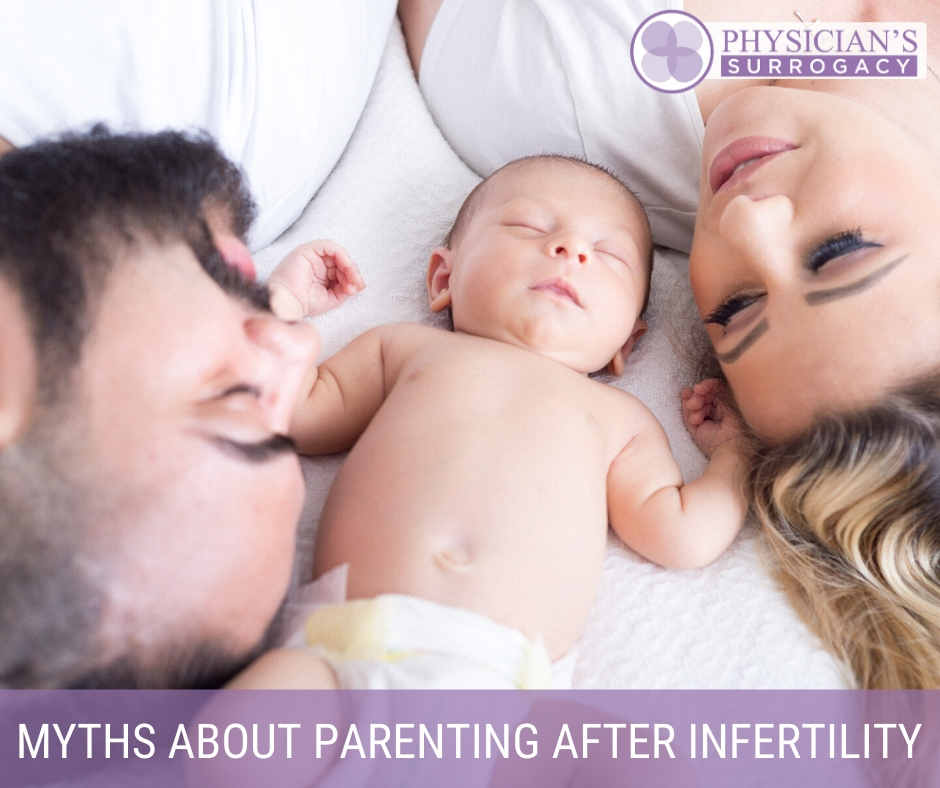
6 Myths About Parenting After Infertility (And the Truth Behind Each One)
Parenting after infertility carries a unique emotional weight that few talk about openly. The relief is real. So is the exhaustion, the lingering grief, and the occasional guilt that creeps in precisely when you expected pure happiness.
According to the World Health Organization, 1 in 6 people globally experience infertility. Those who eventually build their families through gestational surrogacy, IVF, or adoption often arrive at parenting after infertility carrying invisible weight — months or years of loss, hope, and waiting.
This article unpacks six of the most common misconceptions about what life looks like on the other side of that journey. None of these myths are your fault for believing. But seeing the truth behind them can make you a steadier, more grounded parent.
Key Takeaways
Why Parenting After Infertility Feels So Different
Most people picture parenthood as the finish line. After everything — the injections, the waiting rooms, the false starts — you’re supposed to arrive at peace. Parenting after infertility rarely feels that simple. It’s a beginning, not an ending.
Parents who built their families through the surrogacy journey often tell us the first weeks feel like whiplash. You’ve been laser-focused on the process for so long that the arrival of the baby can feel disorienting.
That disorientation is normal. It doesn’t mean something went wrong. It means you’re human — and that the road here was harder than most.
Quick Answer
Parenting after infertility and surrogacy is emotionally complex — even after the baby arrives. Residual grief, delayed bonding, postpartum depression, and financial pressure are all normal and documented experiences that many intended parents face. Knowing about them in advance makes a genuine difference.
Myth 1: All Your Infertility Emotions Will Disappear After You Become a Parent
The joy is real. After years of loss and waiting, bringing your baby home is one of the most profound moments a person can experience. But joy and grief can coexist.
Residual emotions from an infertility journey don’t vanish at the moment of birth. They shift. A casual comment about how easily someone got pregnant. A pregnancy announcement from a sibling. A birthday party that, for reasons you can’t fully explain, brings a wave of something that isn’t quite sadness but isn’t quite happiness either.
These moments happen. They don’t mean you’re ungrateful. They mean the road here mattered — and that the emotional memory of it doesn’t have an expiration date.
If unresolved feelings become overwhelming, an infertility counselor or therapist who specializes in perinatal mental health is a tremendous resource. The emotional work of managing anxiety during the wait often needs to continue after the baby arrives. This is one of the least-discussed realities of parenting after infertility.
Myth 2: One Baby Will Be Enough Forever
Many intended parents enter surrogacy believing they’ll be completely satisfied with one child. After years of longing, that single baby feels like everything. Parenting after infertility has a way of shifting those expectations — often in directions no one predicted.
Then life happens. And for a surprising number of parents, the desire for more children grows — even after infertility.
This is more common than people expect in the context of parenting after infertility. Once the terror of “will it ever happen?” is behind them, some parents find that the joy of parenthood sparks a genuine desire to expand their family. Others feel guilt at even entertaining the thought — as if wanting more somehow dishonors the enormity of what it took to have the first.
Neither reaction is wrong. Give yourself permission to hold these feelings without judgment. You’re not betraying your miracle child by imagining a sibling.
Myth 3: Bonding Will Happen Instantly
Gestational surrogacy is one of the most medically sophisticated ways a family can be built — and one of the most human. One of the biggest surprises of parenting after infertility is that bonding with your surrogate-born child doesn’t always arrive on cue. (Curious how your surrogate experiences this? See do surrogates get attached.)
Some parents feel an immediate, overwhelming connection the moment they hold their baby. Others don’t — one of the harder truths of parenting after infertility. The gap between expectation and experience can feel alarming. It shouldn’t. Studies in developmental psychology consistently show that bonding timelines vary widely across all family types, including biological parents.
The willingness to show up — to feed, to comfort, to stay present even when the emotional flood hasn’t arrived yet — is what builds attachment. Love, in its most durable form, is often constructed over time. Not delivered. Those first weeks often bring small, unexpected moments that catch even the most prepared parents off guard.
Myth 4: Postpartum Depression Only Affects Birthing Parents
This is one of the most widely held — and most harmful — misconceptions in the surrogacy world. Postpartum depression (PPD) is not exclusive to those who carry a pregnancy.
Research consistently shows that PPD can affect adoptive parents, intended fathers, and non-birthing mothers. According to current postpartum depression statistics, approximately 1 in 10 new fathers experience depression in the postpartum period — and that risk climbs sharply when their partner is also struggling.
For intended parents navigating parenting after infertility, the risk factors are real and specific. Years of infertility — including failed IVF cycles — leave emotional residue. The sudden shift from “striving to become parents” to “being parents” removes a long-held purpose and creates a vacuum some find difficult to fill.
Add fatigue, financial stress, and the ordinary chaos of a newborn — and even the most prepared parent can find themselves struggling. The emotional weight of surrogacy doesn’t always lift the moment the baby arrives.
If you experience persistent sadness, numbness, irritability, or difficulty connecting with your baby for more than two weeks, speak with your doctor. PPD is highly treatable — but only when it’s recognized. Physician’s Surrogacy supports intended parents through every stage of this journey, including the emotional landscape after birth.
Myth 5: You’ll Be a Perfect Parent Because You Tried So Hard
Years of infertility create an idealized vision of parenthood. You’ve imagined it so many times, in such detail, that you’ve accidentally set a standard no parent in human history could meet. Parenting after infertility carries this extra layer — the pressure of the price paid to get here.
Real parenthood is messier. Louder. More repetitive and less cinematic than the version that kept you going through the hard years. You’ll lose your temper. Doubt will creep in at moments you didn’t expect. Crying over things that make no logical sense at 3 a.m. is practically a rite of passage.
That doesn’t make you a bad parent. It makes you a parent.
The profound sacrifice it took to get here doesn’t create an obligation to feel fulfilled every moment. That’s the part of parenting after infertility no one puts in the brochure.
As your child grows, questions about their origins will come — often sooner and more directly than parents expect. It actually makes the ordinary moments more meaningful — if you let them be ordinary rather than demanding they be extraordinary.
You Don’t Have to Do This Alone
Physician’s Surrogacy is the only surrogacy agency in the U.S. managed by practicing board-certified OB/GYNs. Our physician-led model means clinical oversight doesn’t stop at delivery — it’s built into how we support intended parents throughout the entire journey.
Our preterm delivery rate is 50% below the national average.
See what sets our approach apart at the Physician’s Advantage.
Myth 6: You’ll Recover Financially Right Away
Surrogacy is a meaningful investment — and an honest one. For families navigating parenting after infertility, this is often the largest expenditure of their lives. The Flat-Rate Surrogacy program at Physician’s Surrogacy starts at $140,000–$170,000+.
That price point reflects real costs — medical management, surrogate compensation, legal protections, and the clinical infrastructure that makes the process safer for everyone involved.
What surprises many parents is how heavily the financial hangover of parenting after infertility weighs on those early years. Years of fertility treatments — often averaging tens of thousands of dollars per cycle — can deplete savings and take on debt before surrogacy even begins.
Then comes parenthood, which brings its own costs. Childcare, healthcare, time off work. Most families find that the financial tightness of parenting after infertility extends for at least the first two to three years of their child’s life.
This isn’t a reason to hesitate. It’s a reason to plan early. Most families find it worth working through the financial side of surrogacy before they begin — ideally with an advisor who understands family-building costs — rather than reacting to numbers after the fact. Flexible payment structures exist specifically for intended parents, and there’s more room to plan than most people assume.
The financial trade-offs of surrogacy are worth weighing early — before the emotional investment deepens and the numbers feel harder to look at clearly.
Quick Weigh-Up
For intended parents weighing the emotional and financial reality of what comes after surrogacy.
What helps
What to think about
How to Actually Prepare for Parenting After Surrogacy
Knowing the myths of parenting after infertility in advance doesn’t immunize you from them. But it does change how you respond when they show up.
1. Get emotional support early
Find a perinatal mental health therapist — ideally one with experience in assisted reproduction — before your baby is born. Don’t wait until you’re struggling to build the support network.
2. Ask your agency about postpartum resources
At Physician’s Surrogacy, our physician-led model means you have access to coordinators and clinical guidance beyond the delivery room — not just during the pregnancy.
3. Connect with other intended parents
The experience of parenting after infertility and surrogacy is specific. Other parents who’ve walked the same road offer a kind of understanding that general parenting communities simply can’t match.
4. Get your financial picture clear early
Work through the financial questions with a family-building advisor before you begin — clarity going in reduces stress significantly on the other side.
Parenting after infertility — and after surrogacy — sits at the intersection of modern medicine and profound human generosity. What comes next deserves just as much preparation as the journey to get here.
With the right agency, the right medical team, and the right community behind you, parenting after infertility becomes not just manageable — it becomes one of the most meaningful experiences of your life.
What Intended Parents Say
The emotional complexity of parenting after infertility isn’t theoretical — it’s lived. It’s something families live through — and come out stronger for. From breastfeeding your surrogate-born baby to managing the emotional waves, the learning curve is real — and so is the reward. Here’s how two PS families describe the experience in their own words.
“We thought the moment we brought our son home, everything would finally feel peaceful. What we didn’t expect was how much the years of waiting would still show up — in little ways, at odd moments. Having support already in place made all the difference.”
— Intended Mother, Physician’s Surrogacy
“I was shocked when I felt guilty for wanting another child — after everything we went through. Then I talked to other PS parents and realized I wasn’t alone. Nobody tells you that becoming a parent after infertility opens a whole new chapter of feelings you weren’t prepared for.”
— Intended Father, Physician’s Surrogacy
Ready to Build Your Family With the Right Support?
Parenting after infertility is a journey that doesn’t end at birth — and neither does our support. Physician’s Surrogacy is the only surrogacy agency in the U.S. managed by practicing, board-certified OB/GYNs. Our physician-led model means clinical oversight, real medical accountability, and a team that stays with you — through the match, the pregnancy, and into parenthood.
If you’re still weighing your options, our team understands what parenting after infertility takes — and we’re here to answer your questions honestly, without pressure, and with the medical expertise no other agency can offer.
Frequently Asked Questions: Parenting After Infertility and Surrogacy
Can intended parents get postpartum depression? +
Is it normal to feel grief after finally becoming a parent? +
What if I don’t bond immediately with my surrogate-born baby? +
How long does financial recovery from infertility take? +
Is it unusual to want more children after surrogacy? +
!

Julianna Nikolic
Chief Strategy Officer Julianna Nikolic leads strategic initiatives, focusing on growth, innovation, and patient-centered solutions in the reproductive sciences sector. With 26+ years of management experience and a strong entrepreneurial background, she brings deep expertise to advancing reproductive healthcare.